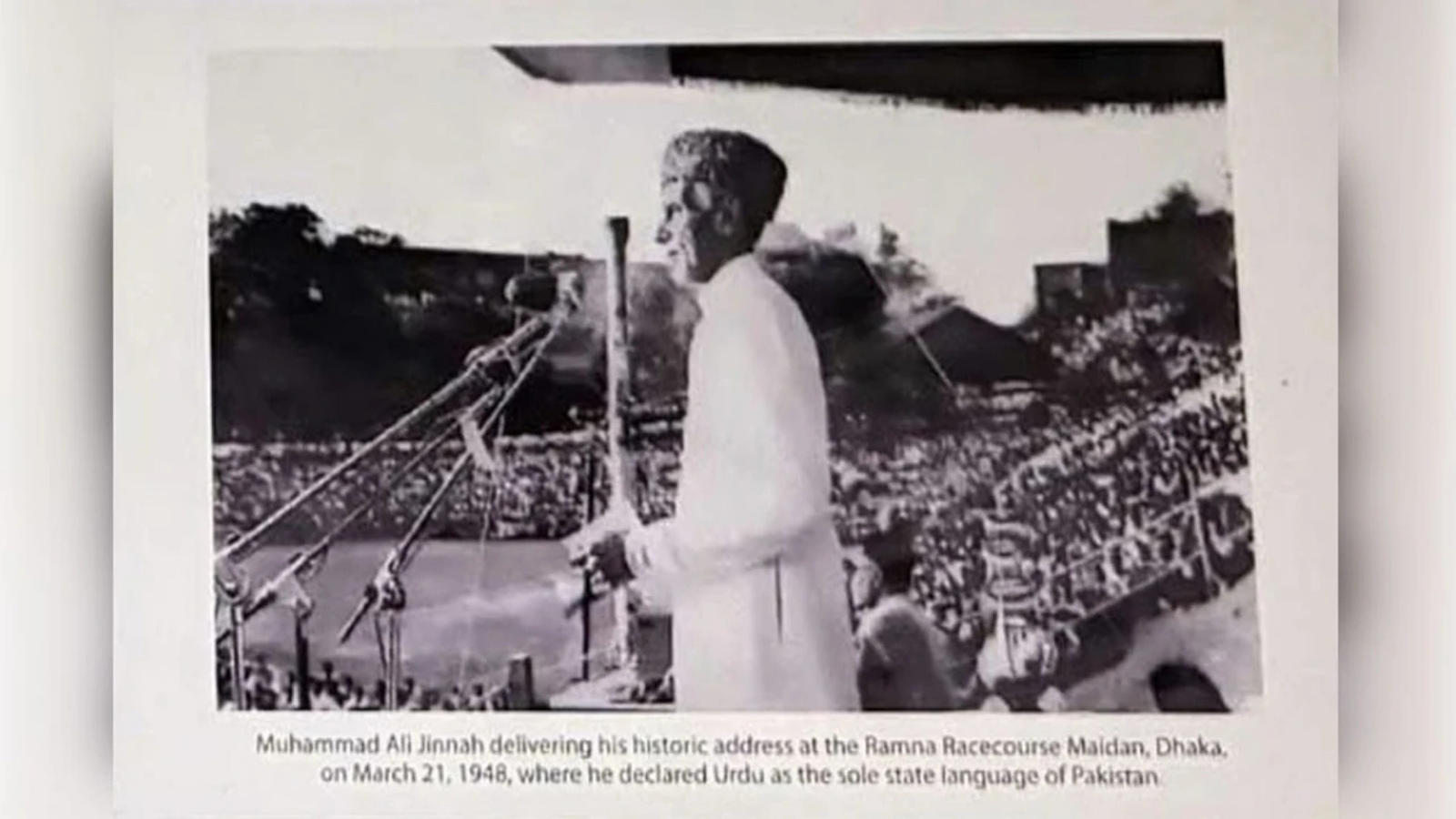
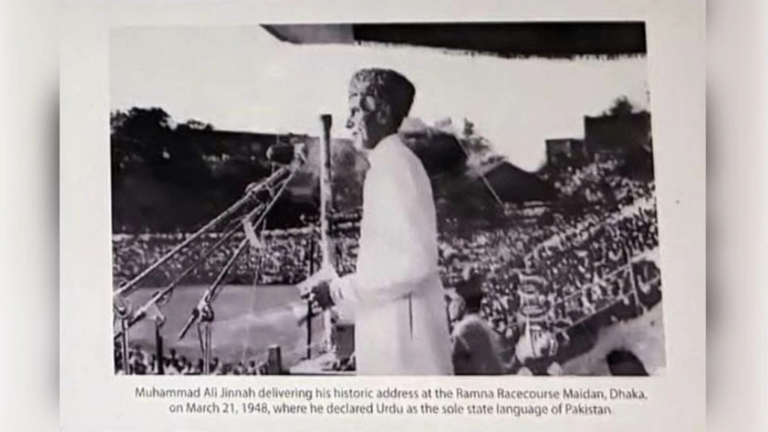
A dispute broke out at the Dhaka University Central Students’ Union (DUCSU) gallery after images of Pakistan’s founding leader, Muhammad Ali Jinnah, were removed by a senior student who objected to their inclusion in the exhibition.
According to reports, the incident occurred at the newly renovated DUCSU gallery when Abu Taiyyab Habildar, a former vice-presidential candidate in the 2025 DUCSU election and a student of the university’s Urdu Department, removed and damaged several images of Jinnah displayed at the venue.
Habildar said his actions were intended as a protest against what he described as efforts to honor individuals he considers to have been opposed to Bangladesh’s national interests. He also cited historical disagreements surrounding Jinnah’s position on the language issue during Pakistan’s early years.
Following the incident, another student affiliated with a left-leaning student group reportedly displayed an image of former Jamaat-e-Islami leader Ghulam Azam. According to accounts of the event, the image portrayed public opposition to Azam over his stance during Bangladesh’s Liberation War, and was presented as a criticism of any perceived attempt to promote narratives viewed as contrary to the country’s independence movement.
The developments sparked discussion among students regarding how historical and political figures should be represented in university spaces. The incident also highlighted ongoing debates about Bangladesh’s history, the Language Movement, the Liberation War, and the role of controversial figures in public exhibitions.
University authorities had not immediately commented on the matter, while students from different groups continued to express varying views over the display and interpretation of historical figures within educational institutions.Following the incident, another student affiliated with a left-leaning student group reportedly displayed an image of former Jamaat-e-Islami leader Ghulam Azam. According to accounts of the event, the image portrayed public opposition to Azam over his stance during Bangladesh’s Liberation War, and was presented as a criticism of any perceived attempt to promote narratives viewed as contrary to the country’s independence movement.
The developments sparked discussion among students regarding how historical and political figures should be represented in university spaces. The incident also highlighted ongoing debates about Bangladesh’s history, the Language Movement, the Liberation War, and the role of controversial figures in public exhibitions.
University authorities had not immediately commented on the matter, while students from different groups continued to express varying views over the display and interpretation of historical figures within educational institutions.






+ There are no comments
Add yours