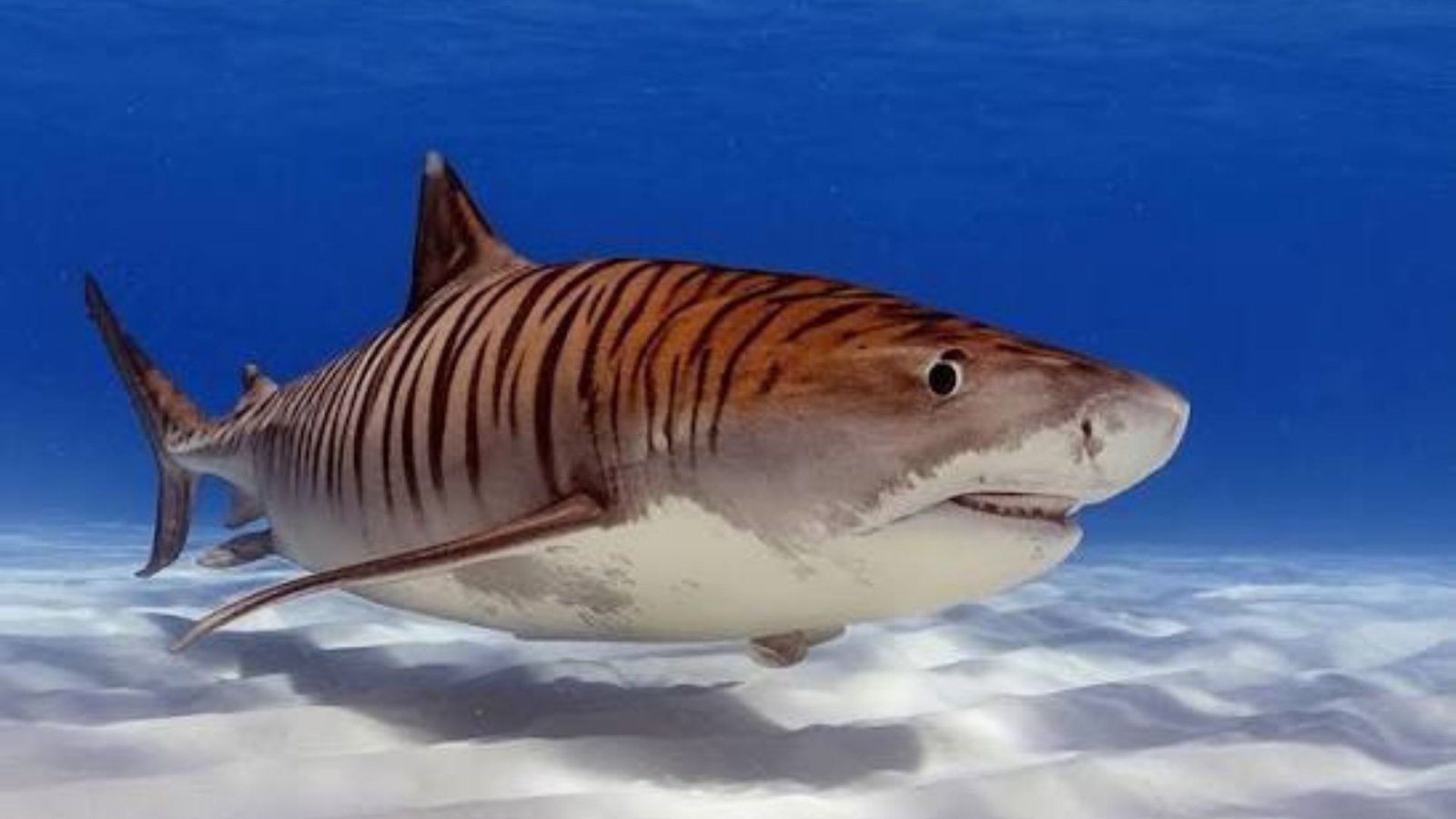
Tiger sharks, built like underwater tanks and armed with a bite force that can crush bone, are among the ocean’s most formidable predators and certainly its least picky eaters. These giants, streamlined like torpedoes and roughly the size of a small bus, have earned a reputation for devouring almost anything they encounter, from antelopes to televisions.
Marine scientist Neil Hammerschlag describes them as the “tanks of the sea”, and with good reason. Tiger sharks boast the widest diet of any shark species, earning the nickname “garbage cans of the ocean.” Their menu spans molluscs, stingrays, sea snakes, seals, squids and even whales.
They swallow seabirds and land animals whole. Researchers have found mole‑rats, antelopes, dogs, goats and cats in their stomachs. One unlucky shark even regurgitated an echidna perhaps its spines proved too much to handle.
Human rubbish is no exception. Crisp packets, condoms, tyres, licence plates, cigarettes, TVs even a full suit of armour has reportedly been discovered inside one. And while tiger sharks are among the world’s “Big Three” most dangerous shark species, alongside great whites and bull sharks, experts stress that humans are far more likely to be struck by lightning than attacked.
Their fearlessness extends beyond diet. Tiger sharks have been known to swim directly into the eye of a hurricane if it promises a feast. Yet their extreme eating habits come with ecological benefits: by scavenging dead and dying creatures, they help maintain the health and balance of marine ecosystems.
When storms approach, most sharks detect shifts in barometric pressure and retreat to deeper waters. But tiger sharks behave differently. According to marine conservation lecturer Phil Doherty, they often arrive early, anticipating a buffet of storm‑killed animals and remain afterward to clean up the ocean’s debris.
In the wild, their steel stomachs and storm‑chasing instincts make them one of nature’s most efficient recyclers, proving that even the ocean’s most fearsome predators play a vital role in keeping marine life thriving.
Human rubbish is no exception. Crisp packets, condoms, tyres, licence plates, cigarettes, TVs even a full suit of armour has reportedly been discovered inside one. And while tiger sharks are among the world’s “Big Three” most dangerous shark species, alongside great whites and bull sharks, experts stress that humans are far more likely to be struck by lightning than attacked.
Their fearlessness extends beyond diet. Tiger sharks have been known to swim directly into the eye of a hurricane if it promises a feast. Yet their extreme eating habits come with ecological benefits: by scavenging dead and dying creatures, they help maintain the health and balance of marine ecosystems.
When storms approach, most sharks detect shifts in barometric pressure and retreat to deeper waters. But tiger sharks behave differently. According to marine conservation lecturer Phil Doherty, they often arrive early, anticipating a buffet of storm‑killed animals and remain afterward to clean up the ocean’s debris.
In the wild, their steel stomachs and storm‑chasing instincts make them one of nature’s most efficient recyclers, proving that even the ocean’s most fearsome predators play a vital role in keeping marine life thriving.
#tags: #TigerSharks #MarineLife #OceanScience #WildlifeNews #SharkBehaviour












+ There are no comments
Add yours