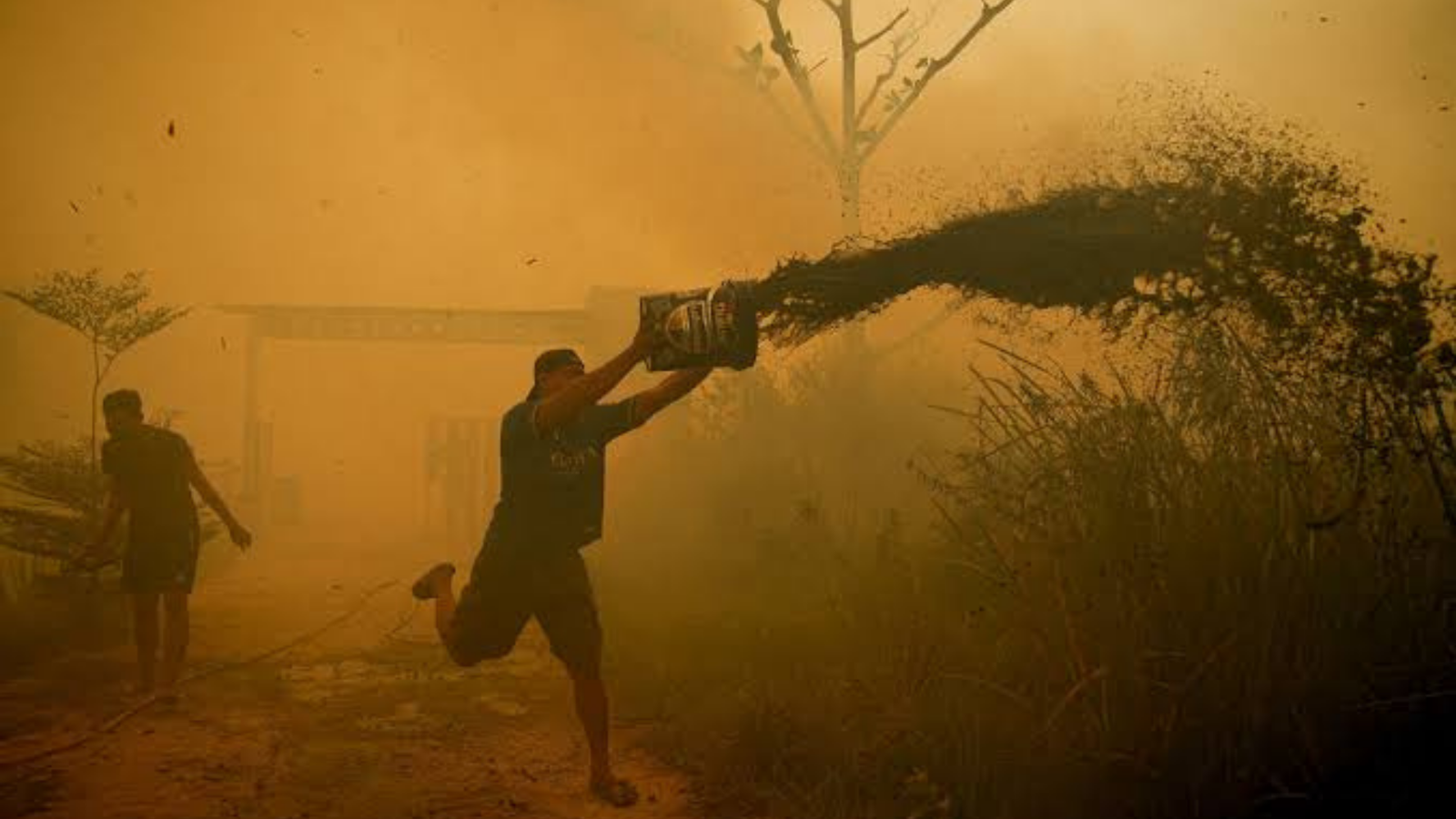
A major forest fire on Indonesia’s Sumatra island has destroyed nearly 300 homes and forced hundreds of residents to flee, as the country continues to battle severe wildfires and worsening haze conditions.
The blaze struck a village in Bangka Belitung Province, where residents first noticed the fire approaching on Saturday. According to local officials, villagers initially attempted to extinguish the flames using portable water pumps and believed the danger had passed.
However, Mayor Riza Herdavid said the fire continued to burn beneath the surface of peatland, allowing it to reignite rapidly when weather conditions changed.
“They thought it was taken care of. But it’s peatland, and there was still a fire smoldering underneath. So, when they assumed it was over, the wind shifted and quickly drove the fire toward the settlement.”
The local disaster management agency reported that nearly 1,000 people were forced to evacuate as flames spread through the community.
Many residents lost everything in the disaster.
Leni, a 55-year-old villager now staying in an emergency shelter with her family, described the devastation.
“My house is gone. There’s nothing left. I could only save myself and take my kids with me.”
“I panicked and didn’t have the time to grab anything.”
Another resident, Haryanti, said powerful winds accelerated the fire’s spread through the village, where many houses were built primarily from wood.
“I immediately ran to save myself. None of my belongings survived… only the clothes on my back.”
Mayor Herdavid said the affected housing development had been constructed last year on land that was previously peatland within a protected area.
Peatland fires are particularly dangerous because they can continue smoldering underground for extended periods, even after surface flames appear to have been extinguished. Strong winds can then cause the fire to reignite and spread rapidly.
Indonesia regularly experiences severe wildfires during the dry season, but authorities say conditions have worsened this year due to the powerful El Niño weather phenomenon, which has brought prolonged drought and unusually dry conditions across large parts of the country.
Environmental experts have also pointed to ongoing slash-and-burn land-clearing practices as a contributing factor. Such activities can make landscapes more vulnerable to large-scale fires, particularly in environmentally sensitive regions such as Sumatra and Borneo.
The fires have not only damaged homes and forests but have also contributed to widespread haze affecting parts of Indonesia and neighboring countries, raising concerns about public health, air quality, and environmental sustainability.
Emergency crews continue to work in the affected area while authorities monitor conditions to prevent new outbreaks as dry weather persists.





+ There are no comments
Add yours