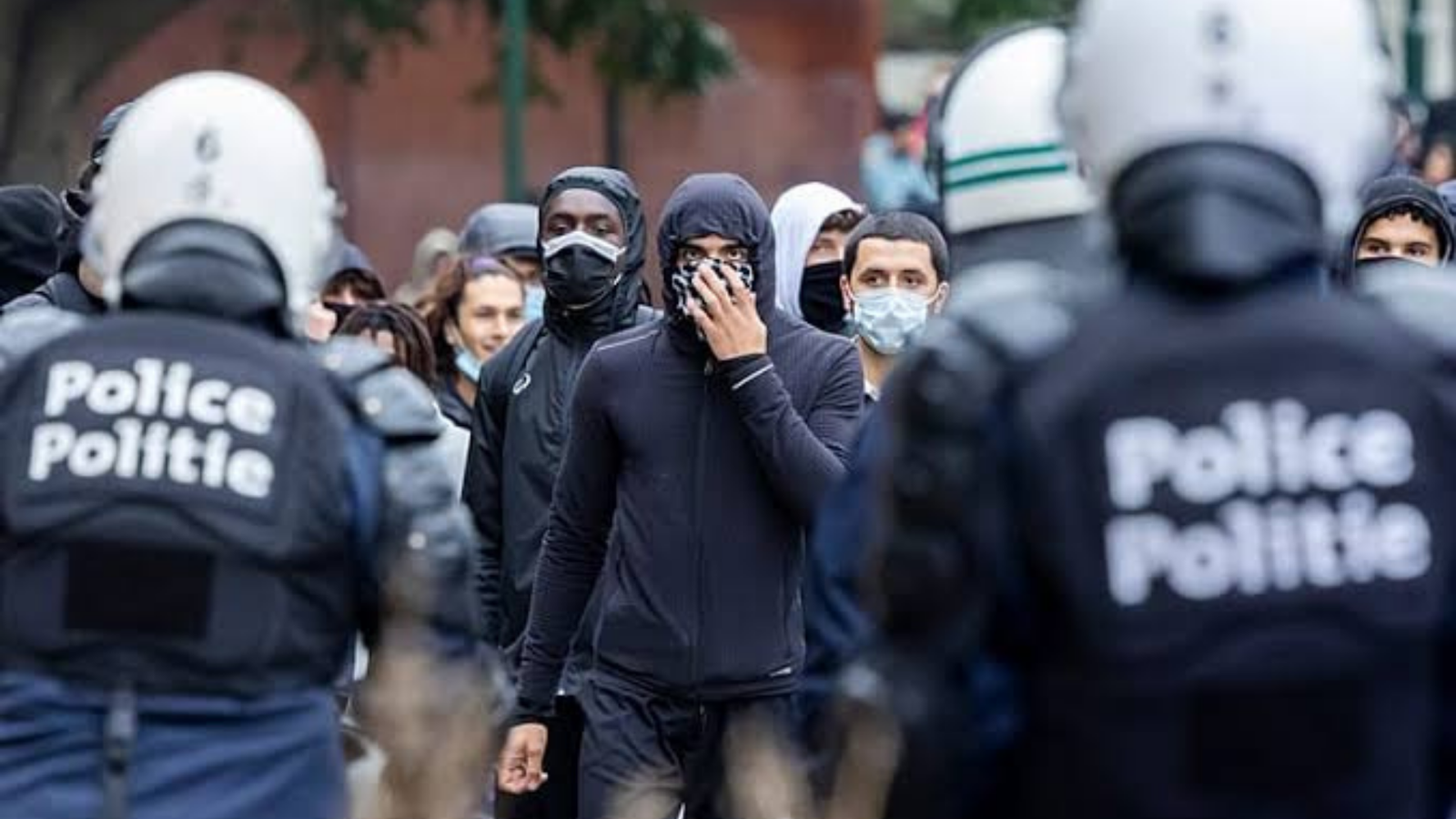
Hundreds of youths clashed with riot police in Brussels on Friday as tensions erupted on the sidelines of a major workers’ march opposing government austerity policies.
According to police, around 30,000 people participated in the national strike and protest movement, which was organised in opposition to planned spending cuts and economic reforms proposed by the Belgian government.
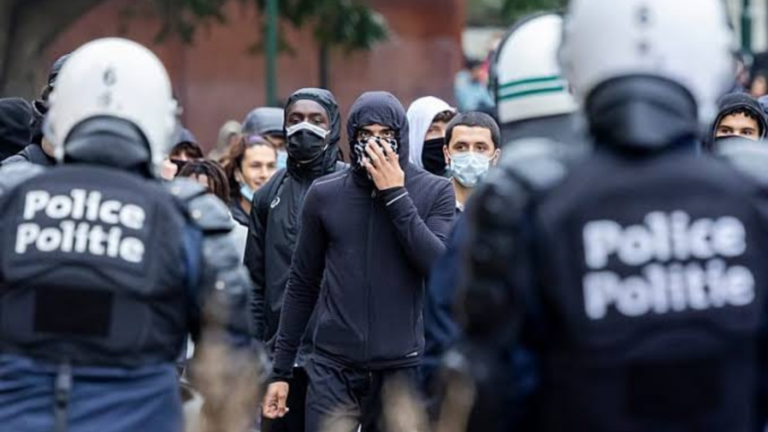
While the main trade union demonstration remained largely peaceful, unrest broke out involving groups of young protesters in the city’s central tourist district. Police said several hundred youths gathered near the march and that the situation gradually escalated into public disorder.
Authorities deployed water cannon and tear gas after officers were reportedly targeted with sticks, bottles, and other projectiles.
“Several hundred youths gathered along with the demonstrators. The atmosphere gradually became more tense and there were serious disturbances to public order,” police said in a statement.
Journalists at the scene reported repeated confrontations between youths and security forces, with tear gas hanging over parts of the protest area as groups of demonstrators challenged police lines.
The unrest follows days of student-led demonstrations across Belgium, inspired in part by recent education protests in neighboring France.
High school students from Belgium’s French-speaking regions have been protesting against proposed education budget cuts, arguing that the measures will negatively affect schools, teachers, and students.
The city of Liège, which has emerged as a focal point of the movement, has witnessed some of the most intense demonstrations. Authorities there have reportedly carried out around 200 arrests, while dozens of police officers have been injured during recent clashes.
Friday’s mobilisation was the latest in a series of nationwide strikes and protests directed at the government of Prime Minister Bart De Wever.
The government is seeking to save approximately €10 billion ($11.2 billion) over the coming years as part of efforts to reduce Belgium’s budget deficit and strengthen public finances.v
De Wever and his coalition partners are currently engaged in negotiations aimed at reaching an agreement on the proposed measures before October 13.
Trade unions have strongly opposed the planned cuts and are urging the government to pursue alternative revenue measures instead.
Union leaders argue that higher taxes on top earners would be a fairer solution than reducing spending on public services such as healthcare or increasing value-added tax (VAT).
The demonstrations highlight growing public concern over the social and economic impact of austerity measures, with workers, students, and unions continuing to pressure the government as negotiations over the budget package continue.
Brussels austerity protest De Wever and his coalition partners are currently engaged in negotiations aimed at reaching an agreement on the proposed measures before October 13. Trade unions have strongly opposed the planned cuts and are urging the government to pursue alternative revenue measures instead.
Union leaders argue that higher taxes on top earners would be a fairer solution than reducing spending on public services such as healthcare or increasing value-added tax (VAT).
The demonstrations highlight growing public concern over the social and economic impact of austerity measures, with workers, students, and unions continuing to pressure the government as negotiations over the budget package continue.





+ There are no comments
Add yours