
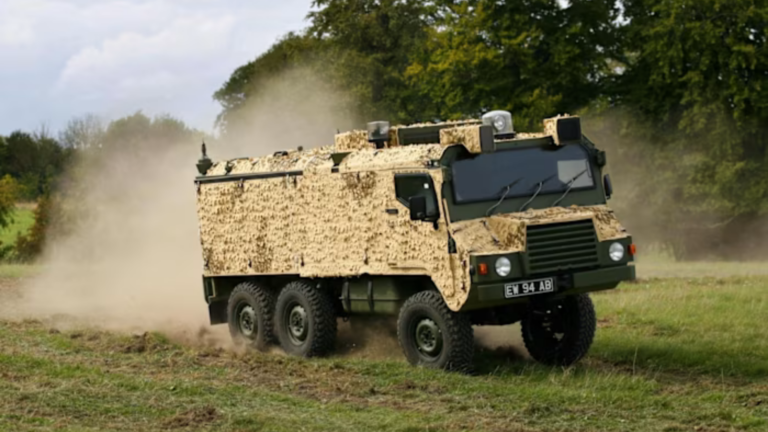
A heavily modified military vehicle based on Ford’s popular Ranger platform is becoming a symbol of the company’s efforts to adapt to a changing automotive landscape, while potentially securing the future of thousands of manufacturing jobs in the UK.
Parked outside Ford’s historic Dagenham plant in east London, the rugged vehicle is capable of carrying up to two tonnes and towing four tonnes. More importantly, it represents Ford’s bid to expand into the defence sector at a time when traditional vehicle manufacturing is facing significant challenges across Europe.
Inside the Dagenham facility, workers continue producing the three-litre diesel engines that power the vehicle. However, production has declined sharply over the past decade, with annual output falling from around 90,000 engines to roughly half that level as the automotive industry undergoes major changes.
Ford hopes growing defence spending across Europe will create new opportunities. The company has joined forces with defence contractor General Dynamics and engineering consultancy Ricardo to compete for a UK Ministry of Defence contract to supply approximately 9,000 military vehicles over the next five to seven years.
The contract is intended to replace the British Army’s ageing fleet of Land Rover-based vehicles, offering a significant opportunity for manufacturers seeking to diversify beyond traditional consumer markets.
Ford UK Chair Lisa Brankin said the project would allow the company to demonstrate its manufacturing capabilities and responsiveness to defence requirements.
“As a manufacturer you look at every opportunity that comes at you and this is a great opportunity that we would love to take advantage of,” she said.
The move comes as European governments increase military spending amid heightened security concerns, creating new opportunities for industrial manufacturers with large-scale production capabilities.
Ford’s involvement in defence manufacturing is not new. Before the Second World War, the company’s Dagenham factory was one of the largest vehicle production facilities in Europe and played a significant role in supporting wartime manufacturing efforts.
Industry analysts say the defence sector is becoming increasingly attractive for automotive companies seeking new growth opportunities as they navigate rising competition, economic uncertainty, and the costly transition toward electric vehicles.
If successful, the Ministry of Defence contract could provide a substantial boost to Ford’s UK operations and help secure jobs while strengthening Britain’s domestic defence manufacturing capabilities.
FB Note: This article reports on a commercial defence contract bid and related manufacturing developments. Final contract decisions remain subject to government procurement processes.










+ There are no comments
Add yours