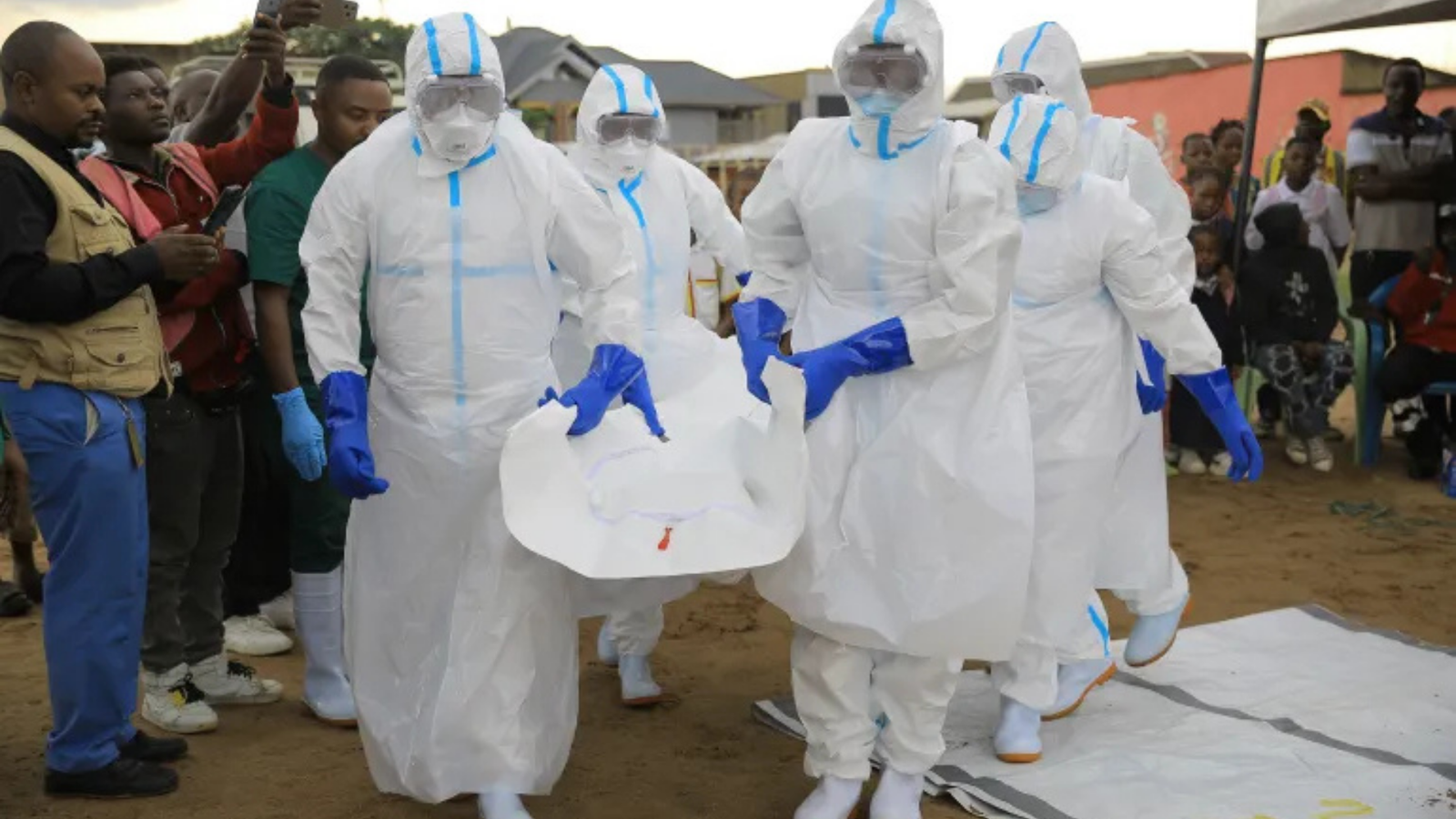
The number of confirmed Ebola cases in the Democratic Republic of Congo (DRC) has surpassed 9,000, highlighting the scale of a worsening public health crisis as authorities struggle to contain transmission in multiple outbreak hotspots.
According to the latest report from Congo’s public health institute, the outbreak has reached 9,066 confirmed cases and 4,381 deaths. The epidemic, caused by the Bundibugyo strain of Ebola, was officially declared in May and has since become the largest and deadliest Ebola outbreak in the country’s history, surpassing the 2018-2020 epidemic.
A major challenge facing health authorities is that the Bundibugyo strain currently has no approved vaccine or specific treatment, making containment measures, surveillance, and supportive medical care critical tools in the response.
Globally, the current outbreak is second only to the 2014-2016 West African Ebola epidemic, which infected more than 28,600 people and claimed over 11,000 lives across Guinea, Liberia, and Sierra Leone, according to the World Health Organization (WHO).
The outbreak’s impact has extended beyond the DRC’s borders, raising concerns among regional health authorities.
Earlier this year, Uganda reported 20 cases and two deaths linked to the outbreak. However, after successfully containing transmission, the country was officially declared Ebola-free in August.
More recently, Kenya confirmed its first imported Ebola case. Authorities reported that a Kenyan citizen who had travelled from the Democratic Republic of Congo through Uganda later died in Nairobi, prompting additional monitoring and public health measures.
Health experts warn that continued cross-border movement increases the risk of cases being detected in neighboring countries, making regional cooperation and surveillance essential for preventing further spread.
The ongoing outbreak has placed significant pressure on healthcare systems and emergency response teams, particularly in affected areas where access to medical facilities and public health resources remains limited.
International health agencies continue to support local authorities in efforts to strengthen disease surveillance, improve case management, trace contacts, and raise community awareness about prevention and early detection.
As the outbreak continues to expand, officials say rapid intervention and international collaboration will be crucial to reducing transmission and preventing additional loss of life.







+ There are no comments
Add yours