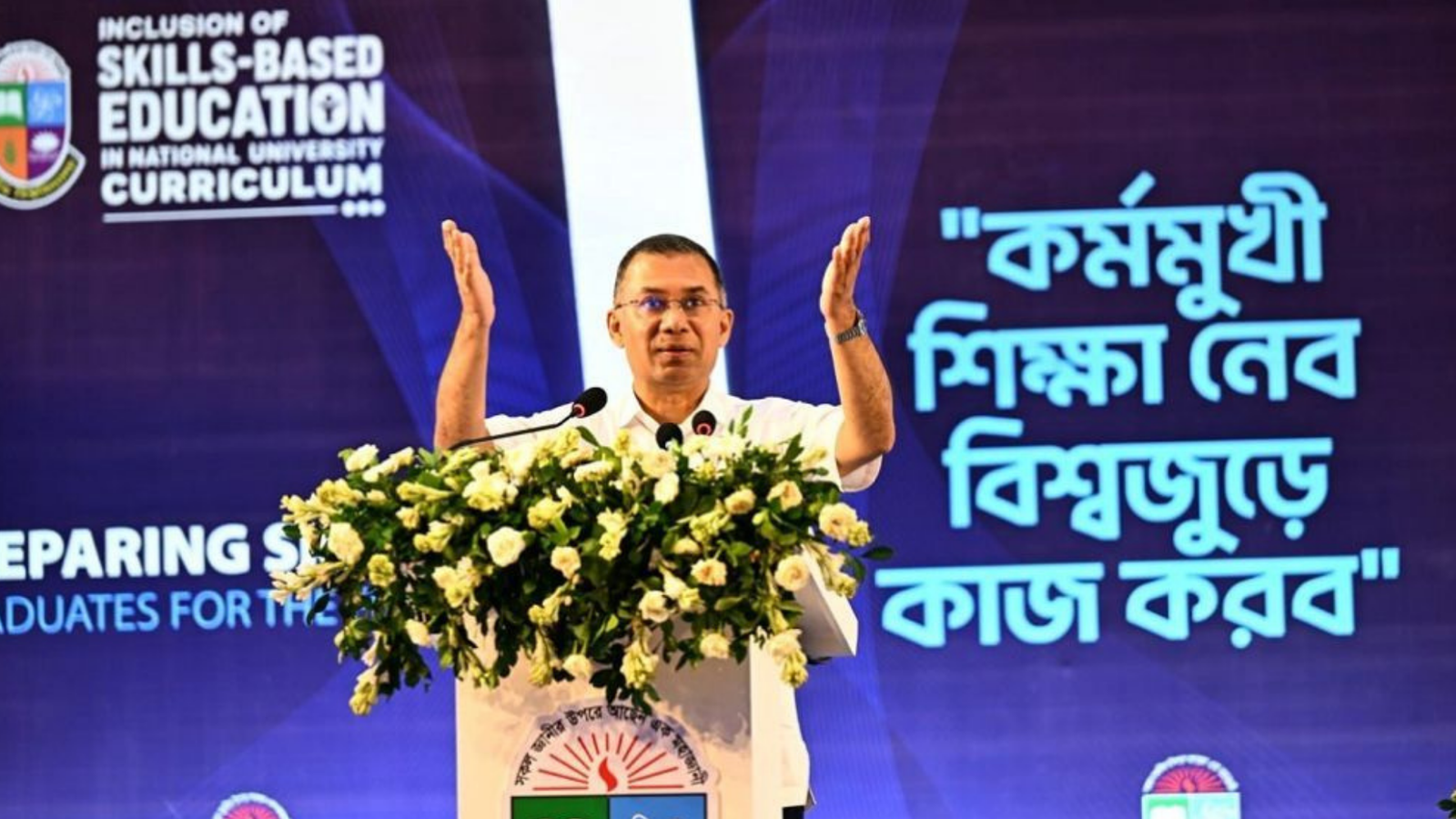
Prime Minister Tarique Rahman has directed authorities to bring skills training programmes operated by various government ministries under a unified national framework, aiming to strengthen workforce development and improve the recognition of training qualifications at home and abroad.
The directive was issued during the third meeting of the Governing Body of the National Skills Development Authority (NSDA) at the Prime Minister’s Office in Tejgaon on Saturday.
During the meeting, the prime minister emphasized the importance of developing a skilled workforce that meets the evolving demands of both domestic and international labour markets. He said the NSDA has been playing a vital role in building human resources and expanding opportunities for Bangladeshi workers in the global employment market.
Tarique Rahman noted that while numerous skills development and training programmes are currently being conducted under different ministries and agencies, the lack of coordination among them has reduced their overall effectiveness. He observed that variations in training curricula and certification processes often create challenges for trainees seeking recognition of their qualifications.
According to the prime minister, many young people are not receiving the expected value or acceptance of their certificates nationally or internationally because of inconsistencies across training systems. He stressed that enhancing youth skills is essential for economic growth, employment generation, and increasing the competitiveness of Bangladesh’s workforce.
To address these challenges, Rahman directed the NSDA Governing Body to formulate the necessary policies through a dedicated committee and develop an integrated structure for all government-managed training programmes. The proposed framework would introduce a unified training syllabus and certification system, ensuring consistency in skills development initiatives across minis
Officials said the move is expected to improve the quality, standardisation, and international recognition of vocational and technical training programmes, while helping align workforce development strategies with labour market demands.
The initiative forms part of broader efforts to strengthen Bangladesh’s human resource capacity, improve employability, and expand opportunities for skilled workers in both local and overseas job markets.













+ There are no comments
Add yours