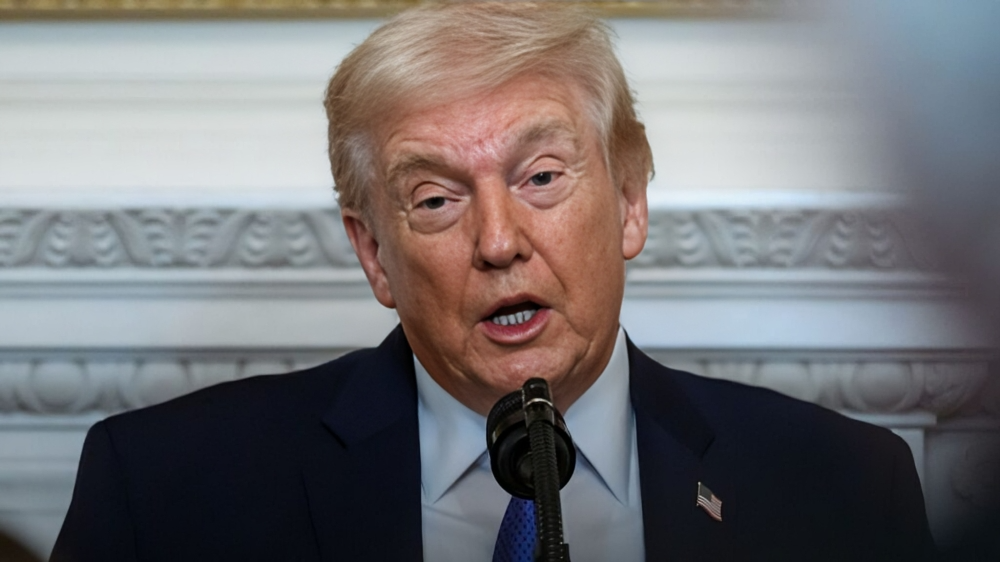
US President Donald Trump, long known for keeping the world guessing about his intentions in Iran, is now openly declaring what he wants: a role in choosing who will lead the country after the assassination of Supreme Leader Ayatollah Ali Khamenei and several senior clerics and commanders.
In what many analysts describe as a “war of choice,” Trump has suggested he intends to influence Iran’s political future a notion unthinkable to a clerical establishment built on decades of distrust toward Washington. Even among Iran’s reformists, pragmatists and hardline Principlists, one principle remains non‑negotiable: preserving the system that keeps them in power.
One week into a conflict that has shaken the region, Iran’s hardliners still appear firmly in control. Yet Trump has made clear he will only accept what he calls “a GREAT AND ACCEPTABLE leader” but only after Iran’s “unconditional surrender,” something for which there is no sign.
His comments suggest he is not seeking regime change, but rather a change within the regime a distinction that may disappoint Iranians who hoped the death of the Supreme Leader would open the door to a new political era.
In interviews with Axios and Reuters, Trump drew a comparison to Venezuela, saying, “I have to be involved in the appointment, like with Delcy (Rodriguez) in Venezuela.” He has repeatedly described the US military operation in Caracas on 3 January as the “perfect scenario,” noting that Nicolás Maduro was removed without casualties or chaos, and that Delcy Rodríguez now works with Washington.
But Iran’s political system fortified by decades of external threats, internal unrest and a deeply embedded religious‑security apparatus is far more complex. Memories of foreign interference run deep. The 1953 CIA‑MI6‑backed coup that toppled Prime Minister Mohammad Mosaddegh and installed Shah Mohammad Reza Pahlavi remains a defining trauma, one that helped fuel the 1979 revolution and its enduring suspicion of the West.
Trump has also made clear who he does not want to see in power. “Khamenei’s son is unacceptable to me,” he said of 56‑year‑old Mojtaba Khamenei, widely viewed as a leading contender to succeed his father.
Tehran’s response was swift. The conservative Mehr News Agency said Trump’s remarks revealed “the depth of the enemy’s malicious objectives,” quoting members of the interim Leadership Council now overseeing the transition. They insisted “the great Iranian nation will never allow anyone to interfere” in its leadership decisions.
As the conflict widens and rhetoric hardens, the gap between Washington’s ambitions and Iran’s political reality appears as vast as ever.


+ There are no comments
Add yours