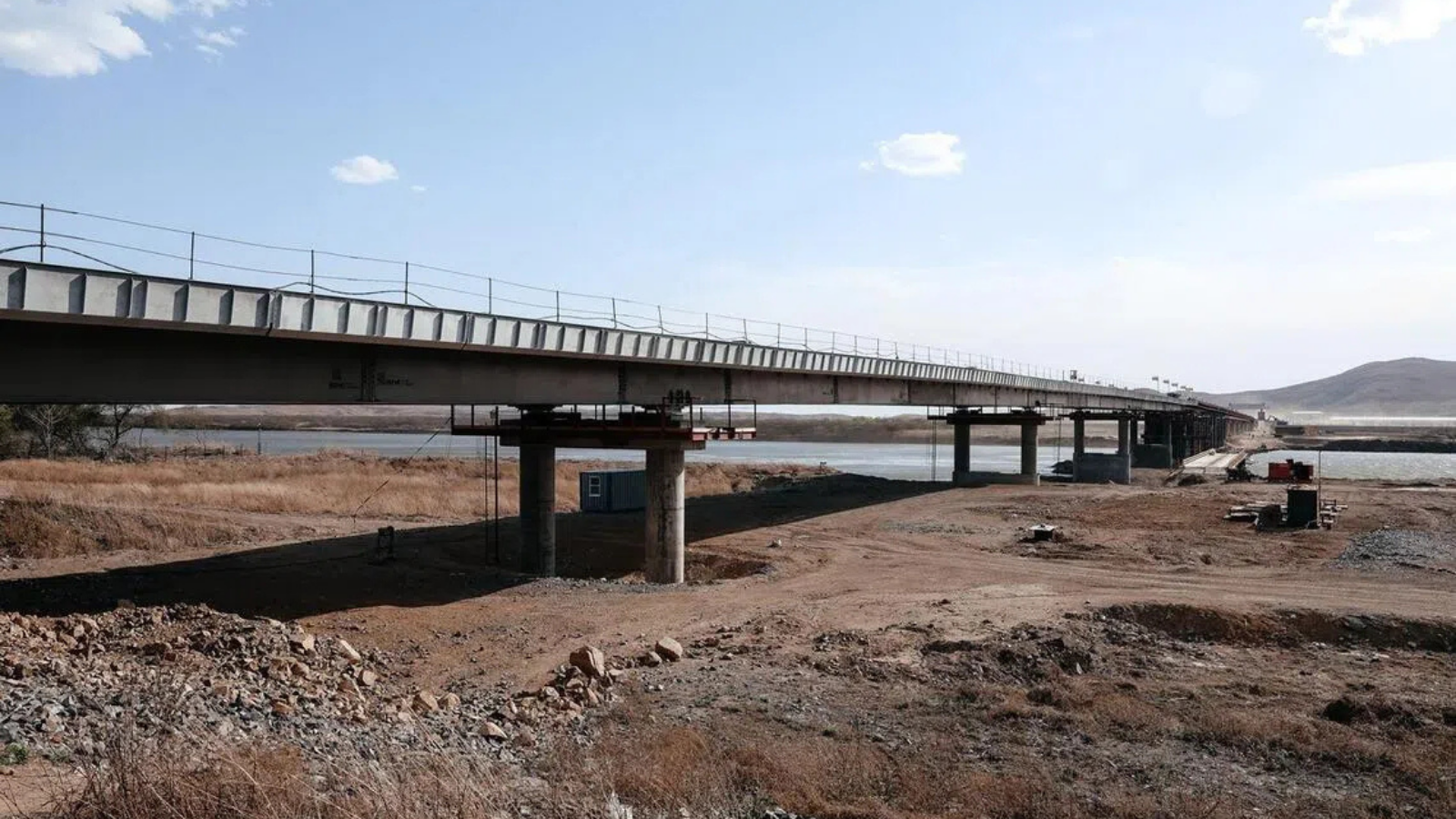
Construction of the new Russia-North Korea road bridge over the Tumen River is in its final stages, nearly a year after President Vladimir Putin approved the project during his 2024 visit to Pyongyang. According to the Russian Embassy in North Korea, the 850 metre (2,789‑foot) bridge is expected to be fully completed by June 19, creating the first direct road link between the two countries.
The bridge, which will connect directly to Russia’s highway network, is being built near the existing 1959 Soviet‑era rail bridge known as the “Friendship Bridge.” Once operational, it is expected to significantly transform cross‑border connectivity. Officials say the new route will cut the distance between Vladivostok and North Korea’s Rason city by 320 kilometres, boosting trade, tourism and cultural exchanges.
Russia and North Korea share only a 17‑kilometre border, entirely along the Tumen River. Until now, rail has been the only direct land connection. The new road bridge marks a major upgrade in bilateral infrastructure and reflects the rapidly strengthening relationship between Moscow and Pyongyang, particularly since the start of the Russia Ukraine war in 2022.
The project has advanced quickly, with Russian and North Korean crews joining the final sections of the structure during a ceremony earlier this week. The bridge will be able to handle up to 300 vehicles per day, according to regional officials.
Diplomatic engagement between the two countries has intensified in recent months. Russian Interior Minister Vladimir Kolokoltsev met senior North Korean officials in Pyongyang this week, while Russian Health Minister Mikhail Murashko attended the opening of a new Russia-North Korea “friendship hospital” in Wonsan. These visits follow the 2024 Comprehensive Strategic Partnership Treaty, which includes a mutual defense clause and has further solidified cooperation.
As the bridge nears completion, it is increasingly seen as a symbol of the countries’ expanding political, economic and military alignment and a sign of Moscow’s growing reliance on Pyongyang amid international sanctions.



+ There are no comments
Add yours