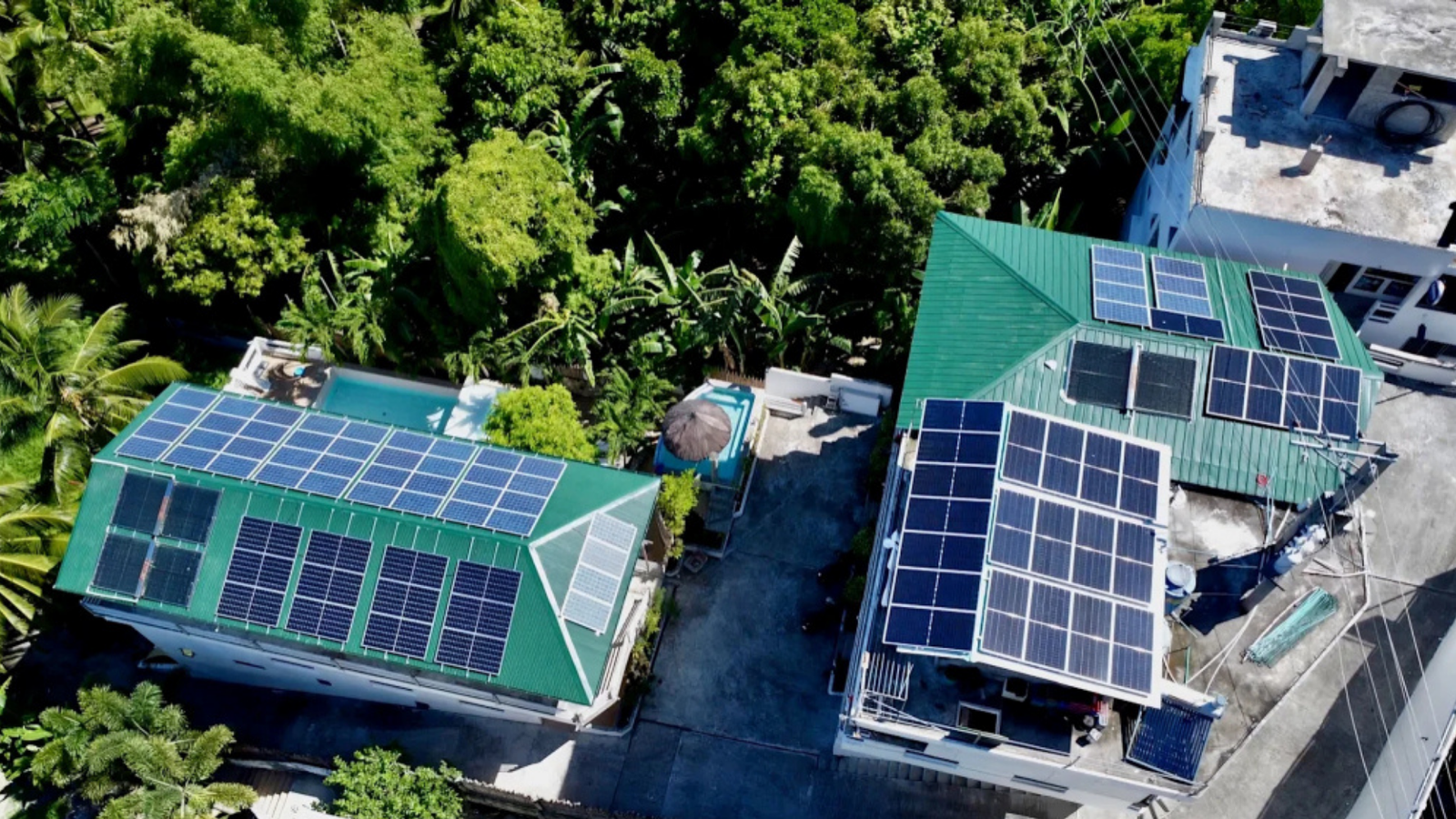
Filipinos are rushing to install rooftop solar systems in unprecedented numbers as electricity prices soar, pushing the country to become the world’s biggest spender on solar panels since the war in Iran began earlier this year. With top power distributor Meralco hiking rates by 10 percent since late February, households are now spending around 12 percent of their monthly income on electricity assuming an average use of 200 kilowatt-hours for a three‑person home.
The Philippines has long stood out in Southeast Asia for offering almost no power subsidies, leaving residents to shoulder the region’s highest residential electricity costs. Only Singapore comes close, but its citizens enjoy purchasing power nearly 13 times higher, making the burden far lighter.
For many Filipinos, rooftop solar has shifted from a distant dream to a financial necessity. Adrian Sabatera, a 39‑year‑old software engineer, said he had considered solar for years but found it too expensive until rising bills forced his hand. He recently invested 570,000 pesos ($9,300) in a system for his Manila home. “I wouldn’t be shocked if a third of the middle-class population eventually finds their way to this setup,” he said.
The surge in demand has triggered a massive spike in imports. In the three months through May, the Philippines brought in $407 million worth of solar panels, a 145 percent jump from the previous year, according to Chinese trade data. Even when China’s overall panel exports dipped in May after a tax rebate removal, shipments to the Philippines still climbed by nearly a third. While the Netherlands appears larger on paper, experts note it functions mainly as a transshipment hub.
Solar installers are struggling to keep up. Philergy German Solar in Manila reported more than 2.5 times the number of customer inquiries compared to last year, at one point fielding 3,000 inquiries a day, according to managing partner Jochen Staudter. “Demand will continue to be driven by high electricity prices,” he said.
Analysts expect distributed solar capacity to nearly triple to 3,500 megawatts within two years matching the country’s utility-scale solar fleet as loan payback periods shrink from four years to just 3.1 years. Yet solar still accounts for under 4 percent of national power consumption.
Challenges remain. A weakening peso has made imported coal and gas more expensive, pushing inflation to multi-year highs and slowing economic growth. Some early adopters, like Manila entrepreneur Jason Porciuncula, have seen dramatic savings his monthly bill dropped to a fifth of last summer’s 21,000 pesos after installing a 12‑kilowatt system with battery storage.
But supply bottlenecks, component hoarding, volatile equipment costs and inconsistent quality checks are slowing installations, said Brenda Valerio of New Energy Nexus. Government loans of up to 500,000 pesos at 5 percent interest help, but exclude private-sector workers. And the biggest barrier remains the steep upfront cost, often higher than the average annual household income of 353,200 pesos.
“The opportunity is real, but the upfront cost is often too high for a household or business, no matter how quick the payback time is,” said Ember analyst Alnie Demoral.
As electricity prices continue to climb, more Filipinos are betting that solar is the only way to stay ahead even if the path to adoption is far from smooth.









+ There are no comments
Add yours