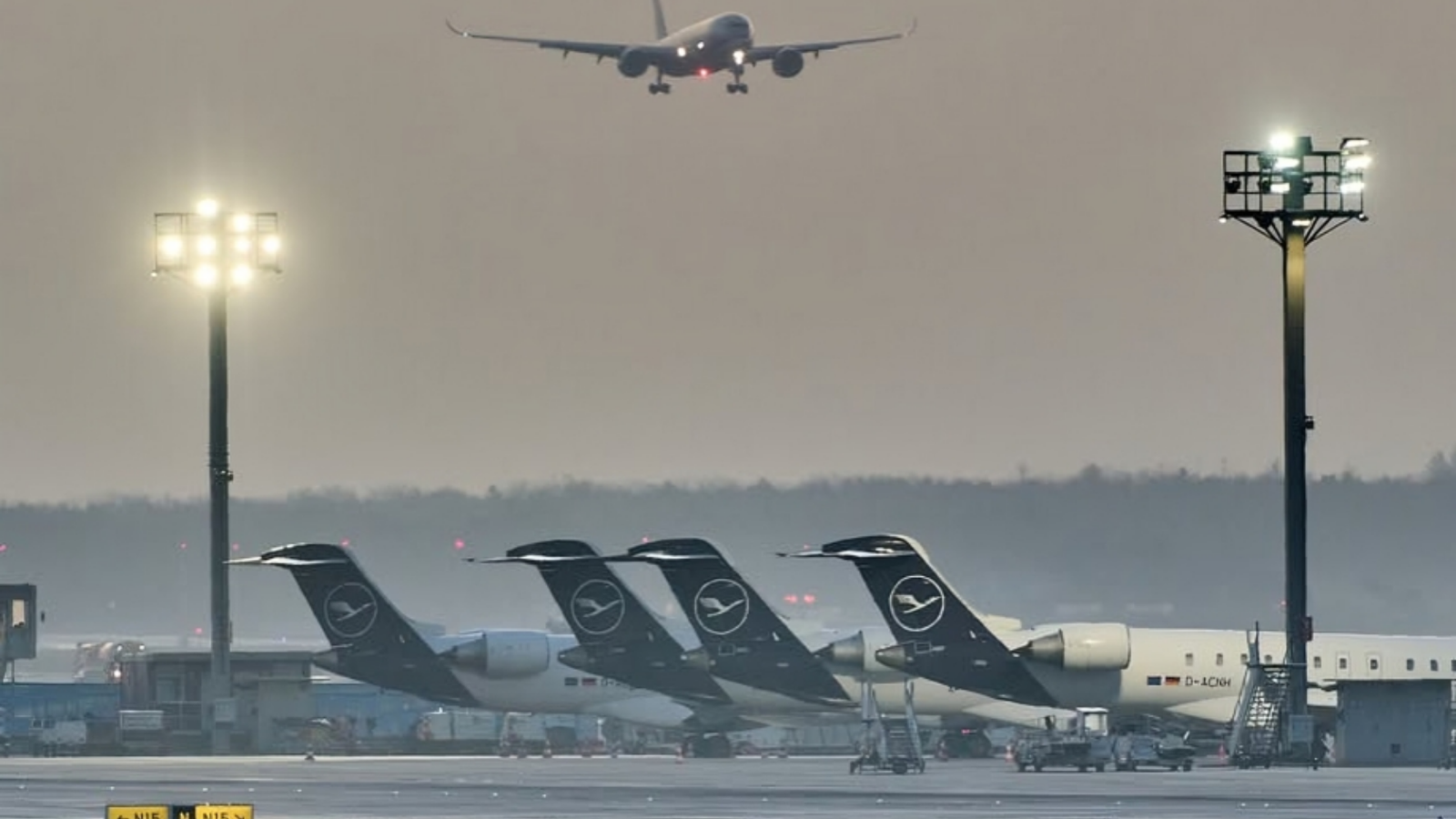
Passenger flights around the world could be grounded within the next two months as a deepening aviation‑fuel shortage driven by the war in the Middle East begins to bite, industry experts warned on Thursday. Analysts say Asia is likely to feel the impact first, followed by Europe, both of which rely heavily on oil and refined products from the Gulf.
Energy economist Claudio Galimberti said the crisis is accelerating rapidly and could become “systemic” within three to four weeks. He warned that Europe may face severe flight cuts as early as May and June, noting that some cancellations have already occurred due to fuel shortages.
The pressure is already reshaping the aviation sector. German carrier Lufthansa announced it will shut down its regional subsidiary, Lufthansa CityLine, citing soaring fuel prices and industrial action. All 27 of the airline’s regional aircraft will be permanently removed from its schedule.
Airports Council International Europe has alerted the European Commission that jet‑fuel shortages could begin at the start of May unless tankers resume sailing through the Strait of Hormuz, a key shipping route now disrupted by the conflict.
Fatih Birol, head of the International Energy Agency, issued one of the starkest warnings yet, saying Europe has “maybe six weeks or so of jet fuel left.” He described the unfolding situation as “the largest energy crisis we have ever faced,” cautioning that flight cancellations could begin “soon” if oil supplies remain blocked.
“No country is immune to this crisis,” Birol said. “Soon we will hear that flights from one city to another are being canceled because there simply isn’t enough jet fuel.”
Economist Rico Luman said the impact will vary across the aviation network. Smaller inland airports are expected to be hit hardest, while major hubs may be able to stretch supplies longer. “It won’t be a full halt,” he said, “but partial cancellations at some airlines and airports are likely.”
As the war continues to disrupt global energy flows, the aviation industry is bracing for a turbulent and uncertain northern summer.








+ There are no comments
Add yours