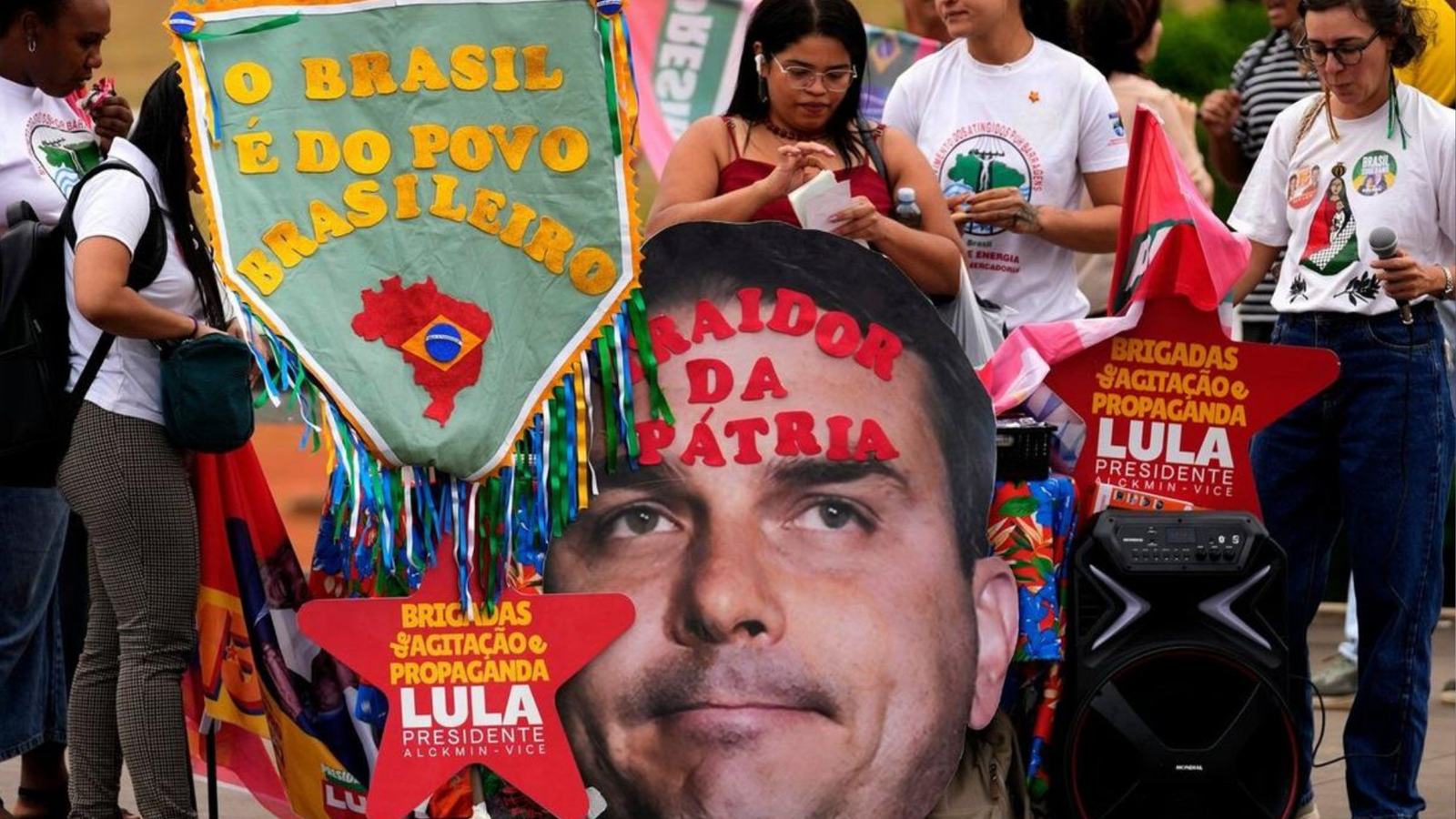
Brazilians have begun voting in a closely watched general election that once again pits two of the country’s most recognizable political families against each other, with incumbent President Luiz Inácio Lula da Silva seeking another term and challenged by Flávio Bolsonaro, son of former president Jair Bolsonaro.
Lula, the veteran left-wing leader, faces a field of 11 candidates, but political attention has largely focused on the contest between him and Flávio Bolsonaro, reflecting the continued influence of two rival political camps that have dominated Brazilian politics in recent years.
At the official launch of Flávio Bolsonaro’s presidential campaign, an AI-generated avatar of Jair Bolsonaro appeared to endorse his son’s candidacy, drawing widespread attention and controversy. While Jair Bolsonaro’s legal team reportedly denied that he had authorised the use of the digital likeness, the appearance reinforced perceptions that Flávio is carrying forward his father’s political movement.
Analysts say the election highlights the enduring influence of Brazil’s recent political history, with voters once again choosing between competing visions represented by the Lula and Bolsonaro camps.
For Lula, the campaign has focused on defending his government’s record and promoting continuity in economic and social policies. For Flávio Bolsonaro, the challenge has been to appeal to conservative voters while building support beyond his father’s traditional political base.
The outcome of the election is expected to have significant implications for Brazil’s economic direction, social policies, and international relationships, making it one of the most consequential votes in the country’s recent history.
As polling stations open across the nation, millions of Brazilians are casting ballots in an election that could determine whether the country continues under Lula’s leadership or turns toward a new generation of Bolsonaro family politics.







+ There are no comments
Add yours