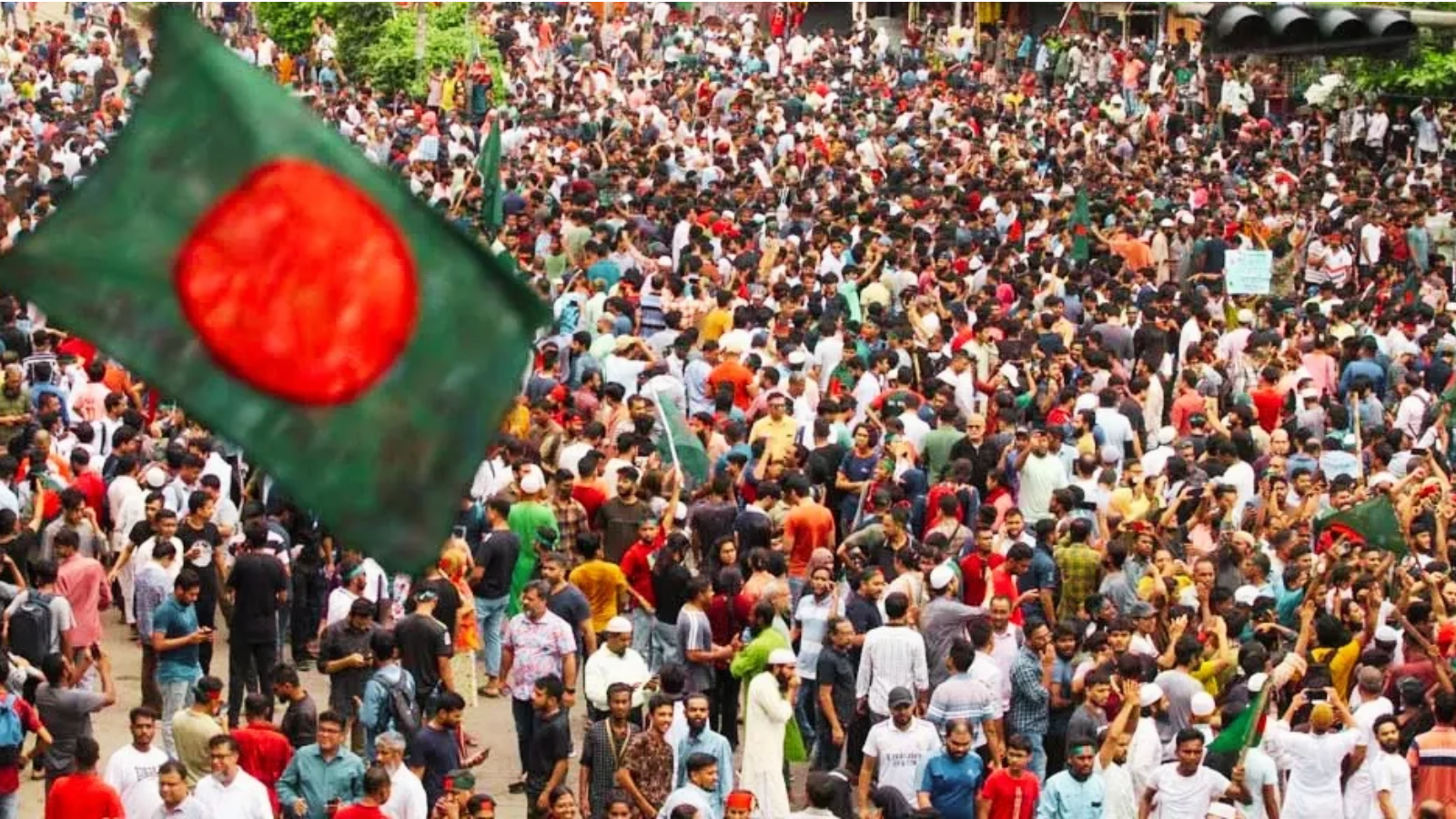
Political transitions often produce competing versions of history. When governments fall, alliances are reinterpreted, reputations are challenged and old political calculations are placed under a microscope. Bangladesh’s post-August 2024 landscape is no exception. The debate is no longer confined to the failures of the former ruling establishment; it has expanded to include the conduct of opposition parties, transitional authorities and the broader institutional framework that shaped the crisis.
One of the most important questions emerging from this period is whether participation within an increasingly centralized political system constitutes resistance from within or merely provides legitimacy to that system. This dilemma has haunted opposition parties in many countries, and Bangladesh offers a particularly striking example.
For years, opposition actors faced a difficult reality. Boycotting elections risked political irrelevance, while participating exposed them to accusations of enabling a flawed democratic process. Many political organizations attempted to navigate this contradiction, arguing that maintaining a presence in parliament and public institutions offered at least some space for dissent. Critics, however, contend that such participation helped sustain the appearance of pluralism while real political competition steadily eroded.
The events surrounding the July 2024 uprising brought these questions into sharp focus. As public frustration over governance, accountability and democratic representation spilled onto the streets, long-standing assumptions about institutional politics began to collapse. Protesters demanding change often viewed all established political actors with suspicion, regardless of their stated positions. In such a climate, distinctions between accommodation, compromise and collaboration became blurred.
Yet the crisis also revealed a deeper structural problem. Bangladesh’s political instability cannot be understood solely through the actions of individual leaders or parties. The concentration of executive power, weak parliamentary oversight and limited institutional checks have created conditions in which political systems become increasingly dependent on a small circle of decision-makers. When power is centralized to that extent, political resilience diminishes. Institutions that appear stable can quickly become vulnerable when public confidence begins to erode.
This raises a broader concern about democratic governance. The health of a democracy depends not only on elections but also on the credibility of institutions that operate between elections. Courts, legislatures, regulatory bodies, law enforcement agencies and electoral commissions must be perceived as independent and accountable. When citizens lose confidence in these institutions, political competition increasingly shifts from parliamentary debate to public confrontation.
The challenges did not end with the change of government. Transitional administrations often inherit enormous expectations while operating under considerable constraints. Their legitimacy depends on balancing reform with inclusion, accountability with stability and urgency with due process. If large sections of society feel excluded from decision-making or perceive that political power is merely shifting from one group to another, public trust can deteriorate rapidly.
Another unresolved issue concerns electoral integrity. Around the world, democratic legitimacy depends not only on the conduct of voting but also on public confidence in the results. Questions about voter participation, administrative neutrality and electoral transparency require careful examination through independent scrutiny, reliable data and institutional accountability. Elections must not only be fair but must also be seen to be fair.
The future of Bangladesh will likely depend on how these lessons are understood. Political parties must reflect on their own roles in sustaining or challenging unhealthy political dynamics. Governments, whether elected or transitional, must recognize that democratic legitimacy cannot be secured through authority alone. Civil society, media and academic institutions must continue to encourage evidence-based debate rather than partisan narratives.
Periods of political transformation are rarely defined by a single truth. They are shaped by competing perspectives, conflicting experiences and ongoing struggles over accountability and representation. Understanding them requires critical distance, institutional honesty and a willingness to examine uncomfortable questions.
Ultimately, the central challenge is not merely who governs Bangladesh, but how it is governed. The enduring test of any democratic system lies in its ability to ensure that political survival never becomes more important than public trust, and that the institutions designed to represent citizens remain stronger than the individuals who temporarily occupy them.






+ There are no comments
Add yours