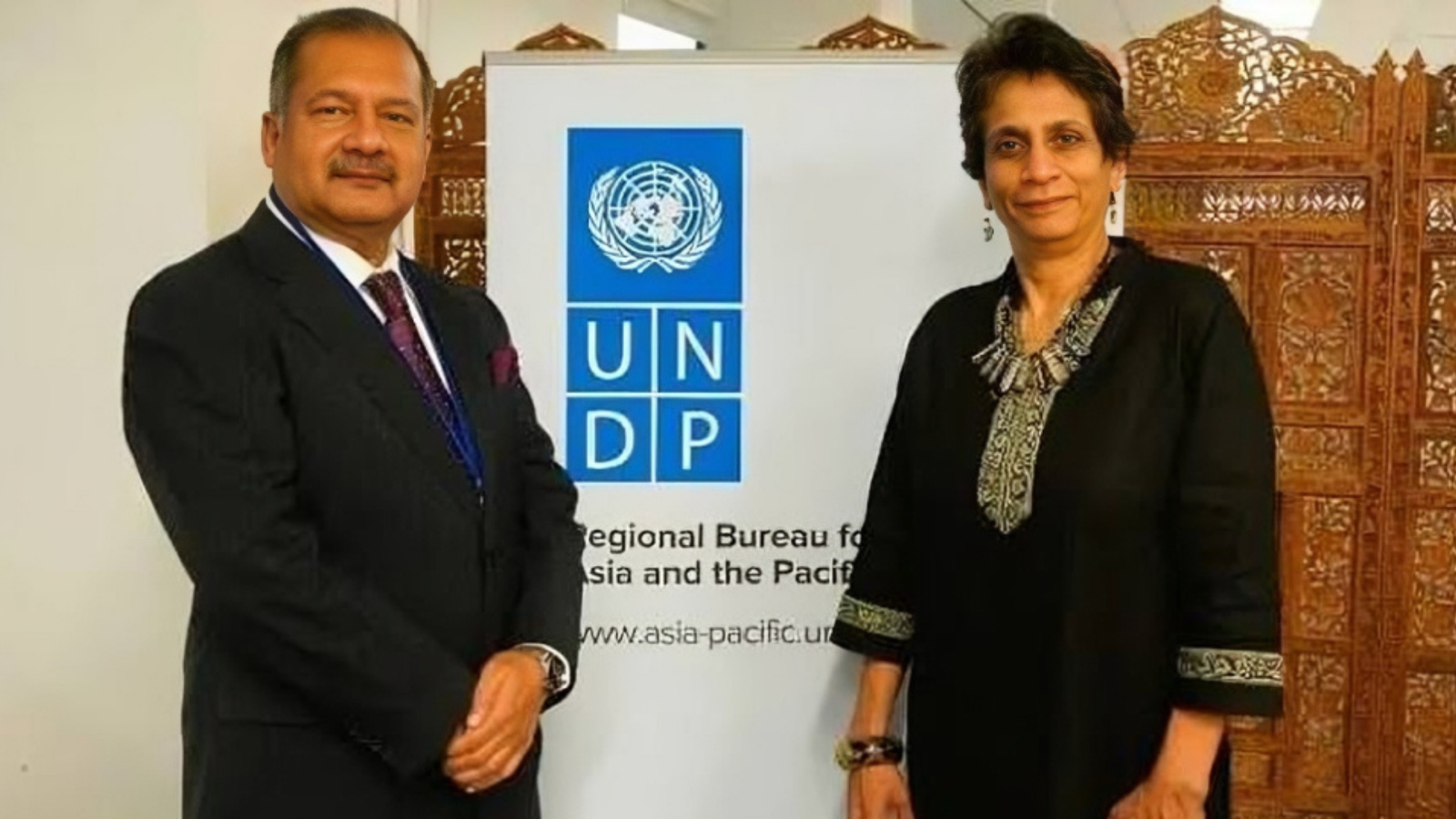
Bangladesh has called for enhanced cooperation from the United Nations Development Programme (UNDP) and the United Nations Population Fund (UNFPA) to strengthen institutional capacity, accelerate economic reforms, create a more investment-friendly environment, and address emerging demographic challenges.
The appeal was made by Zahir Uddin Swapan, Political Adviser to the Prime Minister, during separate meetings at the United Nations Headquarters with Kanni Wignaraja, UNDP Regional Director for Asia and the Pacific and Assistant Secretary-General, and Swolotua Bayaraa, Deputy Director of the Programme Division of UNFPA, representing Executive Director Diene Keita.
According to the Permanent Mission of Bangladesh to the United Nations, the meetings focused on deepening collaboration in areas critical to Bangladesh’s long-term development and economic transformation.
During discussions with Kanni Wignaraja, Swapan highlighted the challenges Bangladesh faces as it prepares for graduation from the category of Least Developed Countries (LDCs) and stressed the importance of technical and policy support in implementing a smooth transition strategy. He emphasized the need to strengthen public institutions, improve the business climate, attract greater foreign direct investment, and diversify export products to ensure sustainable economic growth.
Wignaraja reaffirmed UNDP’s commitment to working closely with Bangladesh and expressed interest in expanding support for institutional development, modernization of commercial laws, and the creation of a more competitive investment environment.
In a separate meeting with Swolotua Bayaraa, Swapan underscored the importance of reliable population data, demographic research, and evidence-based policymaking in addressing Bangladesh’s future development needs. He called for greater UNFPA assistance in strengthening population studies and data-driven planning.
Bayaraa highlighted UNFPA’s ongoing work in Bangladesh, including support for maternal and reproductive healthcare, expansion of midwifery services, prevention of violence against women, and programmes aimed at supporting vulnerable populations, including Rohingya women.
The UNFPA official also reaffirmed the organisation’s commitment to deepening cooperation with Bangladesh and expanding future partnerships in key social and demographic sectors.
The meetings were attended by Sanchita Haque, Chargé d’Affaires of Bangladesh to the United Nations, alongside senior officials from UNDP, UNFPA, and Bangladesh’s Permanent Mission.
The discussions reflect Bangladesh’s ongoing efforts to strengthen international partnerships as it seeks to sustain economic growth, attract investment, improve institutional capacity, and effectively respond to future demographic and development challenges.








+ There are no comments
Add yours