
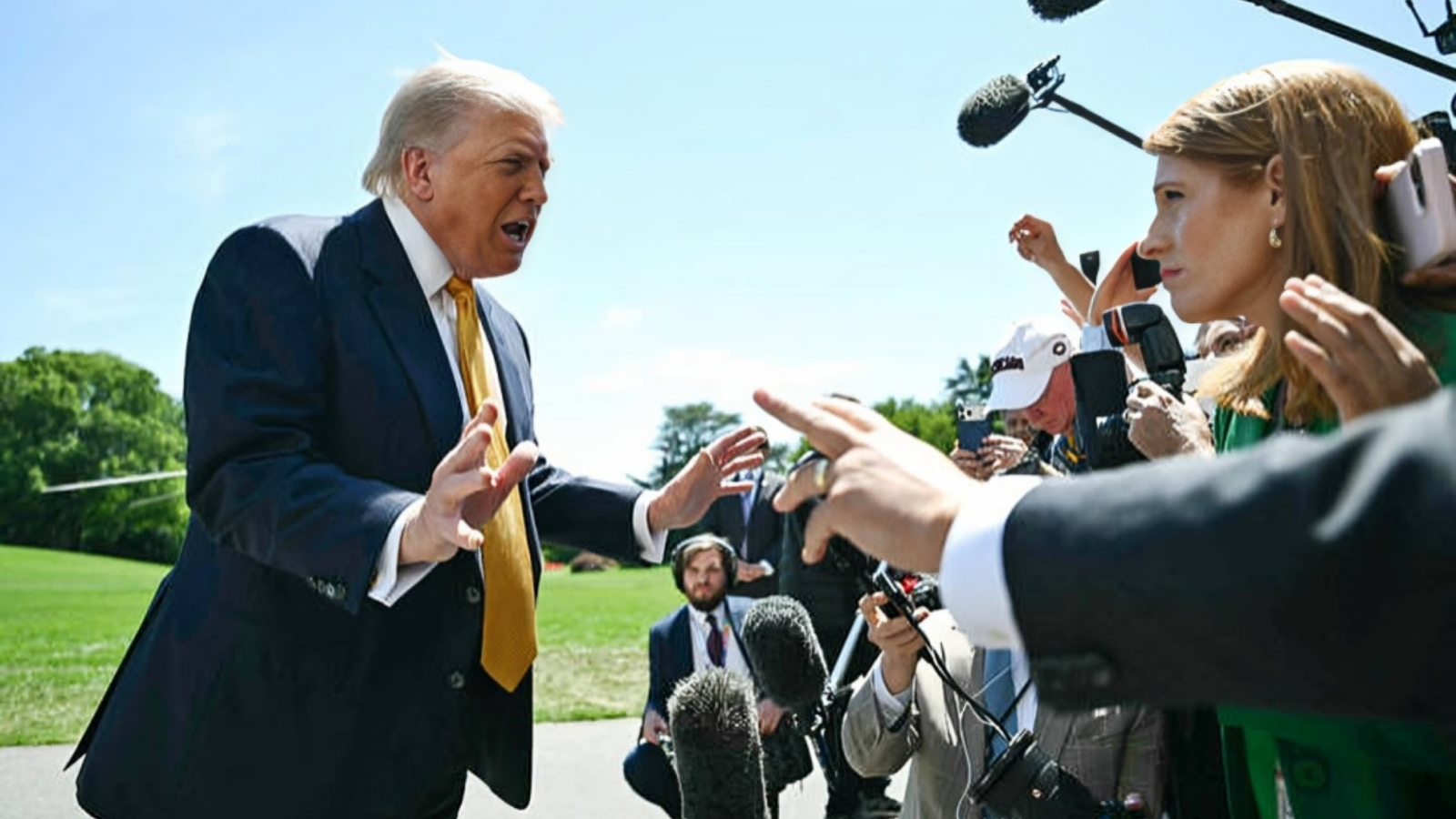
US President Donald Trump has made it clear that Americans’ financial struggles play no role in his decision‑making as he pushes to end the Iran war insisting that stopping Tehran from obtaining a nuclear weapon is the only factor that matters.
Asked whether economic pressure on US families was motivating him to pursue a deal, Trump replied, “Not even a little bit.” He added that his sole focus is preventing Iran from becoming a nuclear‑armed state, calling it the defining issue behind every decision he makes on the conflict.
Before departing the White House for a trip to China, Trump said, “They can’t have a nuclear weapon. I don’t think about Americans’ financial situation. I don’t think about anybody. I think about one thing: We cannot let Iran have a nuclear weapon.”
The comments are expected to intensify scrutiny from critics who argue the administration should weigh national‑security goals against the rising economic burden on Americans. With cost‑of‑living concerns dominating voter sentiment ahead of the November midterm elections, Trump’s remarks may deepen political tensions within his own party.
White House Communications Director Steven Cheung defended the president’s stance, saying Trump’s “ultimate responsibility is the safety and security of Americans,” and that failing to act would have allowed Iran to acquire a nuclear weapon — a threat he said would endanger the entire nation.
But pressure is mounting from Republicans worried that prolonged economic strain could trigger voter backlash and jeopardize the party’s control of Congress. Energy prices have surged amid the Iran conflict, pushing gasoline costs higher and fueling inflation. New data released Tuesday shows US consumer inflation in April rising at its fastest pace in three years.
Despite Trump’s framing of the issue as a global security imperative, US intelligence assessments suggest Iran’s nuclear timeline has not significantly changed since last summer. Analysts still estimate that Tehran would need nine months to a year to build a nuclear weapon — a window that remains largely unchanged even after two months of war, according to sources familiar with the intelligence.
Trump’s allies continue to argue that the threat of a nuclear‑armed Iran outweighs short‑term economic pain. Iran, meanwhile, denies seeking nuclear weapons and maintains that its program is intended for peaceful purposes, though Western governments remain skeptical.








+ There are no comments
Add yours