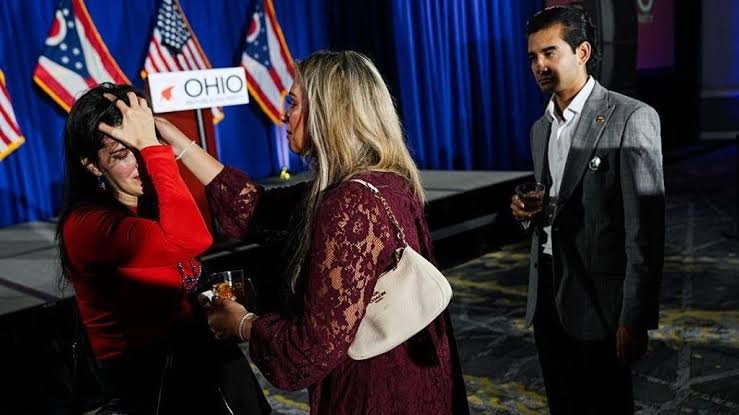
The Republican Party’s crushing defeat in the US midterm elections has been widely interpreted as a decisive rebuke of President Donald Trump’s administration, with soaring living costs and growing dissatisfaction over foreign policy emerging as key factors behind the Democrats’ sweeping victory.
By securing control of both the US Senate and the House of Representatives, Democrats achieved one of their strongest election performances in decades, dramatically reshaping the political landscape in Washington and limiting President Trump’s ability to advance his agenda during the remainder of his term.
Political analysts point to the rising cost of living as the single most important issue influencing voters. Across the United States, households have faced mounting pressure from increasing prices for fuel, groceries, healthcare, housing, and other essential goods and services.
Many voters expressed frustration that everyday expenses had risen sharply while wages struggled to keep pace. Polling conducted around the election showed that nearly 79 percent of voters said inflation had caused moderate or severe hardship for their families during the past year.
One voter in North Carolina summed up the widespread sentiment, saying that soaring prices for fuel and groceries had convinced her to switch her support from Republicans to Democrats.
Inflation rose by 3.7 percent in the year to September, driven largely by fuel and energy costs. Diesel prices also approached record levels, increasing transportation costs that ultimately flowed through to consumers across the country.
The conflict with Iran became another major political liability for the administration. Following military action launched by the United States and Israel earlier this year, tensions escalated across the region, affecting global energy markets and contributing to higher fuel prices.
The resulting economic impact was felt by motorists nationwide, with rising petrol costs becoming a constant reminder of broader economic challenges.
Beyond its economic effects, the conflict also proved politically divisive. Many voters viewed the military action as contradicting Trump’s long-standing “America First” promise to avoid new foreign wars. Surveys indicated that approximately 63 percent of voters believed the United States had made the wrong decision in taking military action against Iran.
The combination of economic frustration, war fatigue, and growing dissatisfaction with government policies appears to have driven a significant shift in voter sentiment, ultimately delivering Democrats a historic electoral breakthrough.
With Congress now under Democratic control, Washington is entering a new era of divided government, where debates over inflation, energy costs, foreign policy, and economic recovery are expected to dominate the political agenda in the years ahead.







+ There are no comments
Add yours