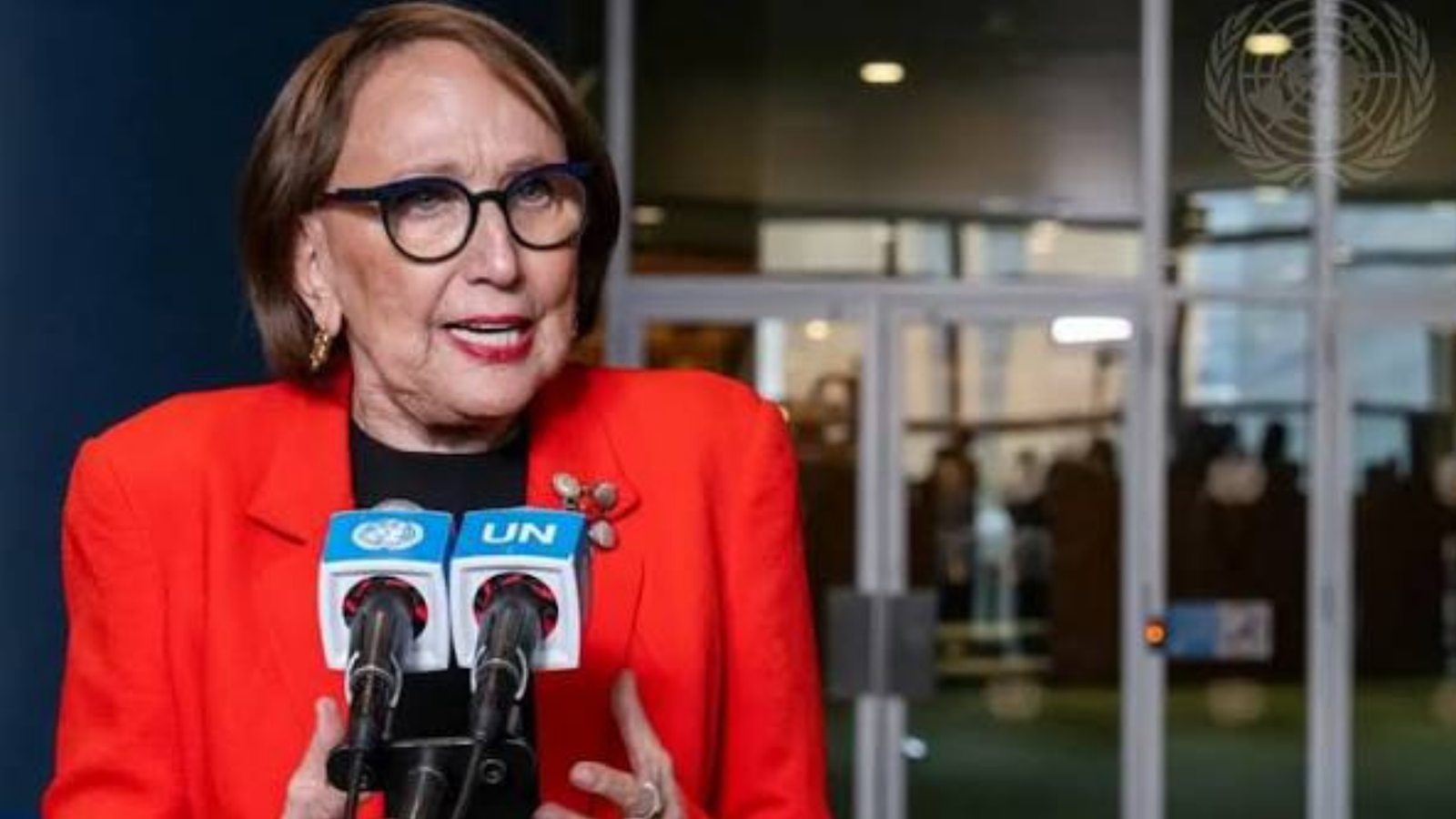
Rebeca Grynspan has emerged as the frontrunner in the latest informal vote to select the next United Nations Secretary-General, narrowly topping the third indicative poll conducted by the UN Security Council as the race to lead the global organization enters a crucial phase.
The former Costa Rican vice president, who is currently on leave from her position as head of the United Nations Conference on Trade and Development (UNCTAD), secured the highest level of support in Friday’s confidential straw poll among the Security Council’s 15 members.
Grynspan’s latest result follows her strong performance in the first round of voting and reinforces her position as one of the leading contenders to succeed Antonio Guterres, whose term as Secretary-General is due to conclude at the end of December.
According to diplomatic sources, Grynspan received nine “encourage” votes, alongside five “discourage” votes and one “no opinion” vote. While the result placed her ahead of the field, the level of opposition highlights the challenges that still remain in securing the broad support required to win the role.
Close behind was Carolyn Rodrigues-Birkett, Guyana’s former foreign minister, who received eight encouragement votes, six discouragement votes, and one no opinion vote. Rodrigues-Birkett had led the second indicative poll, underlining the highly competitive nature of the contest.
The selection process remains particularly significant because several Security Council members have publicly expressed support for appointing the first female Secretary-General in the United Nations’ history. The organization, founded in 1945, has never had a woman serve in its top leadership position.
Under UN procedures, informal straw polls are used to gauge support among Security Council members before formal recommendations are made to the General Assembly. However, a candidate’s prospects can be severely damaged if they receive opposition from any of the council’s five permanent members: China, France, Russia, the United Kingdom, or the United States.
A single discouraging vote from one of those veto-holding nations can effectively block a candidate’s path to the Secretary-Generalship, making support from the permanent members critical in the final stages of the process.
As the voting continues, attention will remain focused on whether Grynspan can maintain her momentum and build the consensus necessary to secure one of the most influential diplomatic positions in the world.
With the end of Guterres’s tenure approaching, the coming rounds of voting are expected to play a decisive role in determining who will lead the United Nations through a period marked by geopolitical tensions, climate challenges, humanitarian crises, and global economic uncertainty.










+ There are no comments
Add yours