
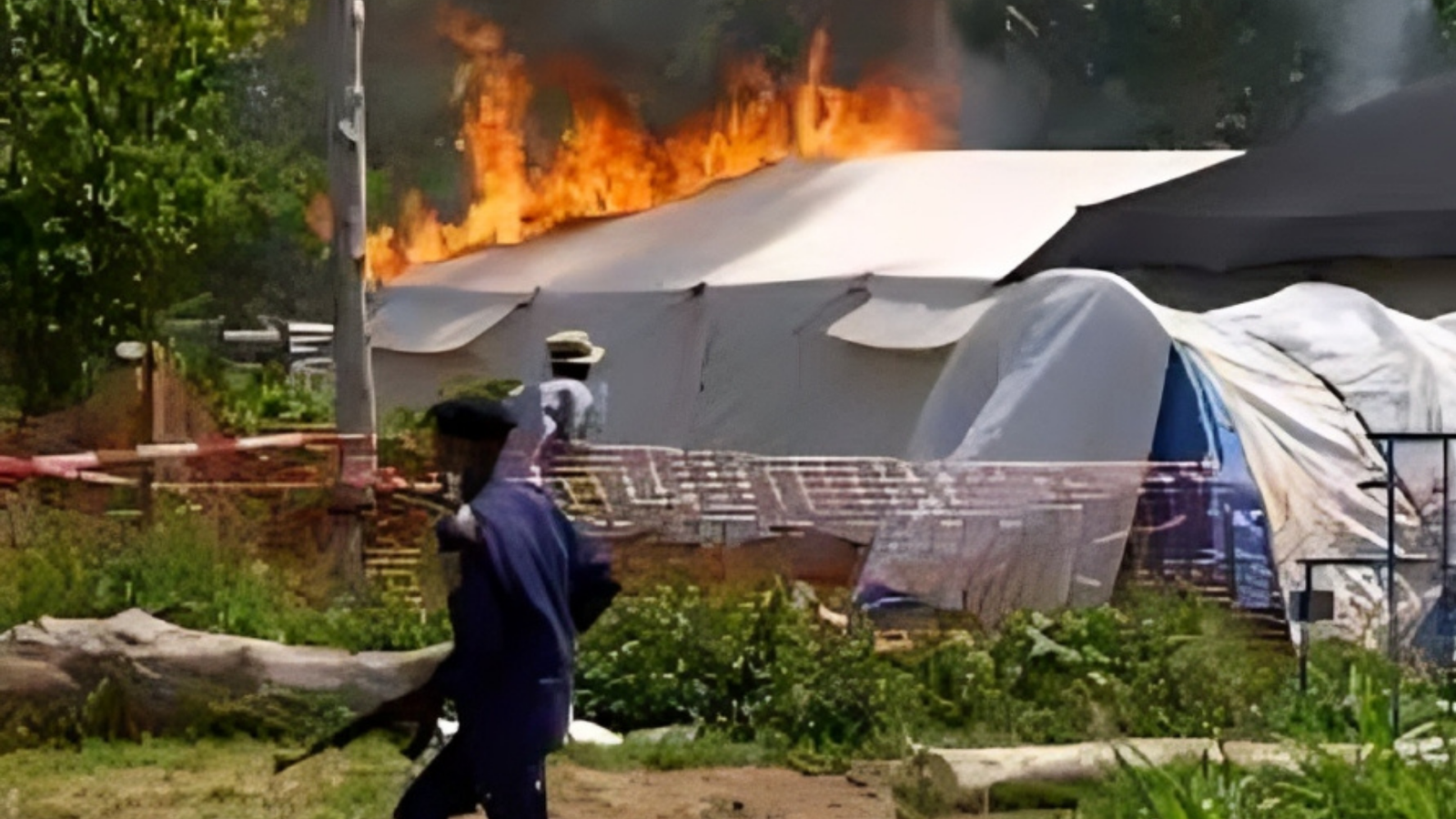
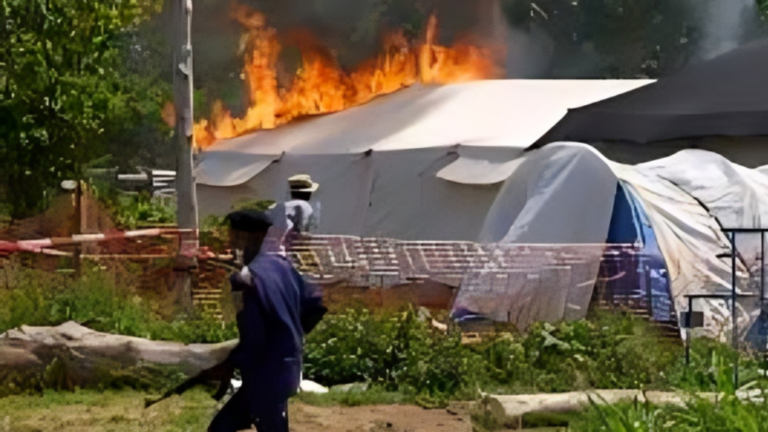
An Ebola treatment center in the eastern Congolese town of Rwampara was set ablaze on Thursday after a confrontation erupted between grieving locals and authorities enforcing strict burial protocols. The attack underscored the volatile mix of fear, anger and misinformation that continues to hamper efforts to contain the fast‑spreading outbreak.
Witnesses said a group of young men stormed the facility after being prevented from retrieving the body of a friend believed to have died from Ebola. When police failed to calm the crowd, the youths broke into the center, torched equipment and even set fire to what appeared to be the body of a suspected victim stored inside. Aid workers fled the scene in vehicles as flames engulfed parts of the building.
Local student Alexis Burata, who witnessed the chaos, said the confrontation escalated quickly. He described a community desperate to honour traditional burial rites but unaware of the extreme contagion risk posed by Ebola victims’ bodies. Authorities insist that all burials must follow strict safety regulations to prevent further spread.
Jean Claude Mukendi, a senior police official in Ituri Province, said the youths “did not understand the protocols” and were determined to take the body home for a funeral despite clear public‑health directives. Calm was later restored, and humanitarian teams have since resumed operations at the site.
The attack comes as the outbreak continues to worsen. Congolese officials have reported 671 suspected cases and 160 suspected deaths, though the World Health Organization warns the true numbers are likely higher. Surveillance remains weak in a region battered by conflict, displacement and chronic shortages of medical resources.
Health experts say the Bundibugyo strain driving the outbreak has no available vaccine or treatment, and it may take six to nine months before one becomes accessible. Meanwhile, more than 920,000 people are displaced in Ituri Province, complicating contact tracing and early detection both crucial to saving lives.
Adding to the instability, militants linked to the Daesh group killed at least 17 people in a nearby village earlier this week, further stretching already fragile emergency services.
Despite the challenges, health workers continue to push forward, urging communities to cooperate with safety protocols and trust the medical teams working to contain the virus. But Thursday’s attack shows just how fragile that trust remains.








+ There are no comments
Add yours