
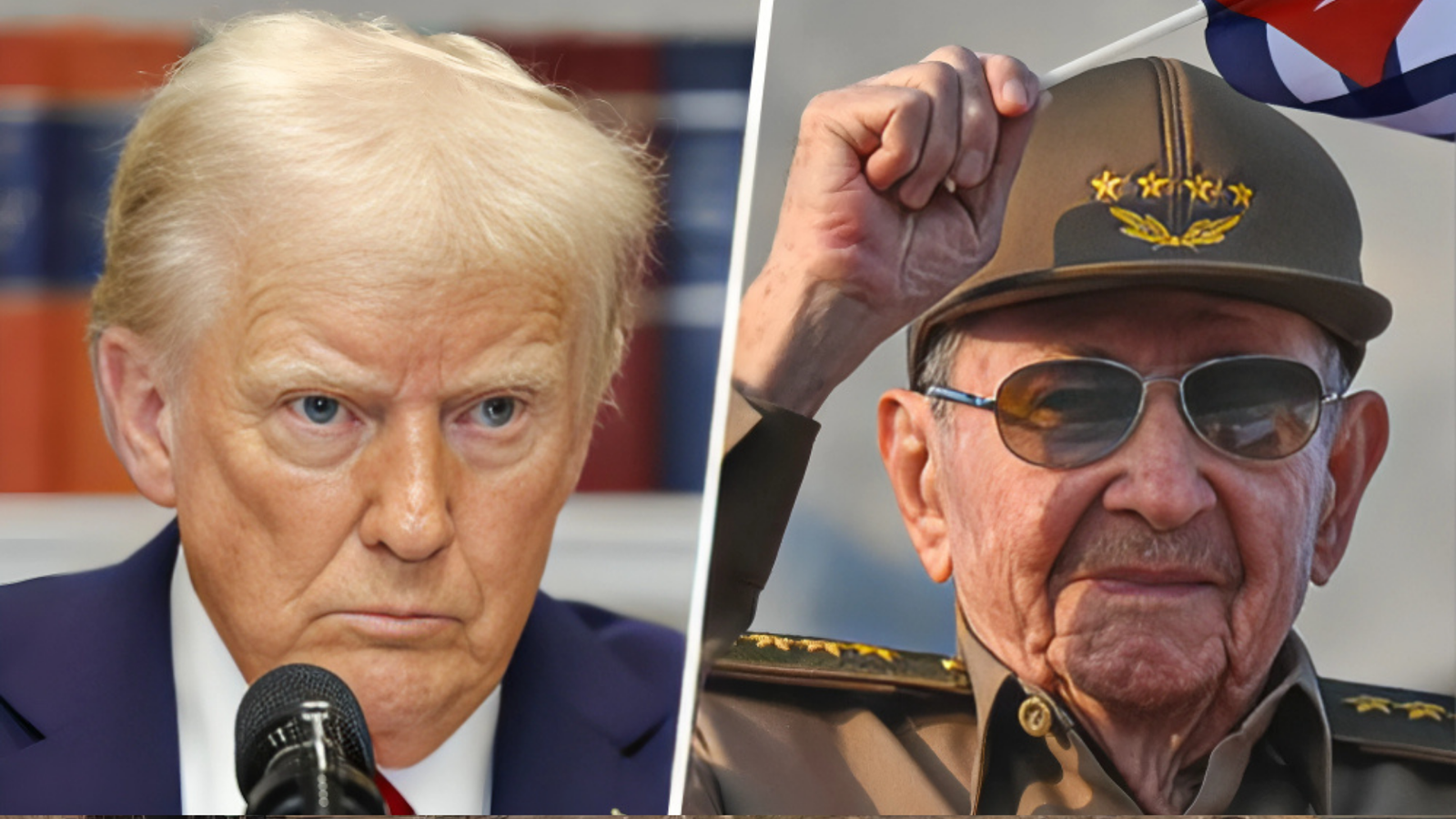
President Donald Trump has once again raised the possibility of US military intervention in Cuba, a warning that carries new weight after federal prosecutors unveiled criminal charges against former Cuban leader Raúl Castro.
Speaking at an Oval Office event, Trump said previous presidents had considered intervening in Cuba for decades, adding, “It looks like I’ll be the one that does it.” His remarks were echoed by Secretary of State Marco Rubio, who said Cuba has long posed a national security threat because of its ties to US adversaries.
Rubio, a longtime critic of Cuba’s socialist government, said the administration still prefers a negotiated, peaceful agreement, but admitted the chances of diplomacy succeeding with the current Cuban leadership are “not high.” He noted that senior Trump officials including CIA Director John Ratcliffe have held talks with Cuban representatives in recent months, but left unimpressed, prompting a new wave of sanctions.
The renewed threats come a day after US prosecutors charged Raúl Castro with ordering the 1996 shootdown of civilian aircraft flown by Miami‑based exiles. Cuban President Miguel Díaz‑Canel condemned the indictment as a political maneuver aimed at justifying aggression.
The situation has drawn comparisons to the US operation earlier this year that resulted in the capture of Venezuelan President Nicolás Maduro, who now faces federal drug‑trafficking charges in the United States.
Adding to tensions, the US Navy announced the arrival of the USS Nimitz carrier group in the Caribbean for maritime exercises the same day the Castro charges were revealed.
Trump has intensified pressure on Cuba in recent months, imposing an energy blockade that has contributed to severe blackouts, food shortages and economic collapse across the island.
The administration also issued new sanctions targeting GAESA, the powerful military‑run conglomerate that dominates Cuba’s economy. Rubio revealed that the sister of GAESA’s executive president, who had been living in the US, has had her green card revoked and is now in ICE custody.
Rubio insisted the administration’s actions are not “nation‑building,” but a response to what he described as a serious national security threat, citing Cuba’s intelligence ties with China and Russia and its alliances with US adversaries in Latin America.
China, meanwhile, condemned US pressure on Cuba. Foreign Ministry spokesperson Guo Jiakun said Beijing “firmly supports Cuba in safeguarding its national sovereignty and national dignity.”

+ There are no comments
Add yours