
Bangladesh’s proposed third offshore LNG terminal has become a flashpoint of controversy. Evidence suggests inflated costs, duplicate project documents, undisclosed political family involvement, and approval of companies with no proven experience. Together, these raise serious concerns about governance, national security, and the integrity of public spending.
Unusual Cost Escalation: Why 37% Higher Than Existing Terminals?
Bangladesh currently pays:
- $254,000 -day to Accelerate Energy
- $249,115 -day to Summit LNG
But the Chinese firm CNEE has demanded $342,000-day 35-37% higher than both existing terminals.
State-owned RPCL’s 2025 feasibility study recommended $239,653-day, meaning CNEE’s figure is 43% higher than the government’s own estimate.
No government committee has provided a clear, technical justification for this inflated cost.
This discrepancy raises questions about procurement integrity and whether the pricing was engineered to benefit specific actors.
Identical Documents: NS Energy and CNEE Two Companies, One Proposal
One of the most alarming findings is the near-identical project documents submitted by two different companies:
- 12 May: NS Energy submits a proposal
- 19 June: CNEE submits a proposal for the same project
A side-by-side comparison shows:
- Six pages of text are identical, except for the company name
- Maps submitted by CNEE still carried the label “NS Energy”
- The proposed FSRU was named “NS Energy FSRU”
This strongly suggests that CNEE’s proposal originated from NS Energy, raising questions about document sharing, unauthorized access, and possible collusion.
NS Energy’s Political Connection A Family-Owned Company at the Heart of the Controversy
NS Energy’s leadership links directly to a powerful political family:
- CEO Tarif Rahman, grandson of MP Mushfiqur Rahman
- Tarif’s mother Mehvin Rahman Munia, daughter of the MP
- Tarif’s father Ashfaq Jamil Rahman , widely believed to be the real owner
This means documents belonging to a company tied to the chairman of the Parliamentary Standing Committee on Finance ended up with a foreign firm.
This raises serious concerns about:
- National security
- Confidentiality breaches
- Conflict of interest
- Potential misuse of parliamentary influence
No Experience: Yet Approved for a Critical National Project
CNEE claimed involvement in Summit Terminal-2. But Summit LNG’s Managing Director publicly stated:
“We have no contract with CNEE.”
This confirms:
- CNEE has no prior experience in FSRU or offshore LNG infrastructure
- NS Energy also has no record of large-scale energy projects
Energy expert Mohammad Tamim questioned the logic:
“If the earlier terminals were cheaper, why approve a new one at a higher cost? There is no justification.”
The approval of inexperienced companies for a high-risk national energy project raises concerns about competence and safety.
Parliamentary Accountability: A System Under Question
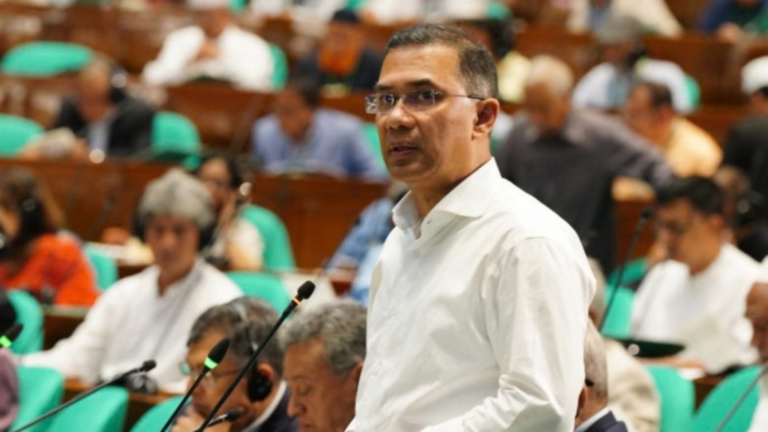
MP Mushfiqur Rahman chairs the Parliamentary Standing Committee on Finance. The Finance Minister reports to this committee. The same minister chairs the Cabinet Committee on Economic Affairs, which approved CNEE’s proposal.
This creates a closed loop of influence.
Key questions emerge:
- If the chairman’s grandson’s company benefits from the project, where is the accountability?
- Is this a clear conflict of interest?
- How did confidential parliamentary documents reach a foreign company?
These issues strike at the heart of parliamentary integrity.
Hasnat Abdullah’s Assessment: “No Experience, No Capacity”
Former energy official Hasnat Abdullah stated:
- NS Energy has no experience in major projects
- CNEE has no experience in FSRU construction
- Assigning such a project to inexperienced firms is dangerous for national energy security
- The project appears designed to benefit a political family
His remarks reinforce concerns about competence, safety, and political favoritism.
Online Investigation: No Track Record, No Financial Capacity
Further digital investigation reveals:
- NS Energy is a small-scale company
- No record of LNG or offshore projects on its website
- No publicly available financial capacity statements
- CNEE’s website also shows no FSRU experience
- Identical documents suggest the project was tailored for NS Energy, then routed through CNEE
- The project was approved using G2G (Government-to-Government) channels, bypassing open tendering
- This contradicts international procurement standards
These findings point to systemic weaknesses in due diligence and oversight.
Public Money, Private Gain, A Dangerous Precedent
Bangladesh’s energy sector is funded by taxpayers. It cannot become a vehicle for private enrichment.
This project shows:
- Lack of transparency
- Conflict of interest
- False claims of experience
- Document duplication
- Inflated costs
- Absence of accountability
Together, these form the anatomy of a major governance failure.
Time for Transparency and Competence
Bangladesh cannot afford another energy-sector scandal. The country needs transparent procurement, experienced contractors, strict oversight, protection of public funds, clear separation between political power and business interests. The third LNG terminal project must be re-evaluated immediately, and an independent investigation should determine how confidential documents were shared, why costs were inflated, and who stands to benefit.









+ There are no comments
Add yours