
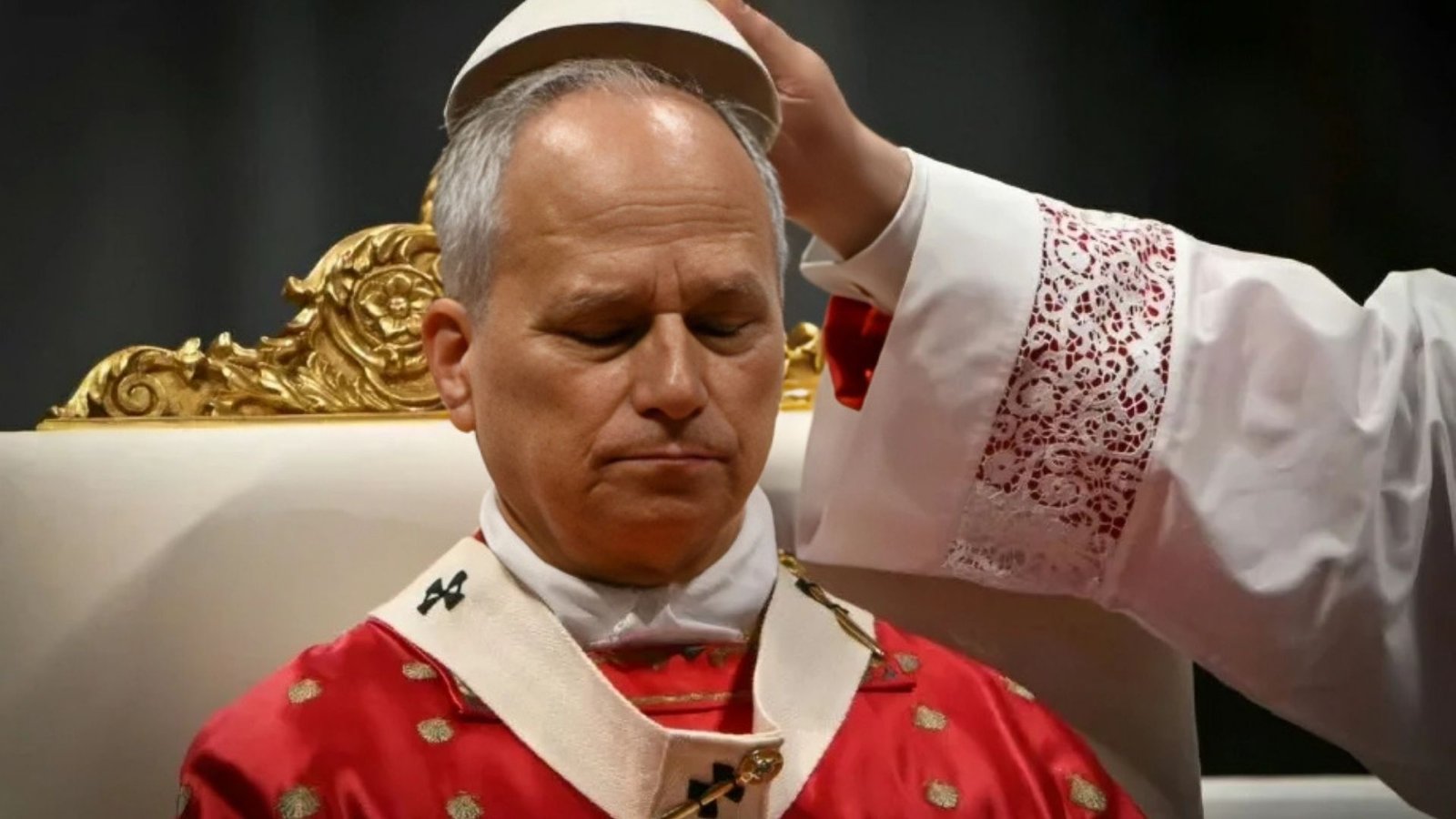
Pope Leo XIV is set to release his groundbreaking encyclical on artificial intelligence, Magnifica Humanitas, marking one of the most significant interventions by the Catholic Church in modern technological ethics.
The US‑born pontiff will personally attend the presentation at the Vatican a first in Church history underscoring the urgency he places on the rapidly evolving AI landscape.
The encyclical arrives at a moment when AI is reshaping global power, economics and daily life. Joining the Pope at the launch will be leading experts, including a co‑founder of Anthropic, the American AI company currently locked in a legal battle with the US military over its refusal to allow its Claude model to be used for lethal autonomous weapons or mass surveillance.
Pope Leo has repeatedly condemned the militarisation of AI, warning that delegating life‑and‑death decisions to machines is a “destructive spiral” humanity must avoid.
Since his election a year ago, Leo XIV has been one of the world’s most vocal critics of unregulated AI expansion. He has cautioned against the “gradual replacement of reality by its simulation” and criticised the environmental damage caused by the global race for rare earth minerals essential to modern electronics.
His new encyclical builds on years of Vatican study and is expected to shape global debate much like Pope Francis’s influential climate text Laudato Si.
The UN estimates AI could reach a value of $4.8 trillion by 2033, with profits concentrated among a small number of powerful actors. UN Secretary‑General António Guterres has warned that the world is running out of time to shape AI “for peace, for justice, for humanity.” Pope Leo’s encyclical echoes that urgency, calling for societies to rethink education, digital literacy and the ways algorithms shape human perception.
Experts say Magnifica Humanitas draws parallels with the Industrial Revolution, when the Church first articulated its social doctrine. Today, the Pope argues, the challenge is not only to train people to use new tools but to ensure those tools do not erode human dignity, truth or social cohesion.
He has warned that AI is increasingly used to fuel polarization, fear and violence, and has criticised the lack of transparency behind the algorithms powering modern chatbots.
Signed on May 15 the anniversary of Pope Leo XIII’s landmark 1891 encyclical the new document positions the Church at the centre of a global conversation about how humanity should navigate the AI era. Vatican officials describe it as a call for responsibility, restraint and wisdom at a time when technology is advancing faster than society’s ability to regulate it.











+ There are no comments
Add yours