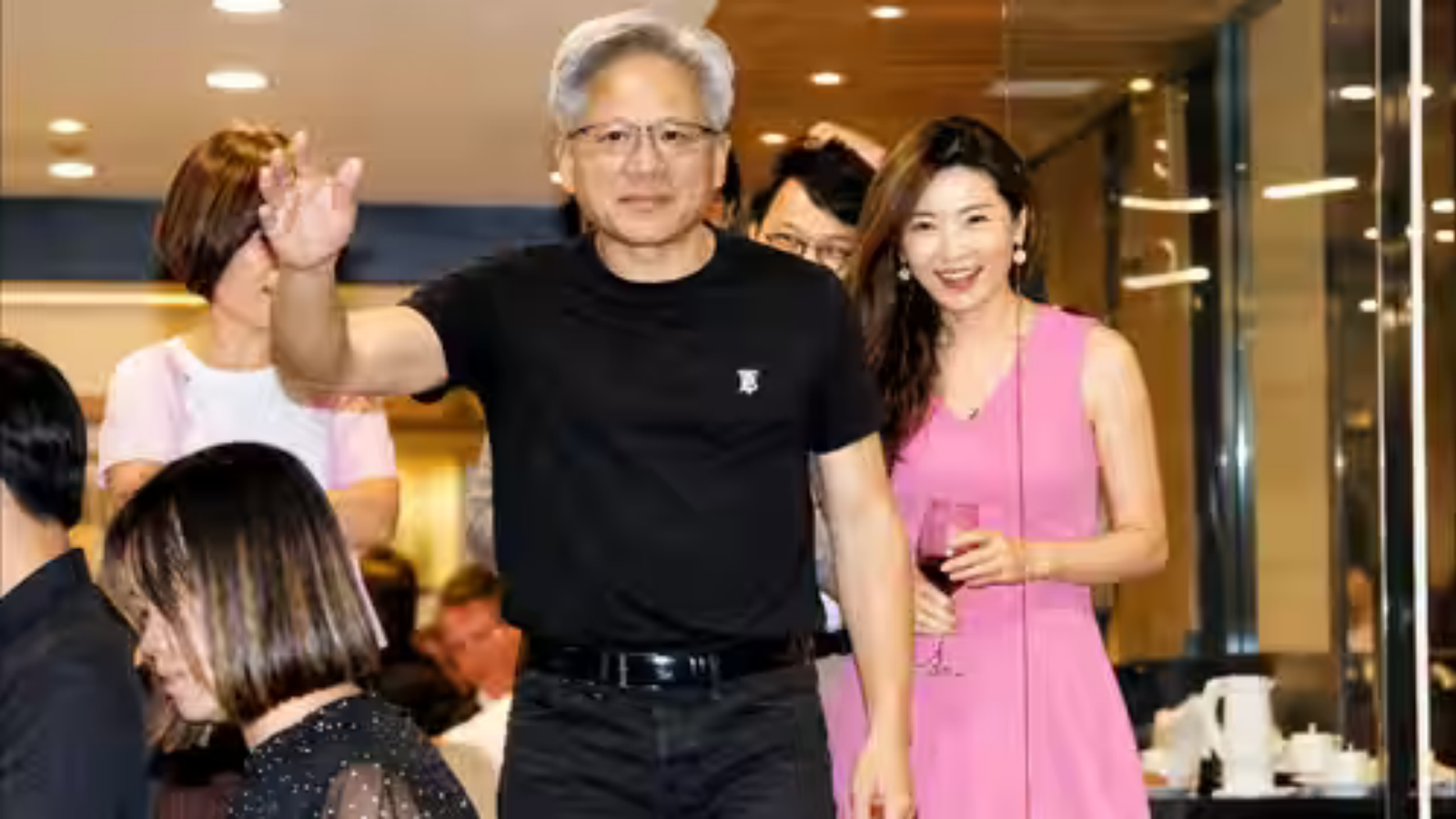
The global technology industry has been shaken by reports that Jensen Huang, the high-profile chief executive of Nvidia, is facing internal scrutiny over allegations concerning a personal relationship with a business executive reportedly linked to an investigation involving China and advanced technology exports.
The controversy centres on allegations involving Alice Huang, a former executive of Singapore-based data centre company Megaspeed. Reports claim that questions have been raised about the nature of her relationship with Huang and whether it intersects with broader concerns surrounding technology transfers and geopolitical competition between the United States and China.
The issue extends far beyond personal matters due to Nvidia’s strategic importance in the global artificial intelligence industry. Nvidia produces some of the world’s most advanced AI chips, which are critical for data centres, machine learning systems, and next-generation computing infrastructure.
Its high-performance processors have become a focal point in the technology rivalry between Washington and Beijing. Advanced Nvidia chips can cost tens of thousands of dollars per unit, with large AI data centres often deploying hundreds of them.
In recent years, the US government imposed export restrictions on several of Nvidia’s most advanced products to prevent China from gaining access to technologies considered strategically important for military and artificial intelligence development.
Reports have highlighted questions surrounding alleged exports of Nvidia technology to China and whether companies operating in third countries may have been involved in supplying restricted equipment. Megaspeed has denied any wrongdoing and has rejected suggestions that its operations were used to circumvent trade restrictions.
For his part, Huang has consistently argued for a more open approach to technology trade between the world’s two largest economies. He has previously maintained that technological cooperation and commercial engagement can benefit both countries.
“President Trump wants America to win and President Xi wants China to win, and it’s possible for both of them to do so,” Huang said during a previous interview.
However, many policymakers and security analysts view advanced semiconductor technology as a key battleground in the global competition for technological leadership.
The controversy comes as tensions remain high between the United States and China over artificial intelligence, semiconductor manufacturing, technology exports, and national security.
Neither Nvidia nor relevant authorities have publicly announced any findings regarding the allegations, and no formal conclusions have been reached.









+ There are no comments
Add yours