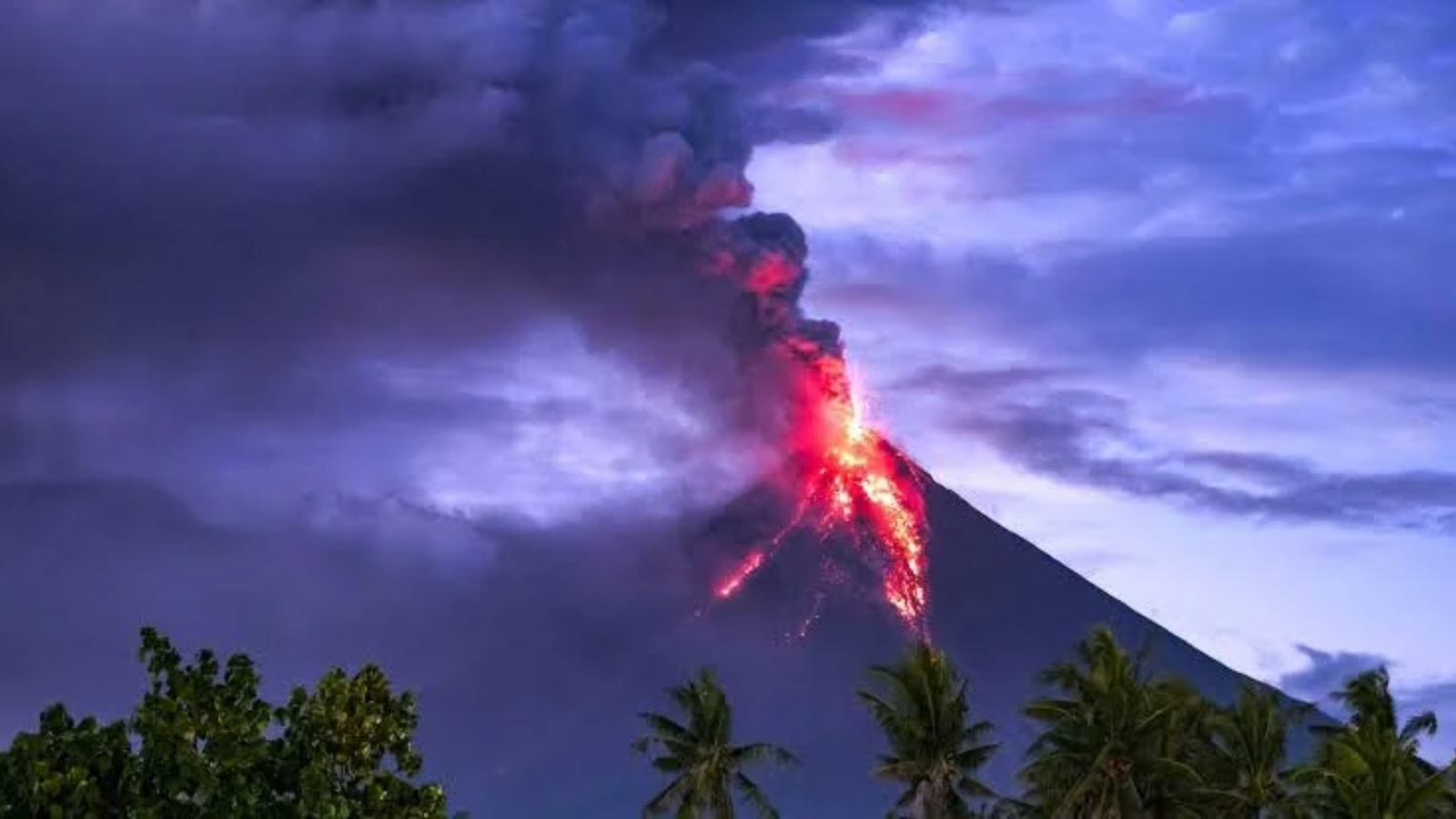
One of the Philippines’ most active volcanoes, Mount Mayon, erupted on Friday, sending a massive column of ash thousands of metres into the sky and prompting authorities to raise the alert level and order precautionary evacuations.
According to the Philippine Institute of Volcanology and Seismology (PHIVOLCS), the volcano produced a “moderately explosive eruption” that lasted nearly six minutes, generating a dark ash plume that reached approximately 3,000 metres (9,800 feet) above the crater.
Officials reported no immediate casualties or significant damage in surrounding communities, but authorities raised the volcano’s alert level from 2 to 3 on a five-level warning scale.
Evacuation Zone Expanded
PHIVOLCS urged residents and local officials to evacuate areas within a six-kilometre radius of the volcano’s crater due to increased volcanic hazards.
The agency warned that Mayon has entered a new phase of magmatic activity, increasing the likelihood of:
- Lava flows
- Rockfalls
- Volcanic ash emissions
- Pyroclastic density currents (PDCs)
- Toxic gas releases
“Mayon is in a new phase of magmatic eruption, with increased chances of lava flows and hazardous PDCs affecting the upper to middle slopes of the volcano in the immediate days to weeks,” the institute said.
The ash cloud gradually drifted southwest toward nearby populated areas, raising concerns about air quality and potential disruptions to daily activities.
Aviation Warning Issued
Authorities also advised pilots and airlines to avoid flying near the volcano due to the risk posed by ash clouds, which can damage aircraft engines and reduce visibility.
One of the Philippines’ Most Active Volcanoes
Standing approximately 2,462 metres (8,000 feet) high and famous for its near-perfect cone shape, Mount Mayon is located about 330 kilometres southeast of Manila in the province of Albay.
The volcano is among the most active in the Philippines and has experienced numerous eruptions throughout its history.
In June 2023, more than 12,000 residents living on Mayon’s lower slopes were evacuated after increased volcanic activity led to ash emissions and dangerous gas releases.
Part of the Pacific Ring of Fire
The Philippines is highly vulnerable to earthquakes and volcanic eruptions because it sits along the Pacific Ring of Fire, a region where several tectonic plates meet and interact.
The country has experienced some of the world’s most significant volcanic events, including the devastating 1991 eruption of Mount Pinatubo, which killed more than 800 people and produced an ash cloud that spread thousands of kilometres across the region.
Authorities continue to closely monitor Mayon’s activity and have urged residents to follow official warnings as volcanic conditions remain unstable.











+ There are no comments
Add yours