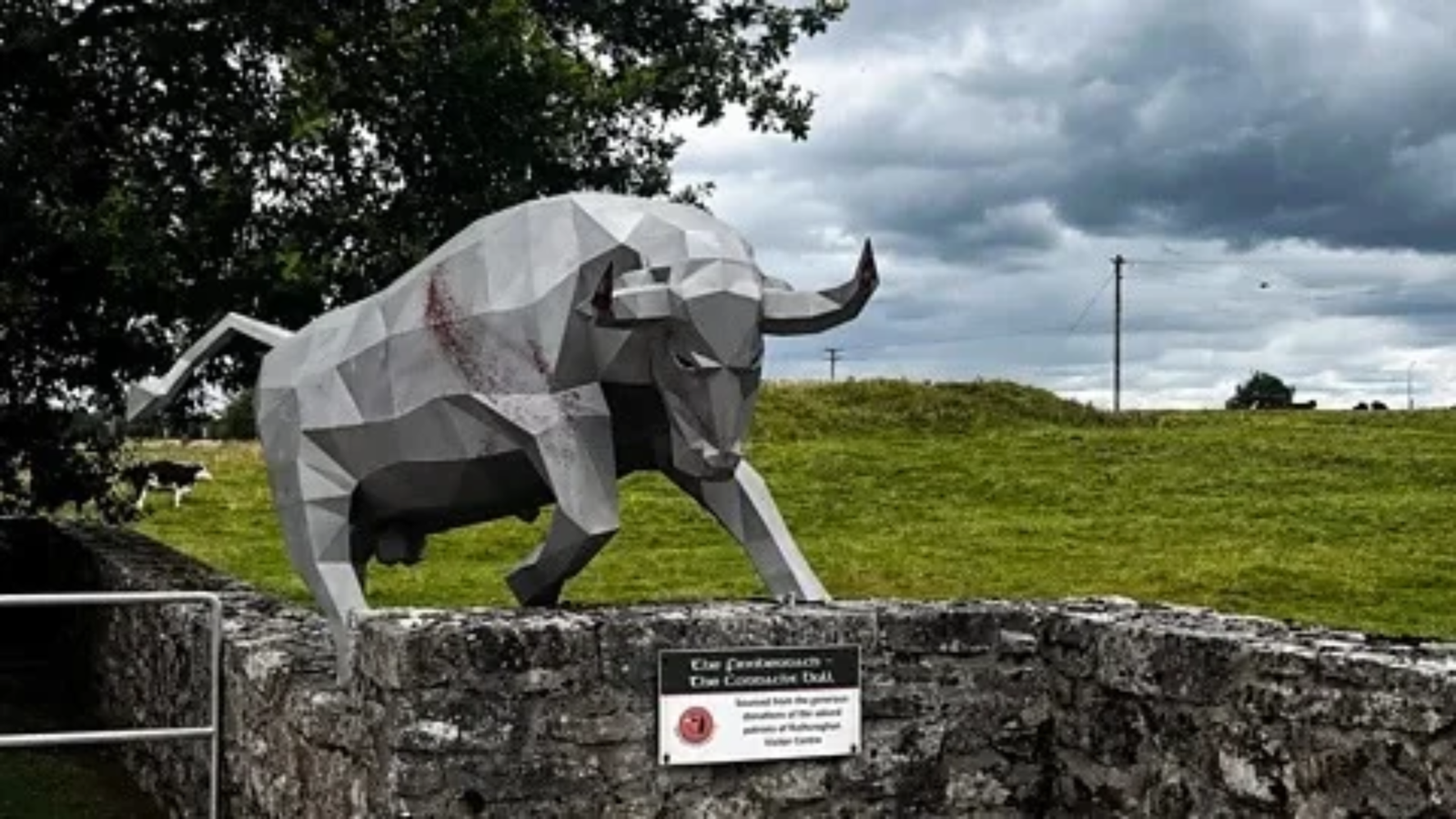
A newly opened walking trail is giving visitors rare access to Rathcroghan, one of Europe’s oldest and largest unexcavated royal sites, located in **County Roscommon, Ireland.
Often overlooked amid Ireland’s more famous historical landmarks, Rathcroghan is regarded as the ancient capital of the province of Connacht and is home to hundreds of archaeological features spread across a 6.5-square-kilometre landscape.
From the summit of Rathcroghan Mound, visitors can look across rolling fields, stone walls, and farmland that at first glance appear ordinary. Hidden within the landscape, however, are dozens of ancient earthworks, burial mounds, ringforts, sacred wells, and Ogham stones carved with some of Ireland’s earliest written script.
Archaeologists have identified 266 archaeological monuments and relics across the site, making it one of the country’s most significant historical and cultural landscapes.
One of Rathcroghan’s most intriguing attractions is a mysterious underground passage known locally as Ireland’s “Gate to Hell.” According to Celtic mythology, the cave is believed to be a portal to the Otherworld and is closely linked to the ancient festival of Samhain, the pagan celebration widely regarded as the origin of modern Halloween.
Historians and archaeologists say many traditions associated with Halloween can trace their roots back to ceremonies believed to have taken place at Rathcroghan thousands of years ago.
John Waddell, Emeritus Professor of Archaeology at the University of Galway, described the site as uniquely significant in Irish mythology and history.
“It’s a fascinating place. Not many sites can claim an entrance to the Otherworld,” he said.
The new walking path aims to make the historic landscape more accessible to travellers while helping preserve one of Ireland’s most important archaeological treasures. Tourism officials hope the trail will attract visitors interested in ancient history, mythology, archaeology, and Celtic culture.
With its blend of historical importance, folklore, and mystery, Rathcroghan continues to captivate researchers and tourists alike, offering a glimpse into a world that helped shape Ireland’s cultural identity and inspired traditions still celebrated around the globe today.





+ There are no comments
Add yours