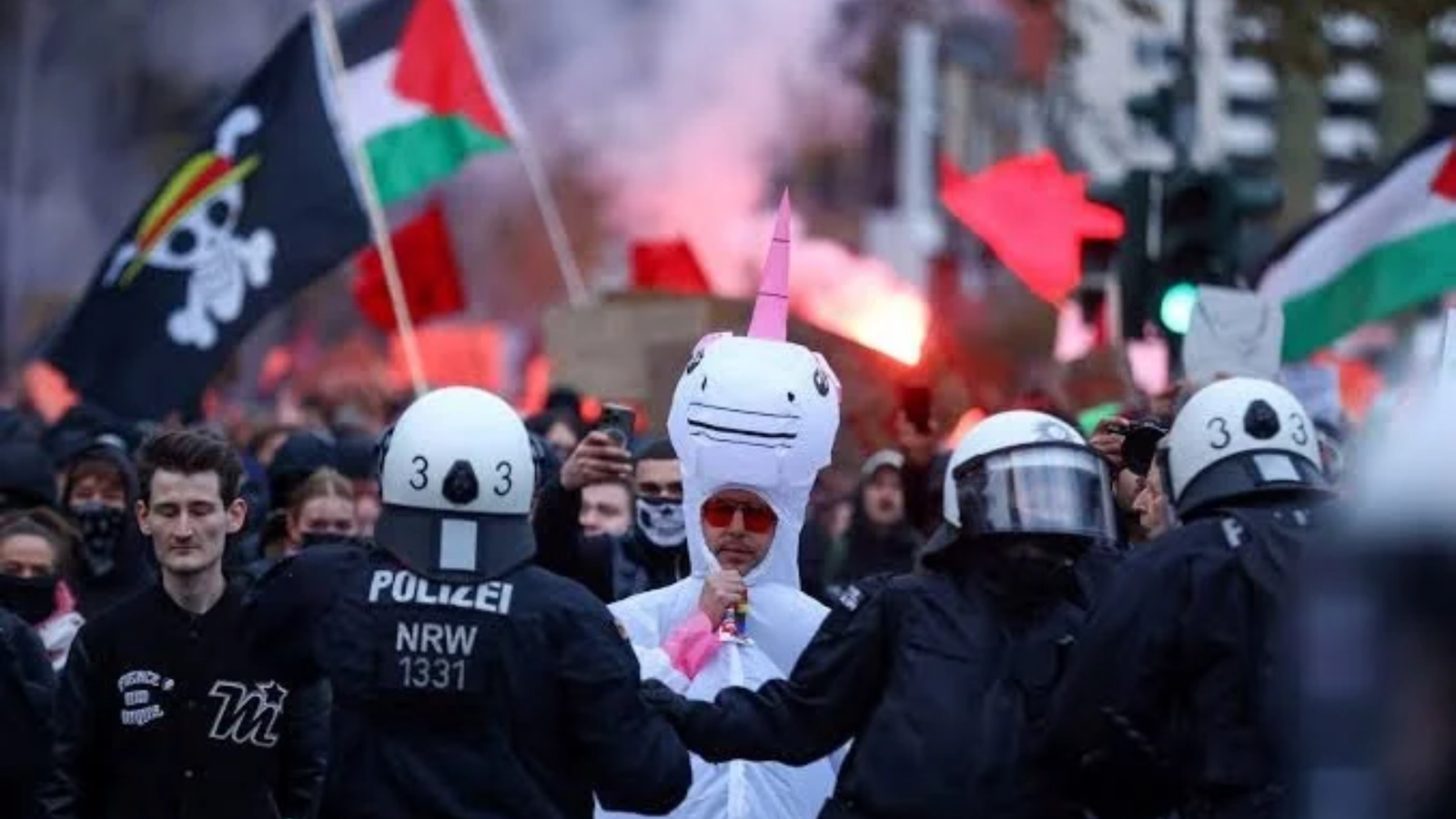
Violent clashes broke out across several German cities on Saturday night after thousands of people took to the streets to protest rising living costs, education funding cuts, and mandatory military service proposals.
While demonstrations began peacefully during the day, unrest later erupted in Frankfurt, Berlin, Cologne, and Hamburg, prompting a large police response. Authorities reported incidents of looting, vandalism, and confrontations between protesters and security forces as tensions escalated after dark.
In Frankfurt, Germany’s financial centre, rioters looted shops along the city’s main shopping district, forcing police to seal off large sections of the area. A police spokesperson confirmed that numerous arrests were made as officers moved to restore order.
Police in several cities said officers came under attack from groups who allegedly threw fireworks, stones, and bottles at emergency personnel. Riot police responded with water cannons and crowd-control measures to disperse violent groups and prevent further damage.
The nationwide demonstrations were organised by campaign group Gen Z regelt, which translates to “Gen Z Takes Charge”. The movement says it is campaigning against underfunded schools, rising living costs, public spending cuts, and military service policies.
Despite the violence that unfolded later in the day, organisers said the overwhelming majority of participants attended peacefully.
Authorities estimated that around 18,000 people gathered in major cities including Frankfurt, Munich, and Berlin, although organisers claimed participation numbers were significantly higher. German media reports suggested that tens of thousands of people joined demonstrations across the country.
Lina Friedrich, a spokesperson for Gen Z regelt, said the movement’s goal was to promote social change through peaceful activism.
“We are fighting for peace and freedom, rather than for war and coercion,” Friedrich said.
The unrest comes amid growing economic pressures across Europe, with many households facing rising costs for housing, energy, transportation, and essential goods.
Saturday’s events also followed similar youth-led demonstrations in France, where more than 320,000 people reportedly took part in nationwide protests over economic and social issues.
German authorities continue to investigate the incidents and assess the extent of damage caused during the disturbances.





+ There are no comments
Add yours