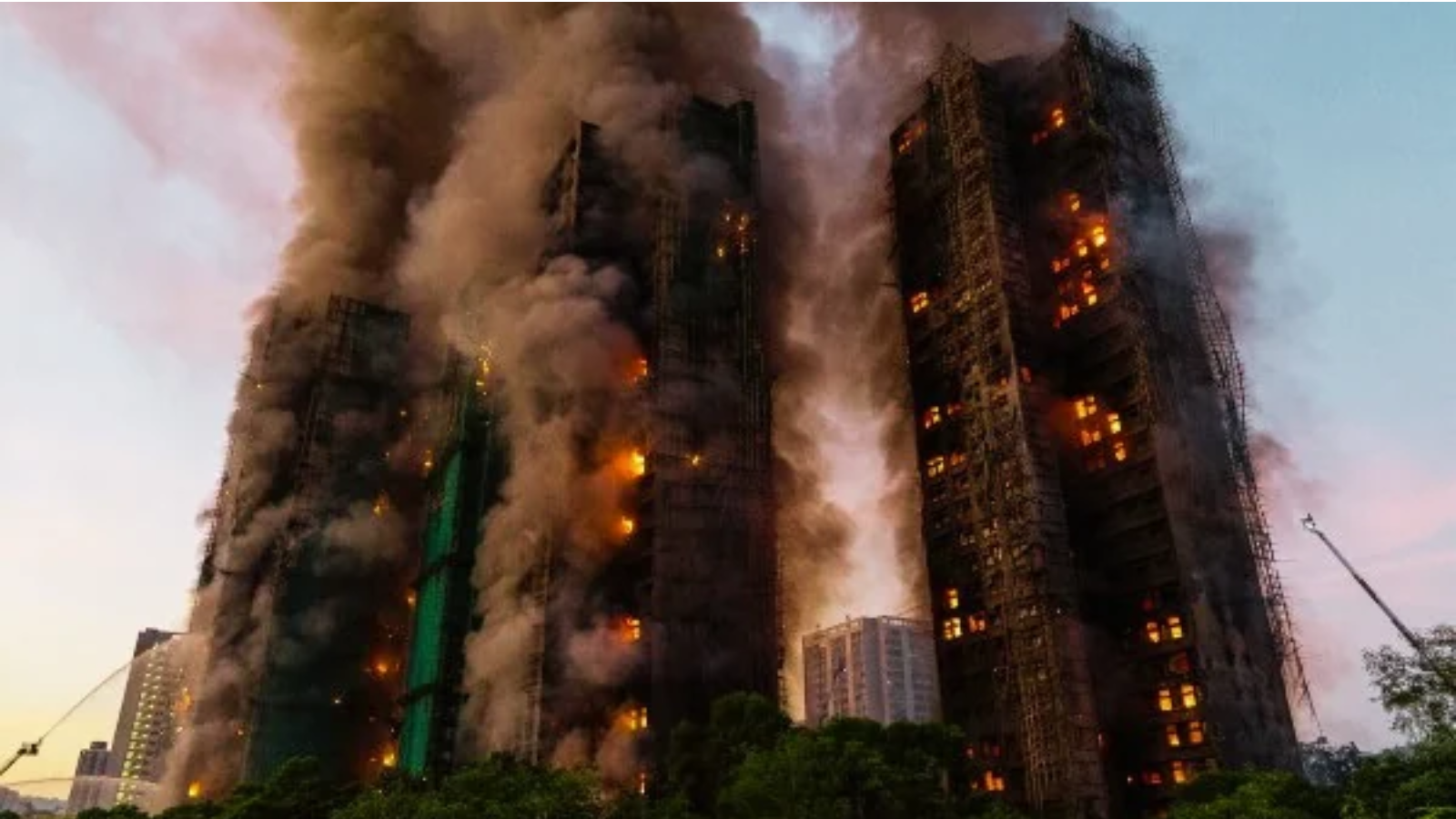
It was a sunny Wednesday afternoon on 26 November last year, and Mrs Lau was at a dance class in an activity centre near her home when an ordinary day turned into the worst of her life.
At around 2:45pm she heard the faint wail of fire engine sirens, but thought little of it.
It was only later, when a friend began calling her, that she learned the truth. Wang Fuk Court, the eight-block apartment complex she had called home for 40 years, was ablaze. And her husband, a wheelchair user, was trapped inside their flat.
“I grabbed my things quickly and ran down without even putting my shoes on properly,” Mrs Lau, who asked to be identified only by her surname, told the BBC.
By the time she arrived, police had already cordoned off the building.
She rang her 74-year-old husband, who tried to reassure her. He had not heard an alarm, he said, so it was probably only a small fire.
Instead, Mrs Lau could only watch helplessly as the flames raced through Wang Fuk Court at a peak speed of about 10 metres (33 feet) per second. A final report by an independent committee into the disaster described that rate of spread as “unprecedented.”
The blaze killed 168 people. According to the report, it was a tragedy that was entirely preventable, the result of a chain of human errors, fire safety failures, alleged fraud and suspected corruption.









+ There are no comments
Add yours