
New Zealand’s general election remains finely balanced, with preliminary results indicating that Prime Minister Christopher Luxon and the National Party are in a stronger position to form the next government, although final outcomes will depend on coalition negotiations and the counting of special votes.
Current projections show National holding 42 seats, compared with 36 seats for the opposition Labour Party led by Chris Hipkins. Political analysts believe Luxon currently has a clearer pathway to retaining power, while Hipkins faces a far more complex challenge in assembling enough parliamentary support to form a government.
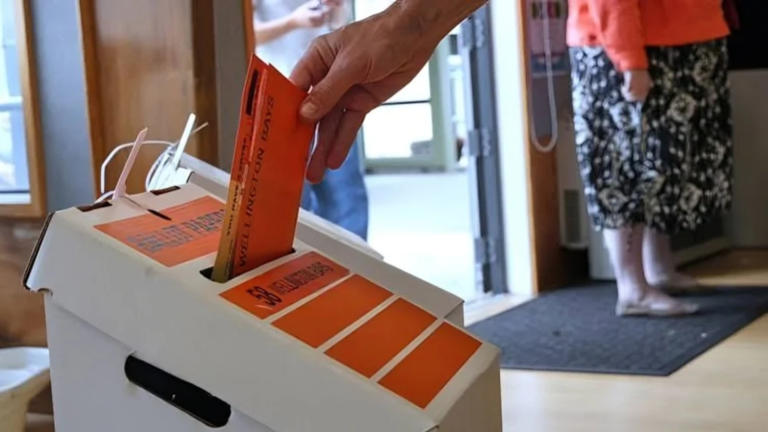
However, the result is not yet final. Approximately 400,000 special votes have yet to be counted by the New Zealand Electoral Commission, and these ballots have historically tended to favour Labour and other centre-left parties.
Election experts caution that while special votes could alter seat distributions, it remains uncertain whether they will be sufficient to deprive National and its potential coalition partners of their narrow parliamentary majority.
Following a relatively restrained election-night speech, Luxon appeared noticeably more confident while speaking to reporters in Auckland the following day.
“Ultimately, New Zealanders have given us the biggest seats in parliament, 42 seats as it stands today, and a pathway to form a government,” Luxon said.
Attention is now focused on possible coalition arrangements and whether National may need support from smaller parties, including emerging political forces, to secure a stable governing majority.
The coming days are expected to be dominated by negotiations, special vote counting, and political manoeuvring as New Zealand awaits a final outcome from one of its most closely watched elections in recent years.









+ There are no comments
Add yours