
Audio recordings released by Spanish media have shed new light on the circumstances surrounding one of Europe’s deadliest rail disasters in recent years, revealing critical communications between train drivers and railway controllers in the moments before a crash that claimed at least 69 lives and left dozens more injured.
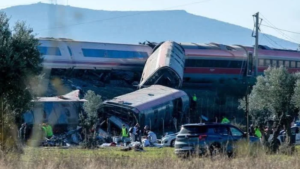
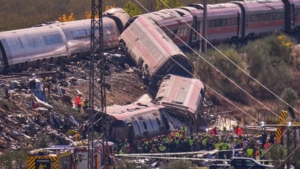
Spanish authorities are investigating the cause of the tragedy, which occurred on Wednesday when a high-speed train travelling from Madrid to Seville collided with a stationary train on the same line.
According to reports, three audio recordings captured exchanges between railway control personnel in Madrid and two train drivers shortly before the crash. The conversations appear to indicate that one of the trains was granted permission to proceed despite another train having become stranded approximately 25 kilometres ahead on the track.
The collision involved a Renfe-operated train carrying 397 passengers and a train operated by private rail company Iryo, which had 147 passengers on board. Officials say a problem with the automatic signalling system had earlier forced trains on the affected section of the route to stop.
However, Spain’s transport minister stated that the Renfe train was later instructed to continue its journey in what authorities have described as an apparent error, a development that has become a central focus of the ongoing investigation.
Prime Minister Pedro Sánchez, who visited the crash site, pledged a full inquiry into the disaster. He said authorities were working “day and night” to uncover every detail of the incident and determine exactly what went wrong.
The release of the recordings comes as Spain observes three days of national mourning, reflecting the scale of a catastrophe that has shocked the country and drawn international attention.
Investigators are expected to examine the role of signalling systems, railway communications and operational procedures as they seek answers about how two trains ended up on a collision course despite existing safety protocols.
As rescue efforts transition into a full-scale investigation, families of the victims and the wider Spanish public are awaiting clarity on the events that led to one of the most tragic rail accidents in the country’s modern history.





+ There are no comments
Add yours