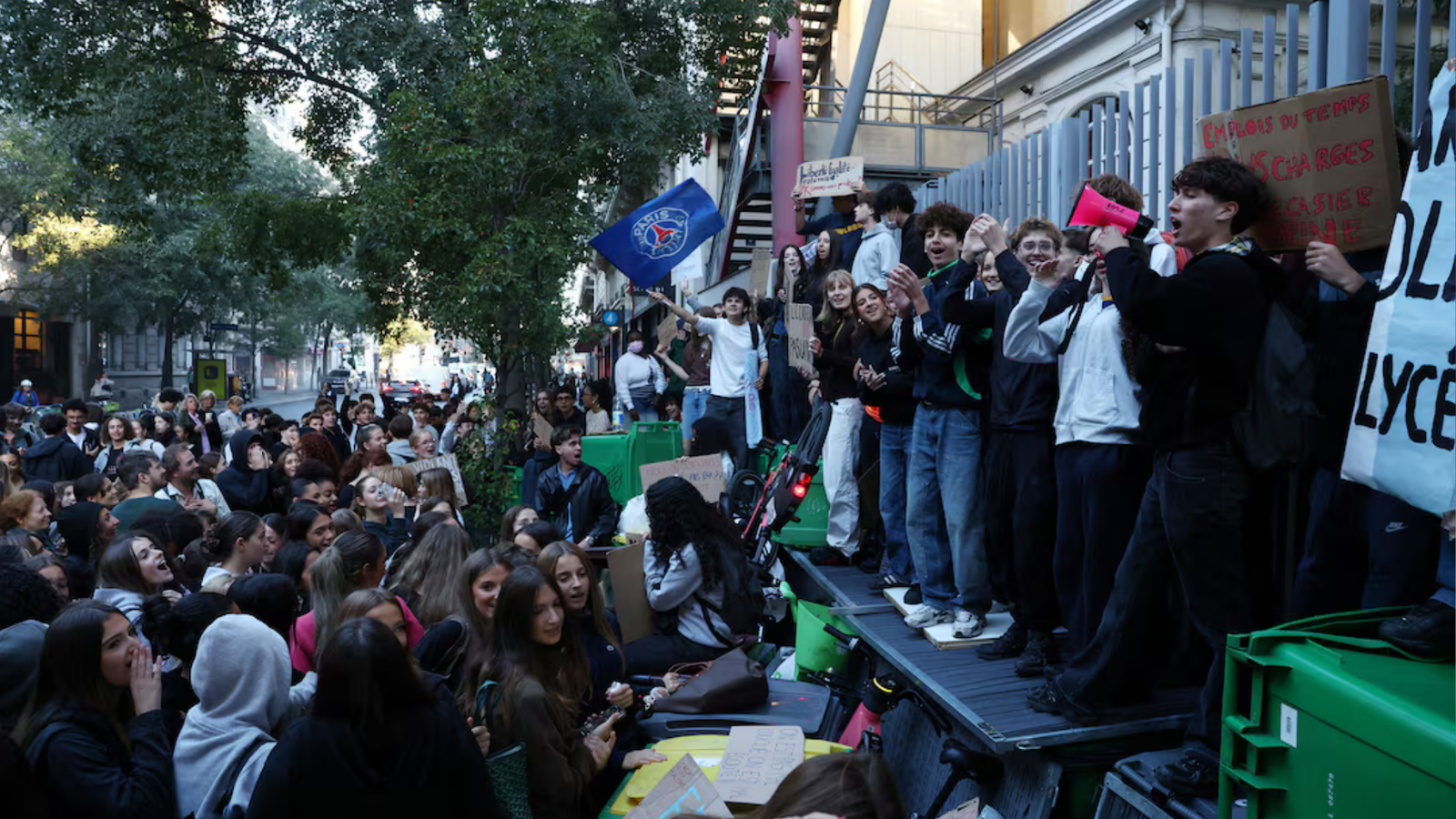
France is preparing for a fresh wave of major demonstrations on Tuesday after student organizations called for a nationwide day of action, intensifying pressure on the government over demands for increased investment in education and improved learning conditions across the country.
The latest mobilization follows a turbulent week of protests that saw students blockading hundreds of schools throughout France. The unrest has escalated significantly, with reports indicating that at least 190 students were injured and more than 5,000 people were arrested during clashes linked to the demonstrations. The growing scale of the movement has transformed what began as localized protests into one of the country’s most significant youth-led campaigns in recent years.
Tensions rose further after serious injuries were reported during confrontations between protesters and security forces. One student reportedly lost a hand during an incident on Monday, while another suffered a head injury after being struck by a tear gas grenade during protests last week. The incidents have fueled criticism from activists and student groups, who accuse authorities of responding too aggressively to the demonstrations.
French Prime Minister has argued that the government has already introduced measures aimed at addressing student concerns. However, protest leaders say those proposals fall far short of what is needed. The Union Syndicale Lycéenne (USL), one of the principal organizations behind the movement, dismissed the government’s response, stating that officials had offered “nothing concrete” to solve the challenges facing French schools and universities.
In a statement urging broader participation, the USL called on students, educators, and supporters to join Tuesday’s demonstrations, citing what it described as a political stalemate and an unprecedented level of repression against the movement. Organizers say continued public pressure is essential to force authorities to commit to meaningful reforms.
Support for the protests has expanded beyond student groups. The influential teachers’ union SNES-FSU has encouraged its members to participate in the demonstrations, highlighting growing concern within the education sector over overcrowded classrooms, deteriorating infrastructure, and teacher shortages. The backing of educators is expected to strengthen turnout and increase pressure on policymakers.
Political support has also emerged from the left. Jean-Luc Mélenchon, leader of the radical-left La France Insoumise (LFI) party, described the demonstrations as the most powerful high school and university student movement since the historic events of 1968, when widespread protests and strikes brought millions of French workers and students into the streets and reshaped the nation’s political landscape.
The protest movement first gained momentum in Paris in September before spreading rapidly across the country. Students argue that years of underinvestment have left schools struggling with overcrowding, aging facilities, and insufficient staffing levels. Demonstrators say urgent reforms and increased funding are necessary to protect the quality of education and ensure better opportunities for future generations.
With large crowds expected nationwide, authorities are preparing for another day of heightened tensions as students, teachers, and supporters seek to keep their demands firmly in the national spotlight.








+ There are no comments
Add yours