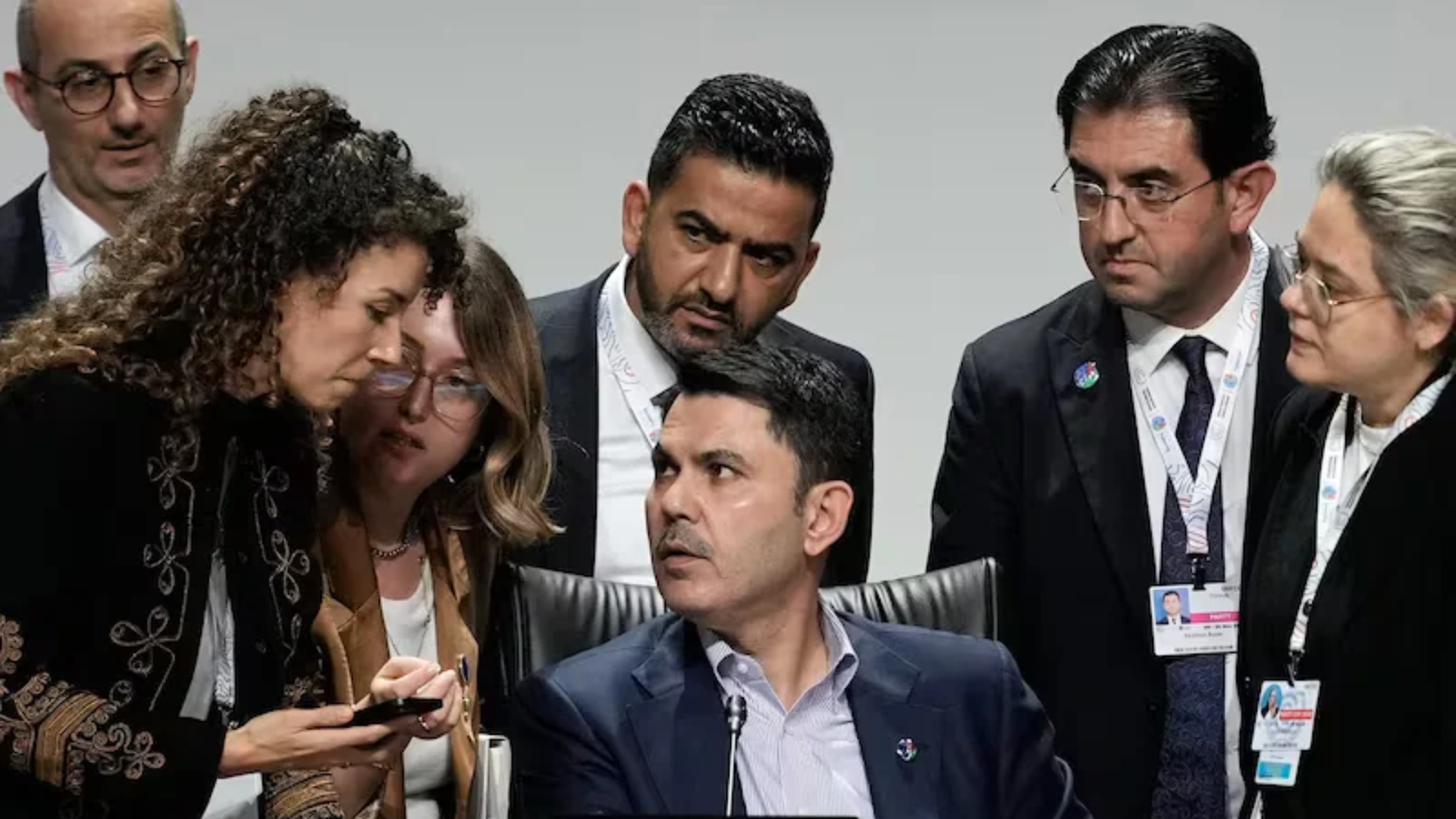
Global climate negotiations have entered a critical phase after countries failed to reach consensus at the United Nations COP31 summit, forcing talks to continue into a second day of overtime amid deep divisions over fossil fuels, climate finance and emission reduction targets.
A revised draft agreement was released in the early hours of Sunday as co-hosts Australia and Türkiye sought to break the deadlock and secure support from negotiating blocs that remain divided on several key issues.
The latest draft attempts to bridge differences between developed and developing nations but stops short of including an explicit new commitment to “transition away from fossil fuels,” a notable omission that has been one of the most contentious issues during the negotiations. The absence of stronger language on fossil fuels had previously prompted warnings from some countries that they could walk out of the summit.
However, the new text does acknowledge a commitment made by nations three years ago to move away from fossil fuel dependence, a compromise that negotiators hope could attract broader support.
In a significant development, the draft also includes, for the first time, an acknowledgment that the world is currently on track to miss the crucial target of limiting global warming to 1.5 degrees Celsius above pre-industrial levels. Scientists have repeatedly warned that exceeding this threshold could lead to increasingly severe climate impacts across the globe.
The European Union and several Pacific Island nations have been among the strongest advocates for retaining language supporting a transition away from fossil fuels. As negotiations continued, the European Union had not yet publicly responded to the latest version of the draft agreement.
Meanwhile, African nations are expected to express disappointment over the revised text, which does not include a specific financial commitment for climate adaptation efforts. Instead, discussions on adaptation funding have been deferred to future negotiations, leaving one of the summit’s most sensitive issues unresolved.
Delegates were scheduled to reconvene at 9:00am local time to determine whether a final agreement could be adopted. Under UN climate negotiation rules, any deal must be approved through consensus among participating countries.
Should negotiators fail to secure unanimous agreement, the talks could be suspended until next year, an outcome that would represent a rare setback for the global climate process. Since COP climate conferences began in 1995, negotiations have only been suspended without a final agreement on one previous occasion.
The outcome of COP31 is being closely watched around the world as governments face growing pressure to strengthen climate action, reduce greenhouse gas emissions and provide financial assistance to vulnerable nations already experiencing the effects of climate change.
As marathon negotiations continue behind closed doors, delegates face mounting pressure to find common ground and avoid a collapse of one of the world’s most important climate forums.






+ There are no comments
Add yours