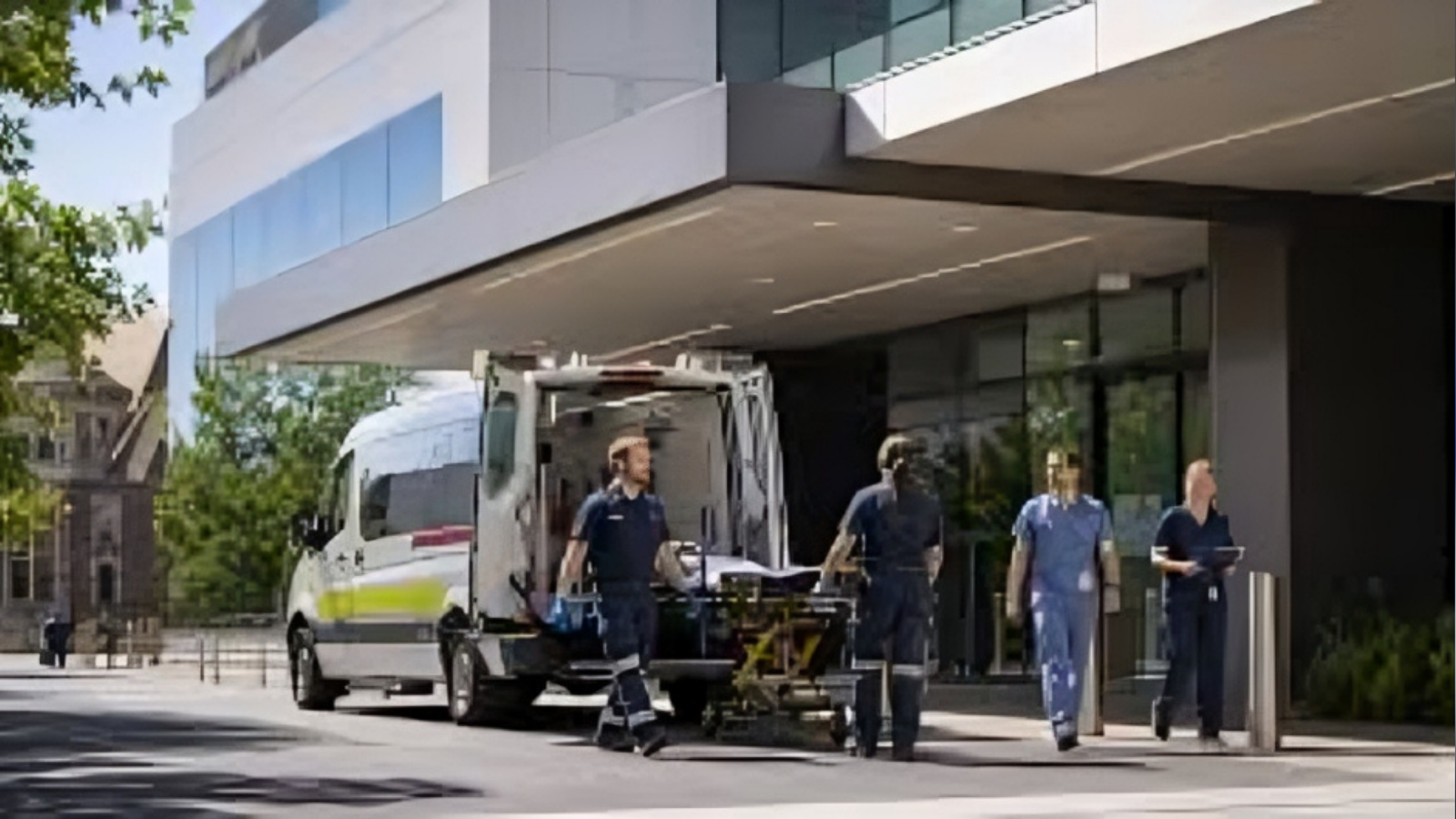
A non-verbal man suffering from pneumonia waited more than nine hours in an ambulance outside Adelaide’s Lyell McEwin Hospital, highlighting ongoing concerns about emergency department pressures and ambulance ramping in South Australia.
Alison Marsh said she called an ambulance for her brother, Michael McLean, on Tuesday after noticing a significant change in his condition while caring for him at home in Adelaide’s northern suburbs. McLean has a traumatic brain injury and is unable to communicate verbally.
According to Marsh, paramedics arrived within 20 minutes and transported them to Lyell McEwin Hospital, but her brother remained in the ambulance for more than nine hours before being transferred into the hospital’s emergency department.
The case emerged as the South Australian Salaried Medical Officers’ Association (SASMOA) described Tuesday as a “flashpoint” day for emergency department demand, with hospitals reportedly experiencing patient volumes more than double normal capacity at certain times.
Marsh said her brother, who relies on a feeding tube for food and drink, received no nourishment while waiting in the ambulance. He was later diagnosed with pneumonia.
Speaking alongside opposition health spokesperson Jack Batty on Wednesday afternoon, Marsh said her brother was still waiting for treatment despite having spent more than a day at the hospital.
“He is still in the emergency department waiting for a bed,” she said.
“He’s had nothing, no treatment since he arrived at the hospital yesterday morning.”
She expressed concern that the delay could have serious consequences given her brother’s already vulnerable health condition.
“He’s gone a long time with pneumonia, someone who’s already got a weakened immune system. He’s just had to sit and wait.”
Marsh said her family understood that further delays were possible even after entering the emergency department because of the heavy demand facing the hospital.
The incident has renewed debate over ambulance ramping and hospital capacity in South Australia, with healthcare workers and unions continuing to warn about the impact of overcrowded emergency departments on patient care.
Doctors’ representatives say staff are increasingly struggling to manage record demand, while patients and paramedics face extended waits before hospital beds become available.
Health authorities have not yet commented publicly on the specific case, but pressure on emergency services remains a significant issue across the state’s healthcare system as hospitals contend with high patient numbers and resource constraints.




+ There are no comments
Add yours