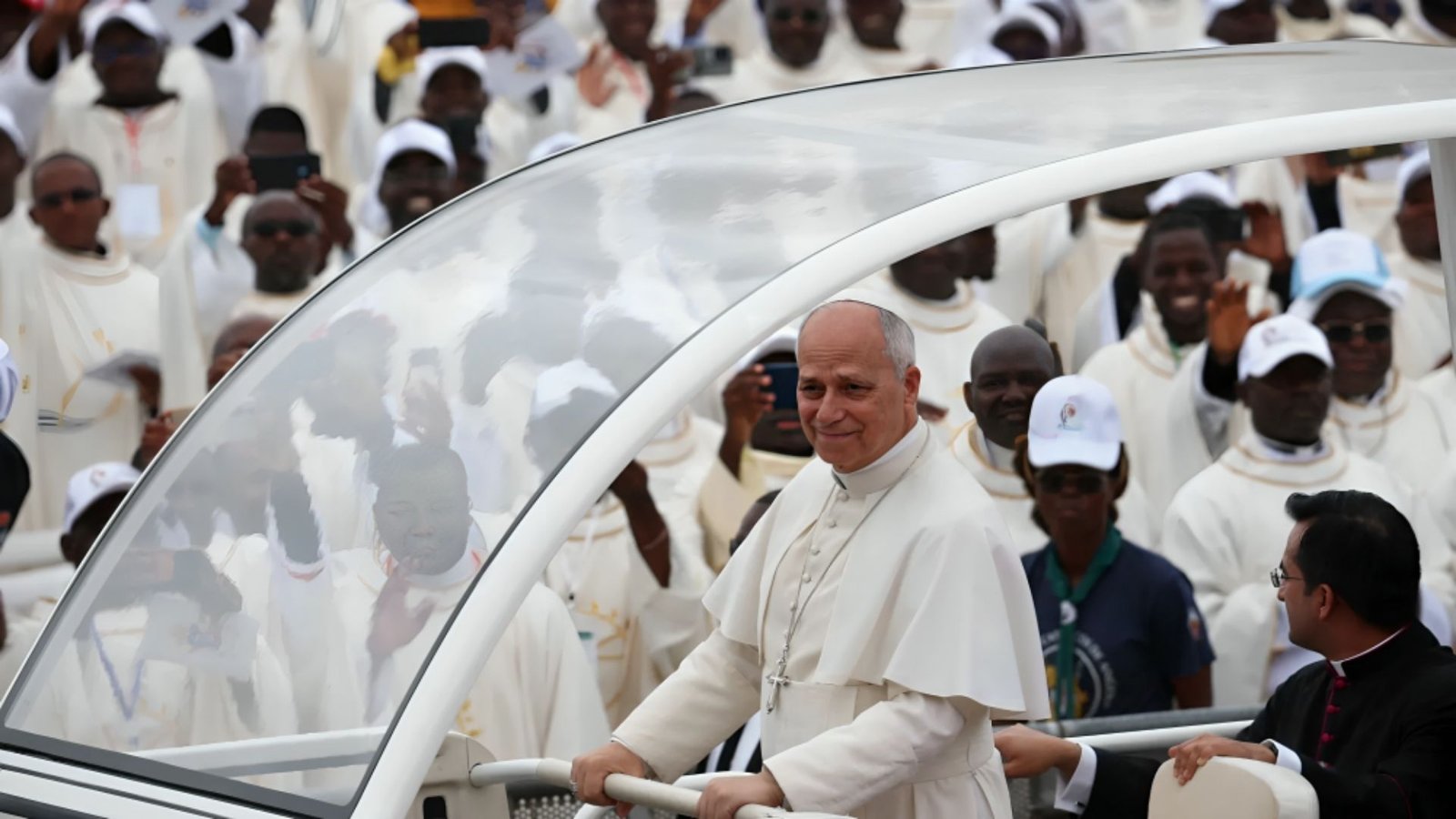
Tens of thousands of worshippers gathered outside Luanda on Sunday for a vast open‑air mass led by Pope Leo XIV, marking the second day of his visit to Angola a nation rich in natural resources yet burdened by deep poverty. The pope arrived on Saturday for the third leg of his four‑nation African tour and immediately met with President Joao Lourenço, where he condemned oppression, inequality and the exploitation of Africa’s wealth.
His remarks echoed a central theme of his 11‑day journey across the continent, during which he has repeatedly warned against corruption and the plunder of natural resources. Many Angolans, hoping for reassurance amid economic hardship, flocked to Kilamba on the outskirts of Luanda to hear his message.
Among them was 32‑year‑old Patricio Musanga, who said young people in Angola desperately need encouragement as unemployment pushes many to seek opportunities abroad. “He needs to give us hope, to help us understand that from here we can live better than abroad,” he said, noting the stark divide between Angola’s resource wealth and the daily struggles of ordinary citizens.
Despite being one of Africa’s top oil producers and home to valuable diamonds, roughly one‑third of Angola’s 36.6 million people live in poverty, according to the World Bank. Father Pedro Chingandu, who travelled from Moxico province, said the country still bears the scars of the civil war that raged from 1975 to 2002. “We need real democracy and the redistribution of wealth and justice,” he said.
After the mass, Pope Leo is set to travel by helicopter to Muxima, Angola’s most revered pilgrimage site. The 300‑year‑old church there overlooks a river once used as a major slave‑trading route. Known for its statue of the Virgin Mary, “Mama Muxima,” the shrine draws around two million pilgrims each year, and large crowds are expected to welcome the pontiff.
The government is currently undertaking a multi‑million‑euro redevelopment project in Muxima, including a new basilica and public facilities a plan that has sparked debate over spending priorities in a country still grappling with inequality.



+ There are no comments
Add yours