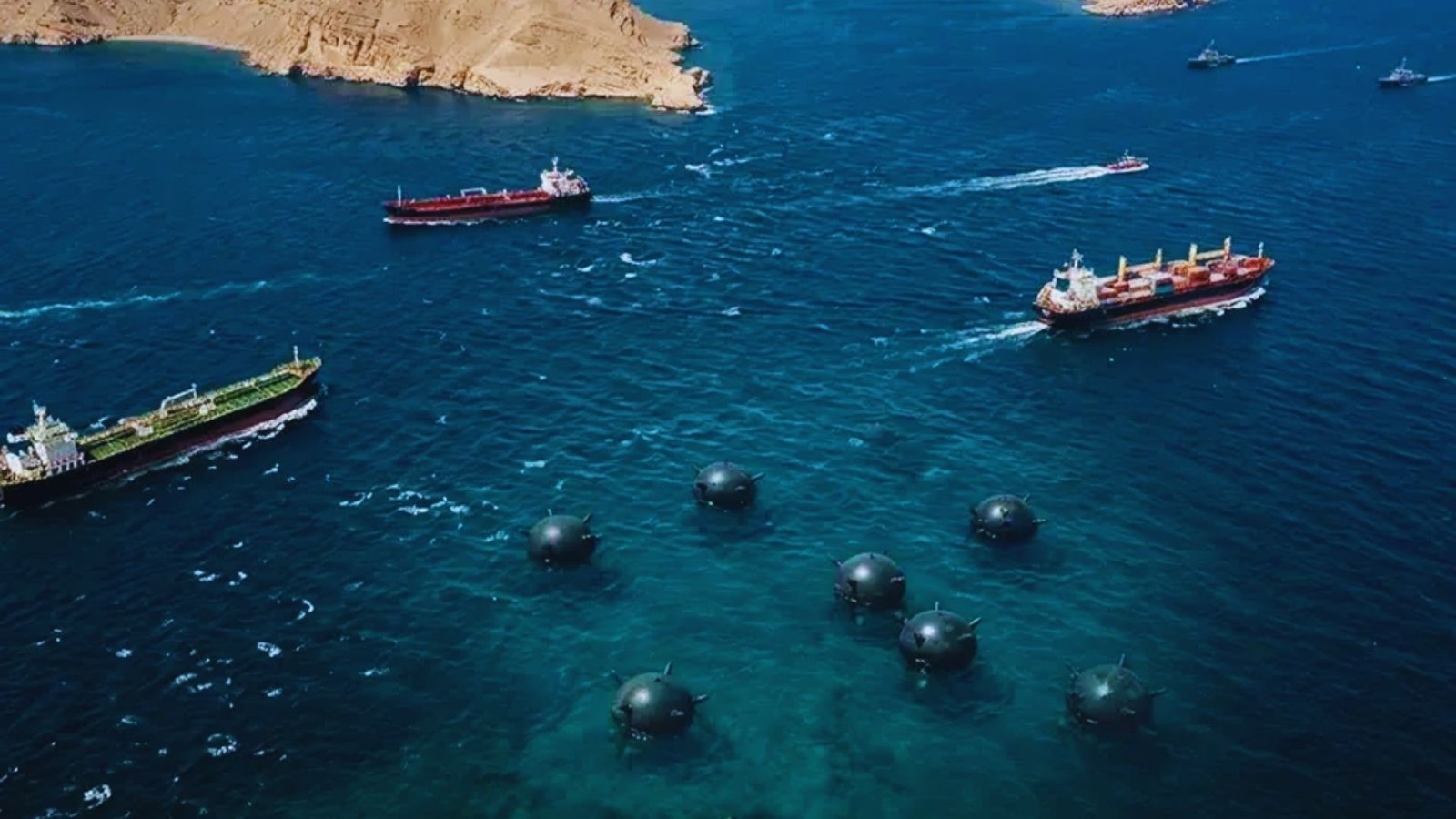
Iran is struggling to reopen the Strait of Hormuz despite agreeing to a ceasefire with the United States on April 7, as its own naval forces can no longer locate many of the sea mines they deployed earlier in the war. The resulting uncertainty has become a major obstacle to restoring one of the world’s most vital trade routes.
According to reporting cited by The New York Times, Iran’s Islamic Revolutionary Guard Corps (IRGC) laid mines using small patrol boats after the joint US-Israel military operation began on February 28. But the IRGC kept incomplete or inconsistent records of where the mines were placed. In several locations where records do exist, many mines have drifted or shifted from their original positions, making detection extremely difficult.
The Strait of Hormuz is essential to global energy markets. Roughly 25 percent of the world’s crude oil supply normally passes through the narrow waterway. For countries such as Bangladesh, India and Pakistan, the route is even more critical, carrying around 80 percent of their imported fuel.
A US official told The New York Times that Iran had laid mines “randomly,” worsening the challenge. Although Tehran has agreed in principle to reopen the strait, the inability to safely clear the mines means the blockade cannot be lifted immediately.
As a temporary measure, Iran is urging commercial vessels to use alternative maritime routes. In a statement, the IRGC said that due to the lingering risk of mine collisions, “using an alternative route is safer for maritime security.”
With global energy markets already strained, the delay in reopening Hormuz is prolonging economic pressure worldwide and highlighting how a defensive tactic has now become a strategic liability for Iran itself.





+ There are no comments
Add yours