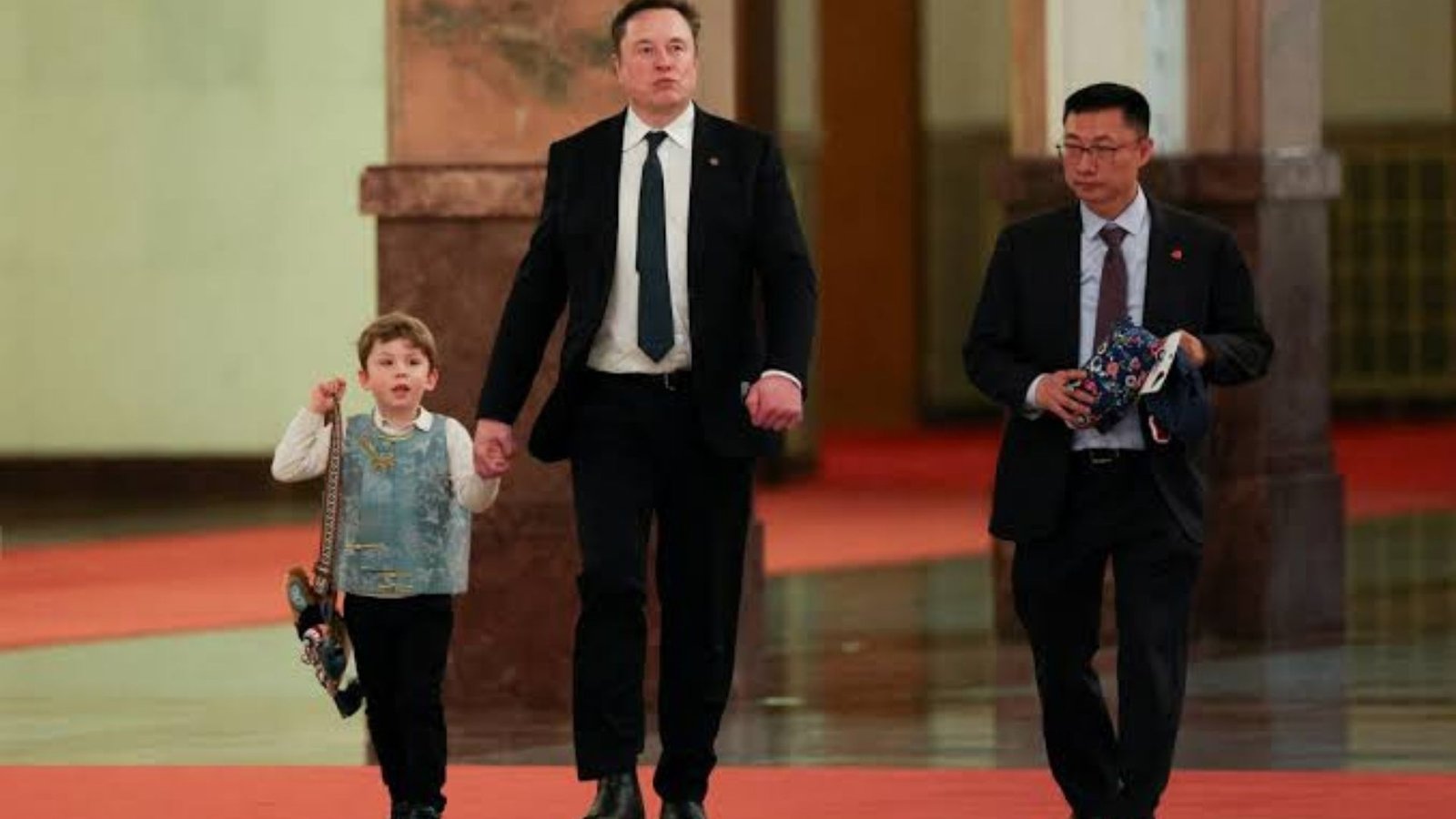
Elon Musk tweets often, but one recent message cut through the noise: “My son is currently learning Mandarin.” He’s far from alone. Across the globe, some of the world’s wealthiest and most influential families are investing heavily in China’s official language a trend driven by economics, diplomacy and global power shifts.
Several of Donald Trump’s grandchildren are learning Mandarin. The children of Jeff Bezos and Mark Zuckerberg are studying it too. Even Prince George, the future king of the United Kingdom, reportedly learned Mandarin in primary school.
According to Kerry Brown, professor of Chinese studies and director of the Lau China Institute at King’s College London, the motivation is obvious: China’s economy is the second‑largest in the world, and its influence is impossible to ignore.
“If you’re interested in business, even if you’re sceptical and not particularly friendly to China … it makes sense to learn Chinese,” Brown said. “Some of these figures really do believe that engagement with China economically is the future.”
Mandarin also offers diplomatic advantages. In 2017, during a state visit to the US, Arabella Kushner, Trump’s granddaughter, famously sang in Mandarin for Chinese President Xi Jinping a moment widely viewed as a soft‑power gesture.
The trend extends beyond Western elites. During his recent trip to Beijing, Russian President Vladimir Putin said more than 100,000 Russians are learning Chinese, with 20,000 studying in China itself. His press secretary, Dmitry Peskov, even revealed that his daughter spoke Chinese before Russian thanks to a live‑in nanny.
Australia has its own high‑profile Mandarin speaker: former prime minister Kevin Rudd, who used the language to host Chinese officials during his time in office.
Yet despite its growing strategic importance, Brown noted that very few students in Western countries including Australia and the UK are studying Chinese languages at university. The gap between elite enthusiasm and broader public uptake remains stark.
As China’s global influence continues to expand, Mandarin is becoming more than a language it’s a tool of access, opportunity and geopolitical relevance. And the world’s most powerful families are making sure their children aren’t left behind.









+ There are no comments
Add yours