
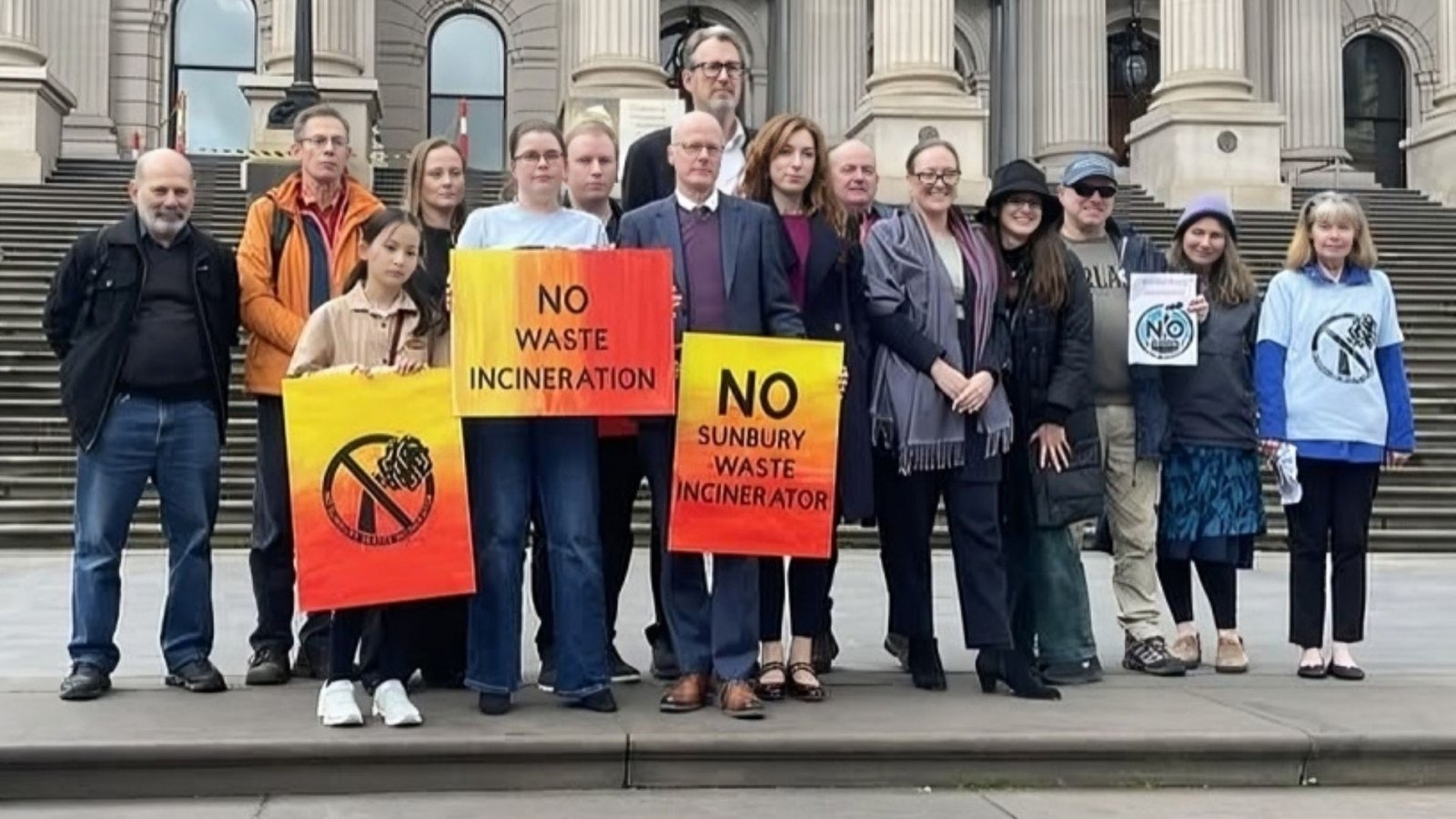
Residents of Sunbury, just 40 kilometres north‑west of Melbourne, say they have reached breaking point after years of feeling like the city’s unwanted dumping ground and a new waste‑to‑energy incinerator proposal has pushed many over the edge.
The frustration has been building since soil contaminated with traces of PFAS from the Metro Tunnel project was trucked into the area. Now locals are facing a far bigger development: a waste‑to‑energy (WTE) incinerator that would burn 750,000 tonnes of rubbish every year, operating 24 hours a day for the next 30 years.
“We are done being taken for granted and being ignored,” said one resident who has become a leading voice in the community’s fightback.
Her concern grew last year when she learned the incinerator would sit just three kilometres from her home. What began as a small Facebook group quickly evolved into a full‑scale grassroots movement No Sunbury Waste Incinerator now rallying residents across the region.
“This is all about waste management, and it’s a quick fix to a long‑term problem,” she told 7.30. “It’s going to have far‑reaching consequences, not only for the communities where they’re located but all of Victoria.”
Waste‑to‑energy technology, used globally as an alternative to landfill, is promoted by supporters as a dual solution: reducing landfill volumes while generating electricity for the grid. But critics argue the environmental and health risks are being downplayed, and that communities like Sunbury are being forced to shoulder the burden for metropolitan waste.
Mark Rodgers, CEO of HiQ, the company behind the proposal, defended the project during a Victorian parliamentary inquiry last month. He said the incinerator is a crucial part of managing the state’s growing waste problem and reducing reliance on landfill.
But for Sunbury residents, the message is clear: they’ve had enough of being the place where Melbourne sends what it doesn’t want.









+ There are no comments
Add yours