
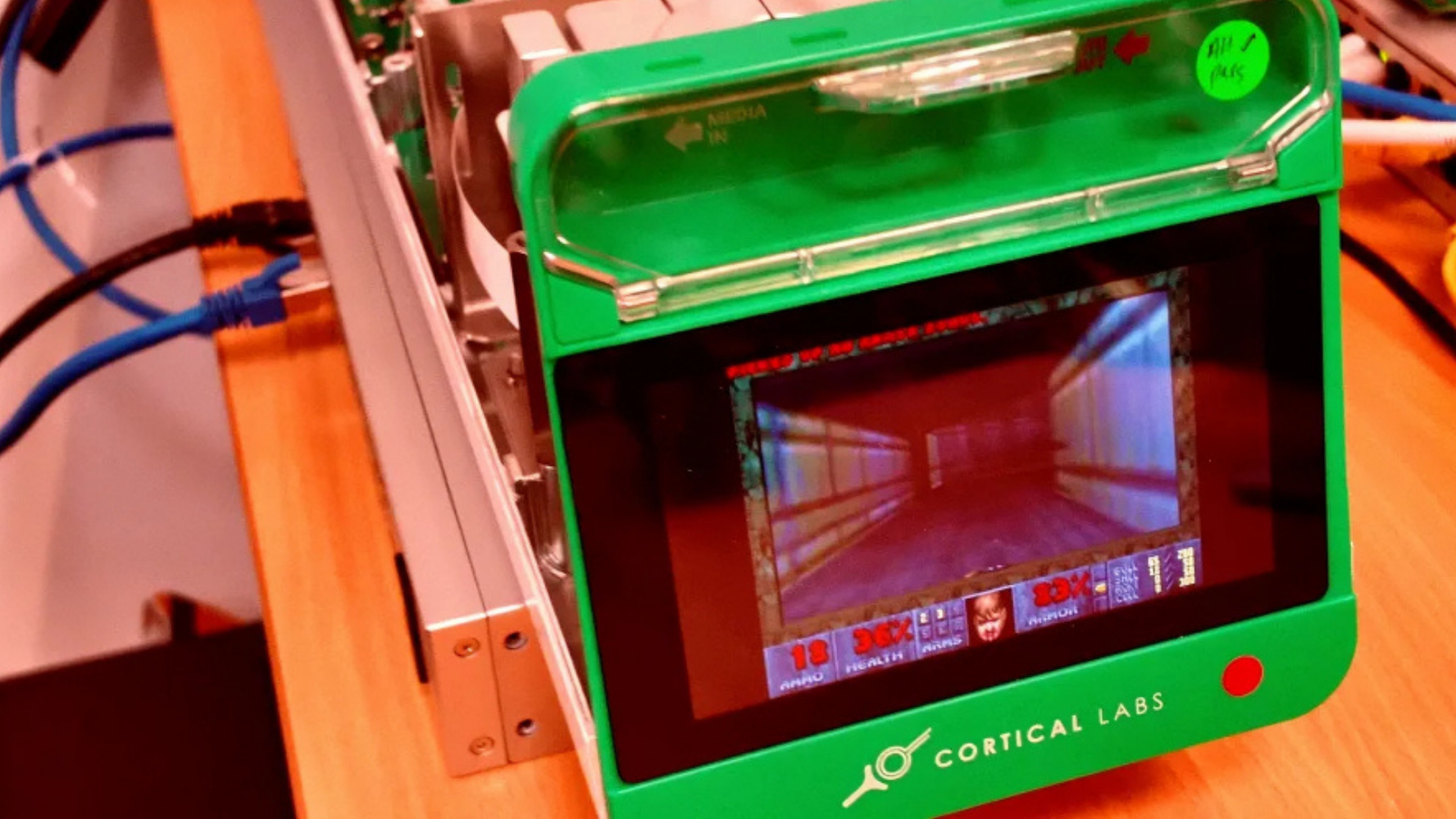
Australian scientists have pushed the boundaries of biotechnology by training lab‑grown human brain cells to play the classic 1990s shooter Doom, demonstrating that living neurons on a silicon chip can learn, adapt and respond to complex digital environments.
The research comes from Melbourne‑based Cortical Labs, where scientists have developed “biological computers” containing around 200,000 living human neurons grown from stem cells sourced through blood donations. These neurons sit atop a specialised chip known as the CL1, allowing them to interact with digital systems in real time.
The team first taught the neurons to play Pong, but Doom presented a far more chaotic challenge a 3D world filled with corridors, enemies and rapid‑fire decision‑making. At first, the neurons behaved like a novice gamer: “They were walking into walls, shooting the walls, turning around, doing funny things,” senior application scientist Alon Loeffler told AFP. But over time, the cells began correctly identifying and targeting enemies, proving they could learn goal‑directed behaviour.
To make this possible, researchers translated the game’s digital environment into electrical stimulation patterns the neurons could interpret. When an enemy appeared, specific electrodes fired signals into the neural culture. In response, the neurons produced electrical activity patterns that corresponded to actions like moving left, right or firing a weapon. Scientists monitored thousands of data points on a connected screen and adjusted inputs to refine the neurons’ performance.
While the gameplay remains imperfect some demons require several clumsy attempts to defeat the achievement is profound. Cortical Labs says the experiment shows neurons can adapt to stimuli, learn in real time and perform tasks traditionally reserved for artificial intelligence.
Chief scientific and operations officer Brett Kagan believes this is only the beginning. “We are just scratching the surface of what these neural cultures can achieve when integrated in systems like our CL1,” he said. Beyond gaming, the chip could be used for drug screening, robotics, disease modelling, personalised medicine and AI‑like machine learning.
The fusion of living neurons with silicon hardware marks a bold step toward a future where biological intelligence and digital systems work side by side and where even a cluster of brain cells can take on a demon or two.










+ There are no comments
Add yours