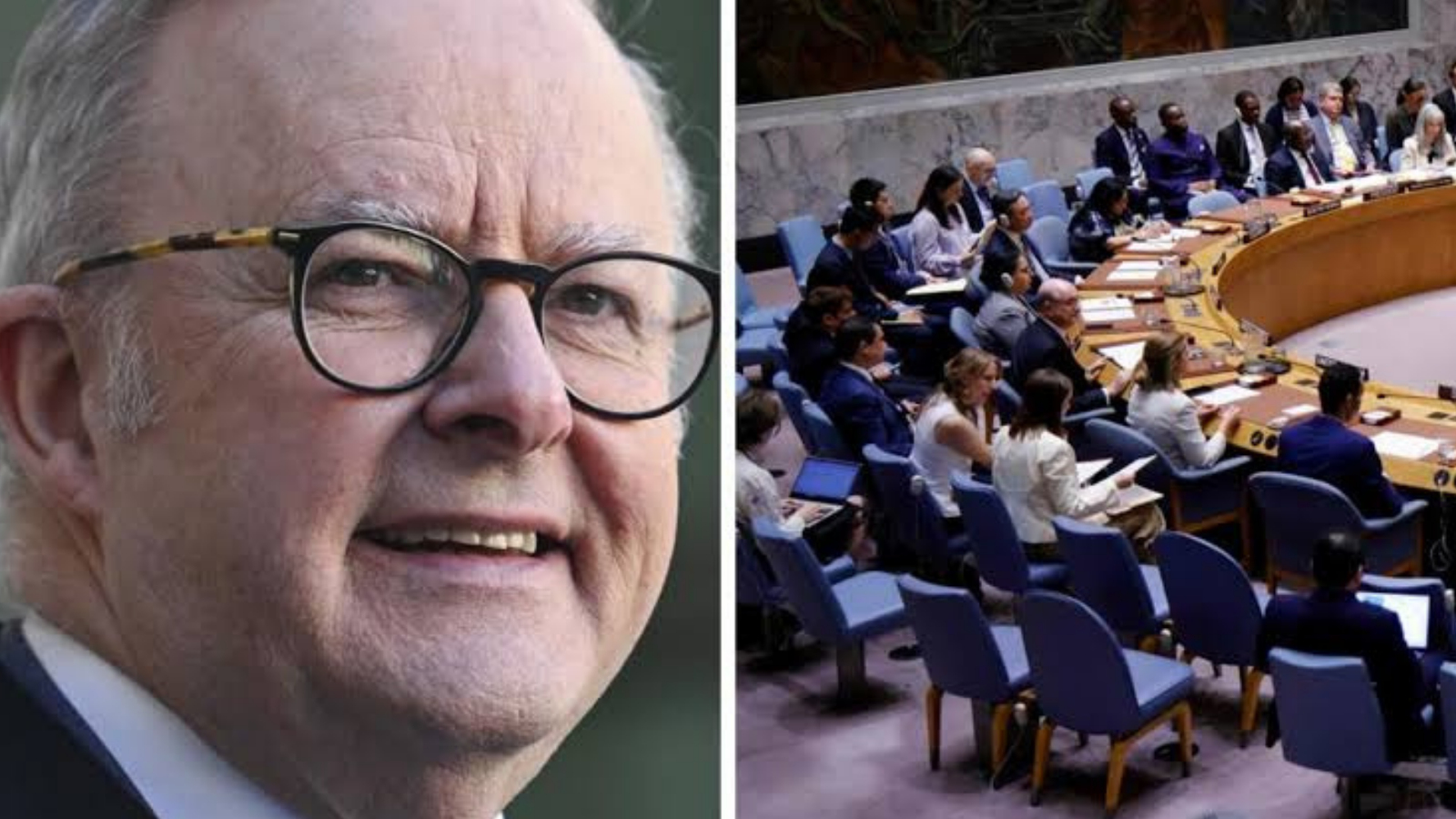
Prime Minister Anthony Albanese is set to formally launch Australia’s campaign for a seat on the United Nations Security Council (UNSC), highlighting the country’s international reputation, commitment to global cooperation, and leadership on key issues including climate action and online safety.
The campaign will be officially unveiled in New York on Monday during the United Nations General Assembly, where world leaders from across the globe are gathering for annual high-level meetings. As part of the launch, the government will introduce its campaign logo, promotional materials, and a new international message built around the slogan: “We listen. We partner. We protect.”
Albanese said Australia’s campaign is built on its long-standing belief in the importance of multilateral cooperation and ensuring that small and middle-sized nations have a meaningful voice in addressing global challenges.
“Australia played a pivotal role in the founding of the United Nations because we have always understood how important it is for small and mid-sized nations to have their voices heard on the challenges facing our world,” the prime minister said.
The government believes Australia is well positioned to secure one of the two available non-permanent seats on the 15-member Security Council for the 2029-2030 term. So far, Finland is the only other nation to have nominated for the available positions from the regional grouping.
The UNSC is responsible for maintaining international peace and security, responding to conflicts, and promoting diplomatic solutions to international disputes. Membership is considered one of the most influential roles within the UN system.
Australia plans to promote its record on issues such as technology regulation, online safety, and climate policy, including its role as host and president of the COP31 climate negotiations. The government argues these areas demonstrate Australia’s ability to contribute constructively to international decision-making and problem-solving.
A secret ballot among UN member states is scheduled for mid-2028, with candidate countries required to secure a two-thirds majority of votes in the UN General Assembly to win election. If all 193 member nations participate, successful candidates would need at least 128 votes.
While pursuing the seat, Australian leaders have also acknowledged criticisms of the Security Council, particularly regarding its ability to respond effectively to major global crises. The council’s permanent members including China, Russia, the United States, France, and the United Kingdom each hold veto powers that can block resolutions and actions.
Albanese said reform is needed to improve the effectiveness of the institution, while Foreign Minister Penny Wong argued that Australia’s presence on the council would provide an opportunity to advocate for international cooperation, diplomacy, and a rules-based global order.
With conflicts continuing in regions such as Ukraine and the Middle East, Australia hopes its campaign will resonate with member states looking for constructive and pragmatic voices at one of the world’s most important diplomatic tables.



+ There are no comments
Add yours