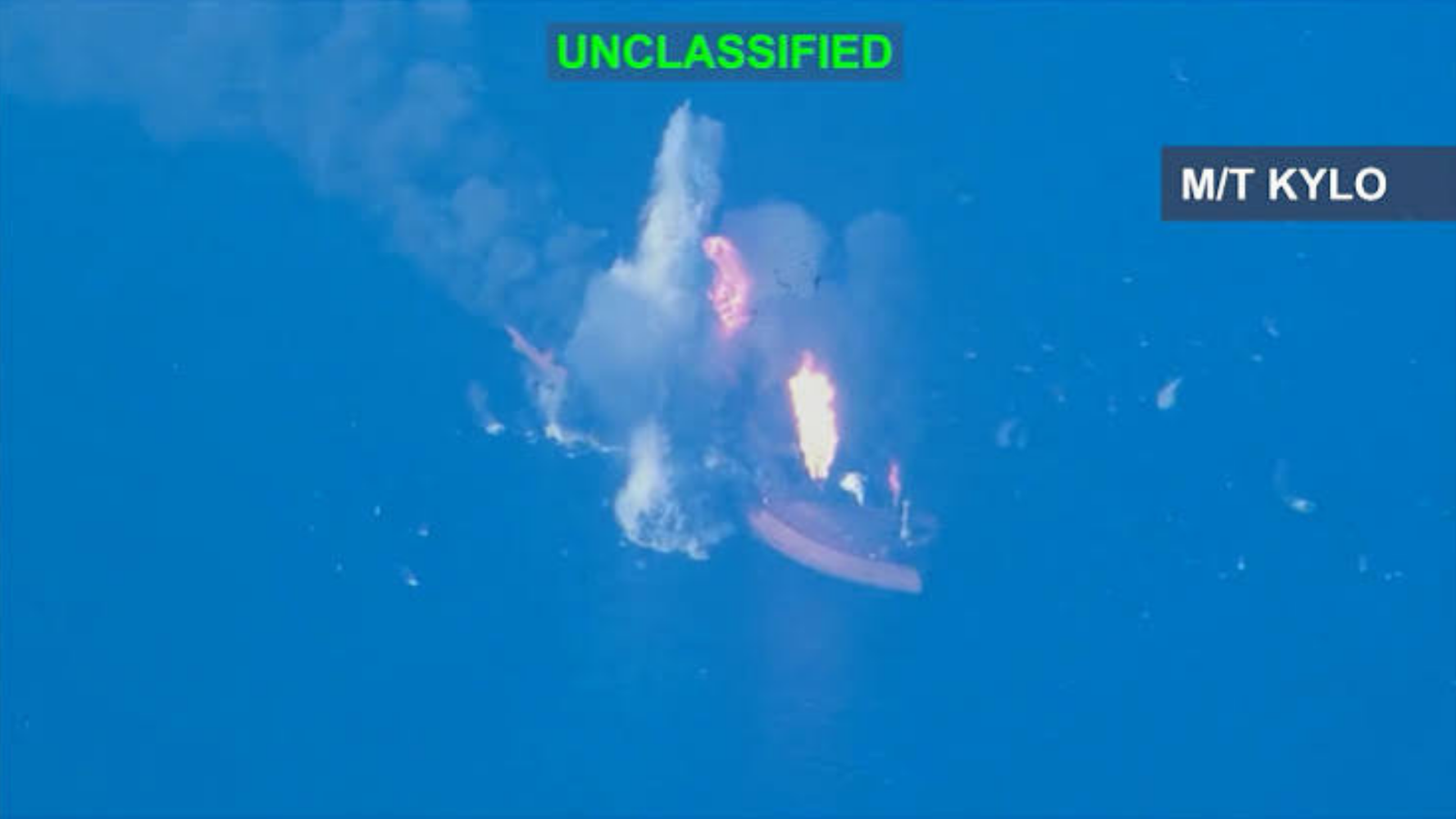
A new wave of military confrontation between the United States and Iran has heightened fears of a broader regional crisis after US forces launched strikes on five Iranian oil tankers and Tehran responded with missile attacks and threats against commercial shipping in the Strait of Hormuz.
According to the US Central Command (Centcom), American forces targeted four Iranian oil tankers in the Gulf of Oman linked to Iran’s Revolutionary Guards Corps (IRGC), as well as another vessel near Kharg Island, a key hub for Iran’s oil exports. One of the vessels, identified as the M/T Riesco, was reportedly sunk following the strikes.
The operation came after Iran allegedly targeted a US warship twice with ballistic missiles. Centcom said the American vessel successfully avoided the attacks and reported no casualties among US personnel.
Iran quickly retaliated by launching missiles toward a US military base in Jordan. Jordanian authorities said their air defenses intercepted 18 of the 20 missiles, while the remaining projectiles landed in unpopulated areas without causing significant damage.
Tehran also claimed responsibility for attacks on two US vessels and eight oil tankers operating in the Strait of Hormuz. Iran’s Revolutionary Guards later announced that they had targeted multiple vessels, including what they described as “non-compliant” ships attempting to transit the strategic waterway.
The latest exchange marks a significant escalation in hostilities between Washington and Tehran, more than six months after the conflict intensified following US and Israeli military operations against Iran on February 28. Despite intermittent diplomatic efforts, tensions have continued to rise, particularly around the Strait of Hormuz, one of the world’s most important energy corridors.
In defending its actions, the US military said the targeted tankers were part of a vast financial network that helps fund the IRGC and its allied groups across the region. The strikes included operations near Kharg Island, through which approximately 90 percent of Iran’s crude oil exports are transported.
The escalating conflict also sent ripples through global energy markets. Oil prices climbed during Asian trading, with Brent crude rising 1.5 percent to $99.35 per barrel, while US benchmark crude gained 1.3 percent to $94.23 per barrel, reflecting investor concerns over potential disruptions to global energy supplies.
Regional instability deepened further after Yemen’s Iran-backed Houthi movement launched attacks on energy facilities and civilian infrastructure in Saudi Arabia, reportedly injuring dozens of people and raising concerns about a widening conflict across the Middle East.
As military exchanges intensify and vital shipping routes come under increasing pressure, global markets and governments are closely monitoring developments amid fears that further escalation could threaten international energy supplies and regional security.









+ There are no comments
Add yours