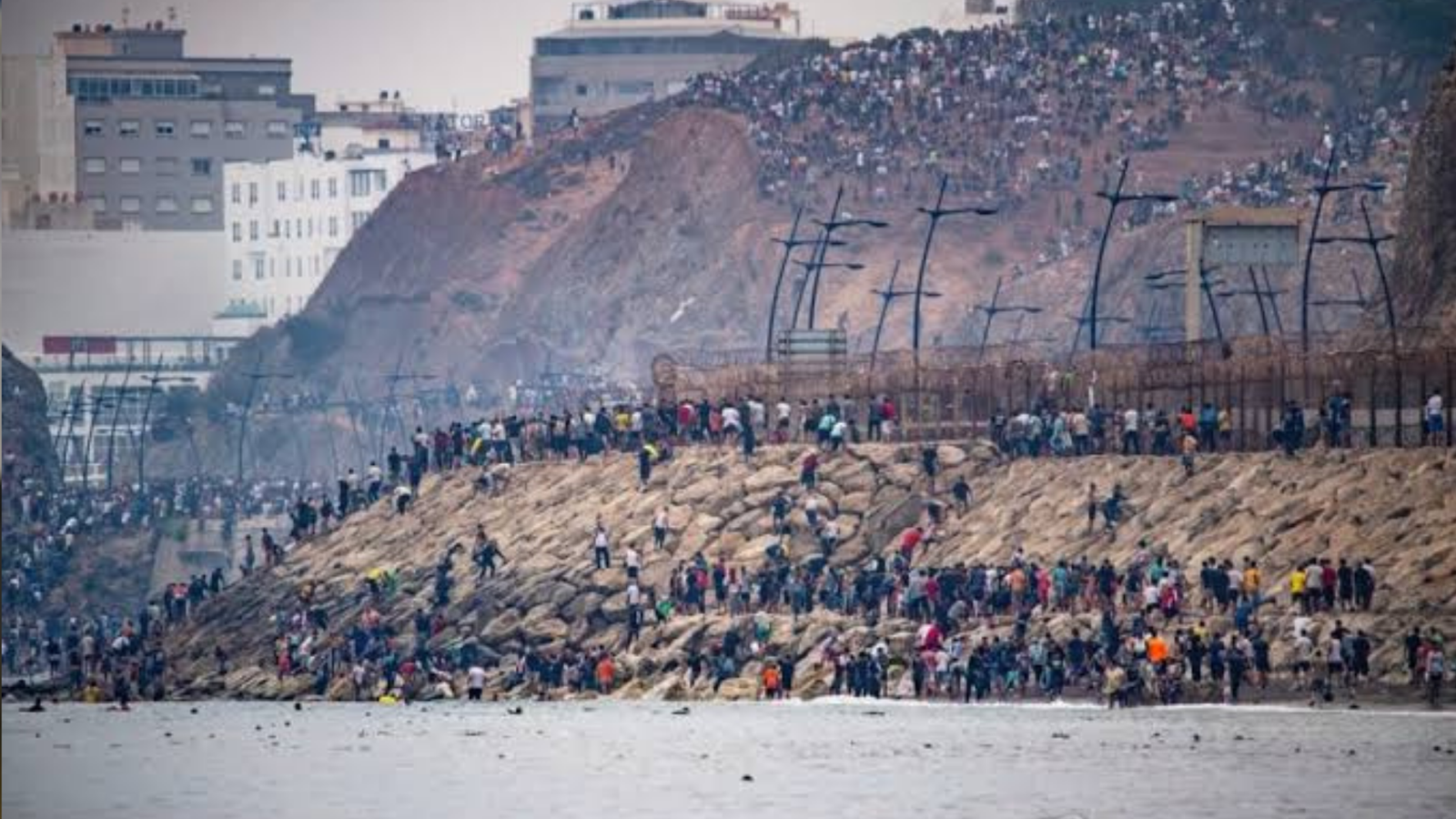
Most of the tens of thousands of migrants who swam into the Spanish exclave of Ceuta on Thursday have now been escorted back to Morocco by Spanish soldiers and police. But the unprecedented surge has left a devastating toll: at least 67 people dead, their bodies recovered from the sea amid discarded rubber rings and flippers.
The dramatic scenes have shaken Europe, reigniting political divisions over migration and prompting fierce debate about what triggered the sudden influx from social‑media rumours promising an easy route into Europe to possible miscommunication at the border.
Whatever the cause, Spain’s socialist prime minister Pedro Sánchez is furious at the reaction from some EU partners. He accused certain governments of “attacking” Spain instead of offering solidarity during the crisis a pointed reference to Italy.
Italy’s hard‑right Fratelli d’Italia, led by Prime Minister Giorgia Meloni, quickly circulated images of migrants running through Ceuta’s streets, mocking Sánchez with the caption: “This is the Sánchez model the Italian left wing likes so much.”
Meloni then escalated tensions by suspending Italy’s Schengen agreement with Spain, citing security concerns a move that Madrid condemned as unnecessary and politically motivated.
Spain argues the situation is under control and stresses that Ceuta is not part of the Schengen zone, meaning Moroccan migrants were never able to freely enter mainland Europe. Officials say Meloni knows this, and accuse her of exploiting the crisis for domestic political gain.
The episode has exposed once again how migration pressures at Europe’s borders can quickly turn into diplomatic flashpoints with human tragedy unfolding alongside political theatre.




+ There are no comments
Add yours