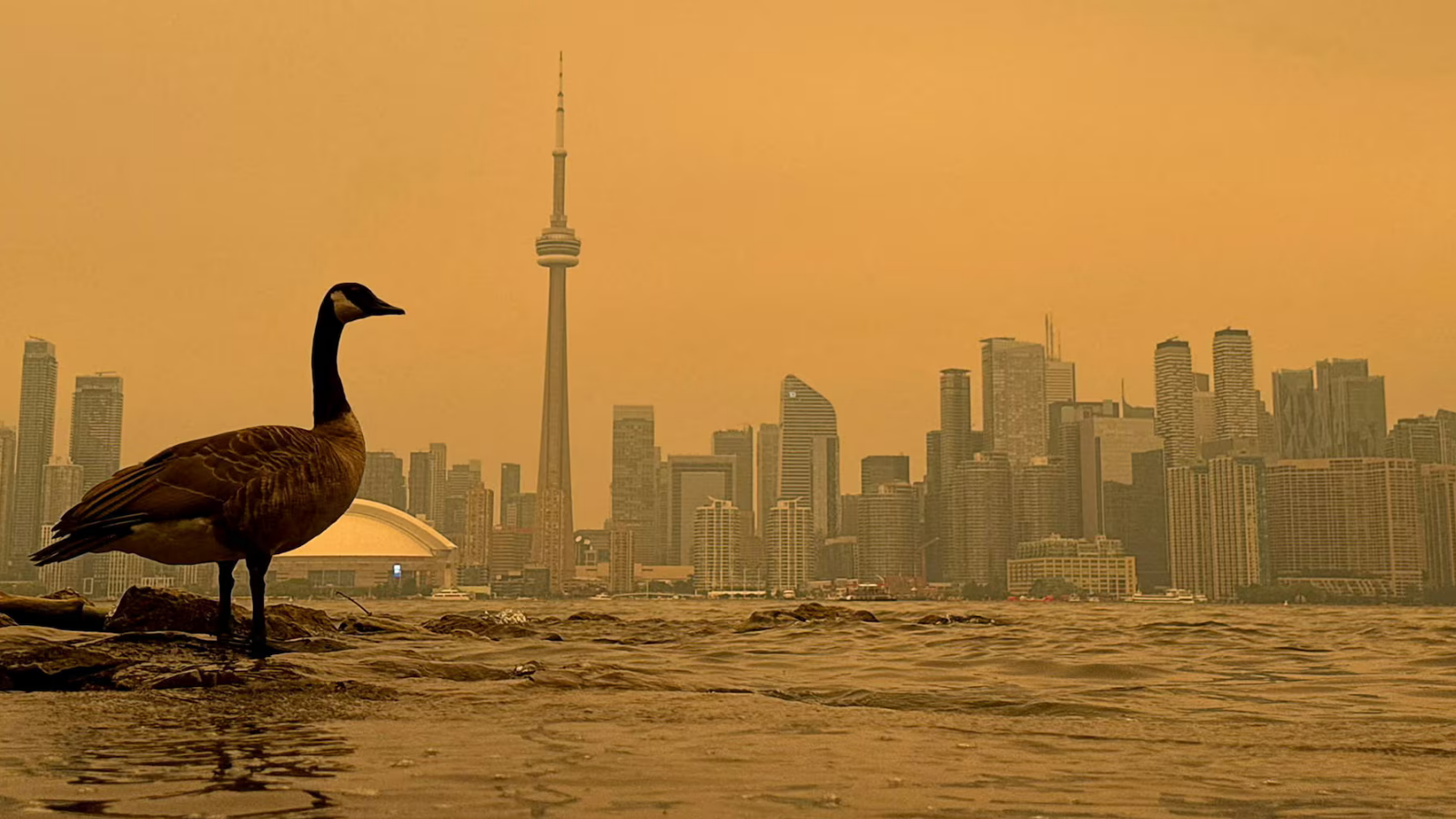
Toronto recorded the worst air quality of any major city in the world on Wednesday as thick wildfire smoke from northwestern Ontario darkened skies, drifted into the northeastern United States and triggered widespread health alerts.
Environment Canada logged an Air Quality Health Index (AQHI) of 10+, the highest “very high risk” category, with hazardous conditions expected to persist through Thursday night. The smoke plume extended southward, reaching New York City, where officials issued warnings urging residents to reduce strenuous outdoor activity. The National Weather Service said smoke could linger into the end of the week.
Air‑quality firm IQAir ranked Toronto No. 1 globally, surpassing Kinshasa and Delhi. New York placed fifth.
Wildfire smoke drifting from Northern Canada has become a recurring summer hazard across the US in recent years. A viral video showed a Canadian National (CN) train surrounded by flames near Armstrong, Ontario. CN said employees and local residents were evacuated Monday night, and rail operations were suspended as a precaution.
The worsening conditions forced Toronto to cancel the FIFA Fan Festival and the England–Argentina World Cup watch party at Nathan Phillips Square. In New York, more than 80,000 people are expected at Sunday’s World Cup final in New Jersey, with another 50,000 planning to watch from Central Park where skies were visibly hazy.
New York Governor Kathy Hochul warned that smoke from Canadian wildfires was creating unhealthy air statewide, urging vulnerable residents to exercise caution.
Canada’s federal government said the 2026 wildfire season began more slowly than the catastrophic seasons of 2023 and 2025, but warned that warmer‑than‑average temperatures were fuelling dangerous conditions. As of Wednesday, 835 active fires were burning nationwide, 112 out of control, with 1.9 million hectares scorched mostly across Manitoba, Saskatchewan and Ontario.
University of Toronto professor Greg Evans noted the city was being hit simultaneously by extreme heat and wildfire smoke, a combination he expects to become more common. “Cities and residents need to prepare for this in the future,” he said.
Toronto resident Paula Oreskovich said she immediately noticed the haze and smell of smoke. With wildfire summers becoming routine, she said the situation underscores a broader crisis: “You have to be silly if you’re not going to be concerned about climate change. It’s definitely here, it’s definitely happening, and it’s happening globally.”









+ There are no comments
Add yours