
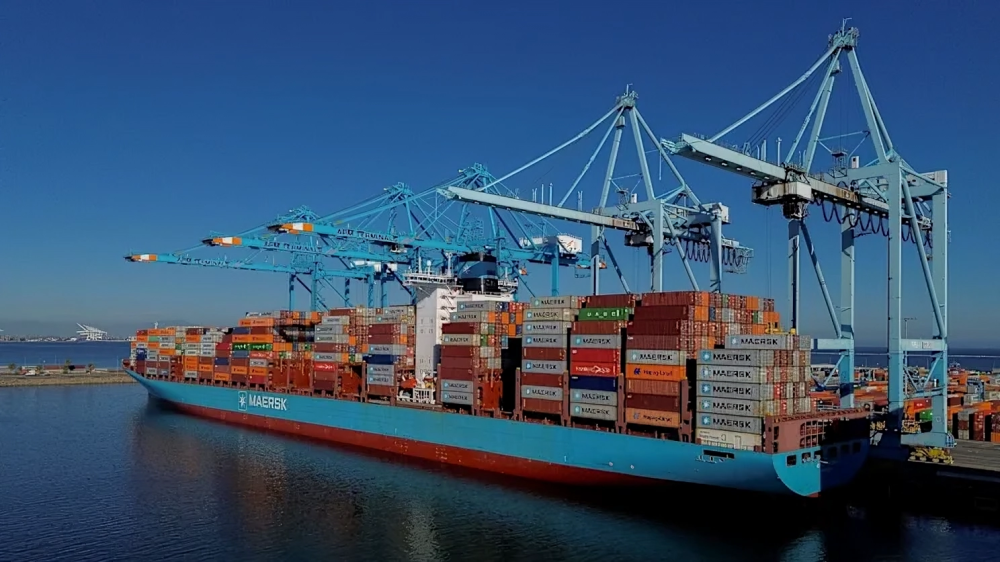
The Trump administration has released a sweeping blueprint to rebuild America’s long‑declining shipbuilding and maritime industries, outlining a multibillion‑dollar strategy partly financed by port fees on Chinese‑built vessels charges that Washington and Beijing agreed to freeze for one year after a tense standoff.
The more than 30‑page Maritime Action Plan lays out an aggressive roadmap to restore U.S. dominance in a sector that once thrived during World War II but has since fallen far behind global competitors, especially China. The proposal calls for the creation of maritime “prosperity zones” to attract investment, major reforms to workforce training, an expansion of U.S.-built and U.S.-flagged commercial fleets, a dedicated Maritime Security Trust Fund, and a reduction in regulatory burdens.
The administration first announced the China‑linked port fees last year, arguing they were necessary to counter Beijing’s “unfair practices” and loosen its grip on global shipping. The Section 301 penalties were expected to generate more than $3.2 billion annually from Chinese‑made ships docking at U.S. ports. But China retaliated with its own fees on U.S.-linked vessels, triggering disruptions across global trade routes. The two nations eventually agreed to pause the levies for 12 months.
Despite the delay, the maritime industry and bipartisan lawmakers welcomed the long‑awaited plan. Shipyard owners, investors and sponsors of the SHIPS for America Act legislation aimed at revitalizing U.S. shipyards and maritime infrastructure praised the administration’s renewed focus.
Senator Todd Young, a Republican from Indiana, said Trump’s proposal aligns closely with the SHIPS Act, which he reintroduced alongside Democratic Senator Mark Kelly and others. The bill would establish a Maritime Security Trust Fund to channel port fee revenue into shipyard upgrades, maritime security and infrastructure projects. Although it enjoys rare bipartisan support, progress has been slow.
For now, the administration’s plan signals a renewed push to rebuild a sector seen as vital to national security, economic resilience and America’s standing on the world’s oceans.











+ There are no comments
Add yours