
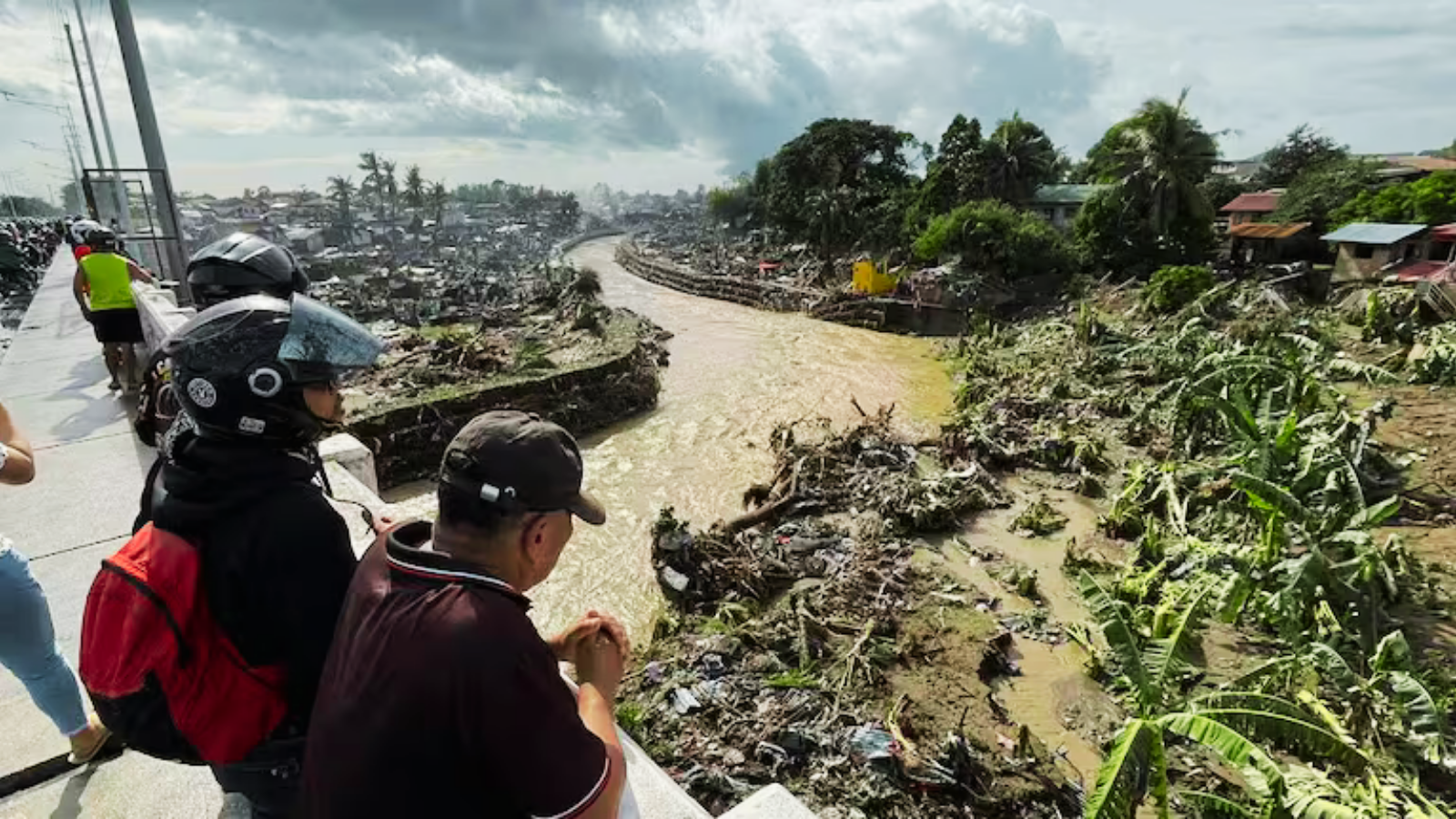
The Philippines has declared a state of calamity after powerful storms unleashed catastrophic flooding across Cebu province, leaving dozens dead and many more missing. Officials confirmed that most fatalities were caused by drowning, as torrents of muddy water swept down hillsides and surged into towns and cities, destroying homes and livelihoods.
Under the declaration, government agencies gain expanded powers to tap emergency funds and fast-track the delivery of essential goods and services to affected communities. The move is designed to accelerate rescue, relief, and recovery efforts in areas where normal life has been severely disrupted.
The destruction in Cebu has been described as extensive, with residential neighborhoods hardest hit. Many small buildings were swept away, while floodwaters left behind a thick carpet of mud across streets and homes. In Mandaue City, residents were seen wading through waist-deep water carrying their belongings, a stark image of the storm’s impact.
Authorities reported that the storm dumped more than a month’s worth of rain in just 24 hours, triggering landslides and flash floods that overwhelmed infrastructure. The Cebu City Disaster Risk Reduction and Management Office confirmed multiple casualties across several districts, ranging from infants to the elderly.
The declaration of a state of calamity allows local governments to mobilize resources more quickly, including the use of Quick Response Funds for rescue operations, medical assistance, and rebuilding efforts. It also enables faster procurement of food, water, and shelter supplies for displaced families.
Officials warned that the full extent of the damage is still being assessed, with thousands of residents displaced and critical services such as electricity and transport disrupted. Clearing operations are underway, but recovery is expected to take weeks, if not months.
The disaster highlights the Philippines’ vulnerability to extreme weather events, with Cebu experiencing what authorities described as its worst flooding in recent history. Climate experts have repeatedly warned that rising global temperatures are intensifying storms across Southeast Asia, increasing the risk of mass casualties and widespread destruction.









+ There are no comments
Add yours