
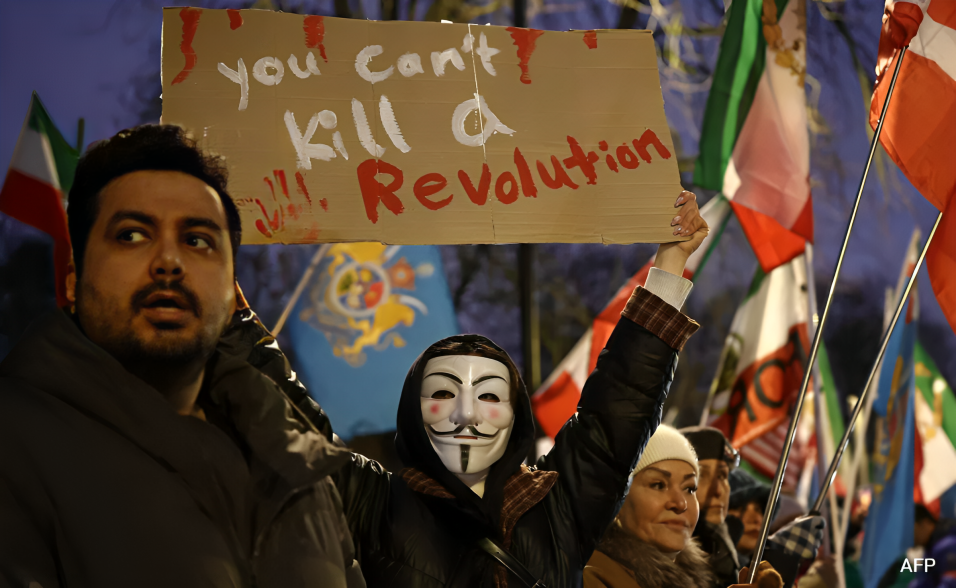
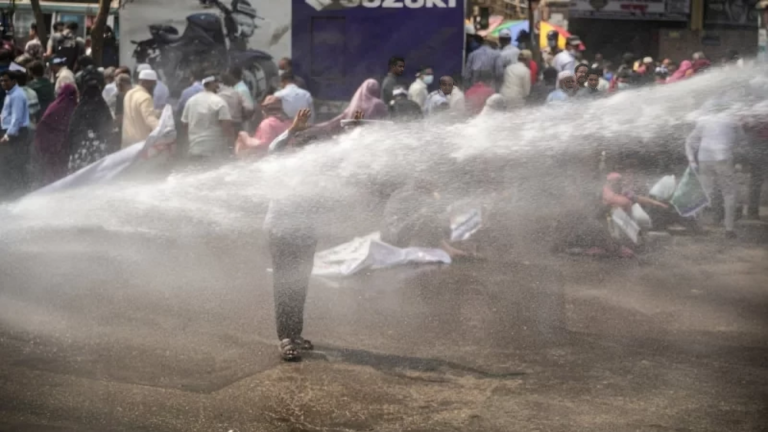
Iran has warned that it will retaliate forcefully if attacked by the United States, as nationwide anti‑government protests continued to surge on Saturday night despite an increasingly violent crackdown. Medical staff at two major hospitals told the BBC that more than one hundred bodies had been brought in over the past forty eight hours. Verified videos and eyewitness accounts indicate that security forces have intensified their use of live ammunition, tear gas and mass arrests as unrest spreads across the country.
The protest movement has now reached more than one hundred cities and towns across all thirty one provinces, marking one of the most widespread uprisings since the 1979 revolution. Demonstrators continue to defy the government despite internet blackouts, roadblocks and the deployment of elite security units.
US President Donald Trump warned that the United States would strike Iran “very hard” if the government “starts killing people.” In response, Iran’s parliament speaker declared that any US attack would make Israel and all American military and shipping bases in the region “legitimate targets,” raising fears of a broader regional confrontation.
Calls for Reza Pahlavi Gain Momentum
As the protests intensify, a growing number of demonstrators have begun chanting in support of Reza Pahlavi, the exiled son of Iran’s last monarch. The former crown prince has publicly endorsed the uprising, urging Iranians to continue resisting the current regime. Pahlavi, who has lived in the United States for decades, has long advocated for a secular, democratic Iran and has recently increased his outreach to opposition groups.
However, he remains a divisive figure. Many younger Iranians see him as a symbol of potential reform and national unity, while others remember the authoritarian rule of his father’s government, which was toppled during the 1979 Islamic Revolution. With independent polling inside Iran nearly impossible, the true extent of Pahlavi’s support remains unclear.
Crackdown Expands as Protests Grow
Security forces have intensified operations in Tehran, Mashhad, Shiraz and Isfahan, with armored vehicles and riot police deployed across major intersections. Human rights groups report that thousands have been detained, including students, activists and journalists. Several universities have become flashpoints, with students staging sit‑ins and refusing to leave campuses despite threats of expulsion and arrest.
Meanwhile, videos circulating online show protesters chanting slogans rejecting both the current clerical leadership and foreign intervention. Crowds in multiple cities were heard shouting variations of “Not Gaza, not Lebanon my life for Iran,” reflecting frustration over the government’s regional policies amid severe domestic economic hardship.
Economic Collapse Fuels Anger
The protests were initially sparked by the collapse of the Iranian rial, which now trades at more than 1.4 million to one US dollar. Years of sanctions, corruption and mismanagement have pushed inflation to record levels, leaving millions struggling to afford basic necessities. What began as economic frustration has now transformed into a broad political movement demanding systemic change.



+ There are no comments
Add yours