
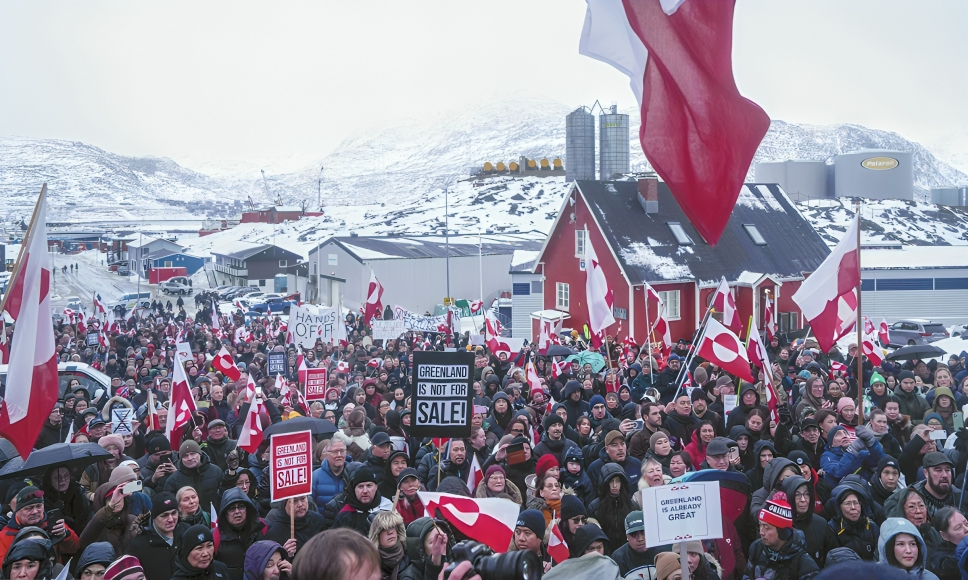
Greenland is stepping deeper onto the world stage. In a symbolic and strategic move, France and Canada will open new consulates in Nuuk on Friday an unmistakable signal of support for Greenland’s autonomy and a clear rebuke to Donald Trump’s long‑standing ambition to bring the Arctic island under Washington’s control.
A Diplomatic Counterweight to U.S. Pressure
Since returning to the White House last year, Trump has repeatedly argued that the United States must control Greenland for security reasons, citing the island’s mineral wealth and strategic Arctic location. Although he recently softened his stance claiming a “framework” agreement with NATO chief Mark Rutte to expand U.S. influence concerns remain high in Copenhagen and Nuuk.
A joint U.S.-Denmark-Greenland working group is now exploring ways to address Washington’s security interests, though the details remain behind closed doors. Danish and Greenlandic leaders have been firm: sovereignty is non‑negotiable.
Europe Steps In
For many in Greenland, the arrival of two new Western consulates is more than a diplomatic gesture. It’s reassurance.
“It’s a victory for Greenlanders to see two allies opening diplomatic representations in Nuuk,” said Jeppe Strandsbjerg, a political scientist at the University of Greenland. “There is great appreciation for the support against what Trump has said.”
French President Emmanuel Macron announced France’s plans during a June visit to Nuuk, where he emphasized Europe’s solidarity with Greenland and openly criticized Trump’s ambitions. France’s new consul, Jean‑Noel Poirier, brings extensive diplomatic experience, including a previous posting as ambassador to Vietnam.
Canada followed suit in late 2024, framing its new consulate as a step toward deeper Arctic cooperation.
A Broader Message to Washington
Experts say the move is designed to send a unified message.
“It’s a way of telling Donald Trump that his aggression against Greenland and Denmark is not a question for Greenland and Denmark alone,” said Ulrik Pram Gad of the Danish Institute of International Studies. “It’s also a question for European allies and for Canada.”
Christine Nissen, a security analyst at the Europa think tank, added that the implications stretch far beyond the Arctic. “The consequences are obviously not just Danish. It’s European and global.”
A Step Toward Greenland’s Long‑Term Aspirations
The new consulates will operate under the French and Canadian embassies in Copenhagen, but their presence in Nuuk carries symbolic weight. According to Strandsbjerg, they offer Greenland a chance to “practice” the diplomatic functions of an independent state—something many Greenlanders hope to achieve in the future.
If you’d like, I can also craft a shorter version suitable for social media or a more analytical piece focusing on Arctic geopolitics.








+ There are no comments
Add yours