
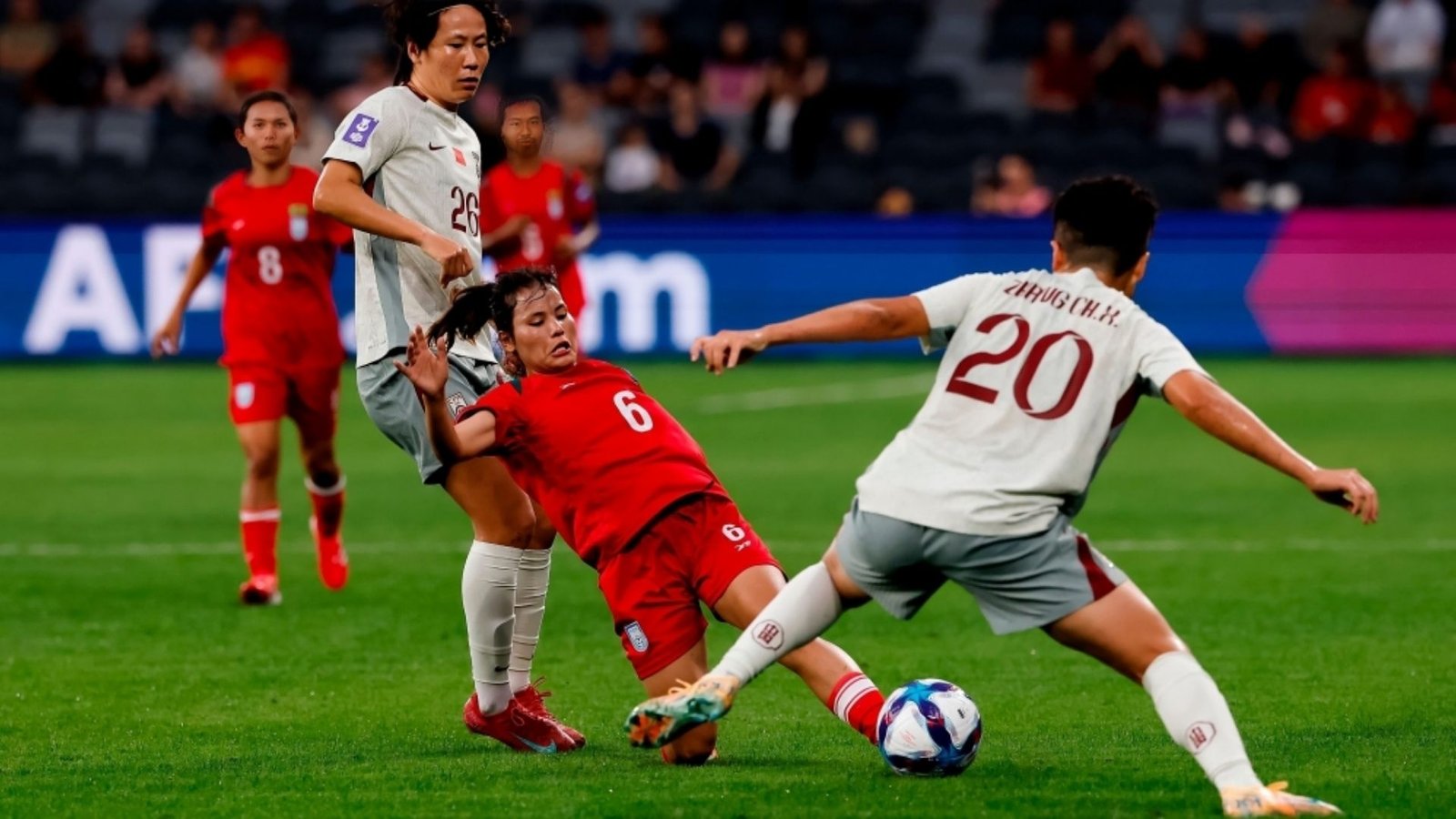
Bangladesh ended their AFC Women’s Asian Cup campaign without a point or a goal, falling 0-2 to China, 0-5 to DPR Korea and 0-4 to Uzbekistan. On paper, the numbers look brutal. But head coach Peter Butler’s reflections painted a far more complex picture one of courage, progress and a team fighting structural disadvantages far beyond the pitch.
“Sometimes you feel like a boxer going into a fight with one arm tied behind your back,” Butler said after the Uzbekistan defeat. “We’re playing teams 60-70 places higher, physically stronger, and better prepared. Yet the girls fought. They’ve come a long way. I’ve got nothing but praise for the girls. We had long periods where we played better football.”
Those bright spells were real, even if buried beneath heavy scorelines.
Monika Chakma and Maria Manda held their ground in midfield, refusing to be bullied by vastly superior opponents. Young Sauravi Akanda Prity showed composure well beyond her age. And throughout the tournament, Bangladesh tried to play football on their own terms even when the pressure was suffocating.
But Butler, true to his Yorkshire bluntness, didn’t sugarcoat everything.
“I think one or two gave up. My teams don’t give up. That disappointed me,” he said a reminder that at this level, effort is merely the starting point.
The “tied arm” he spoke of wasn’t about talent. It was about tools. Bangladesh entered the continent’s toughest stage without the analytical equipment, training facilities or support systems their opponents consider basic necessities. Butler repeatedly pointed to this gulf not as an excuse, but as a reality that must be addressed if Bangladesh want to compete, not just participate.
For now, the campaign ends with harsh results but valuable lessons. The players showed heart. The gaps were exposed. And the message from the coach was unmistakable: Bangladesh can grow but only if the country gives its women’s team the resources to fight with both arms free.












+ There are no comments
Add yours