
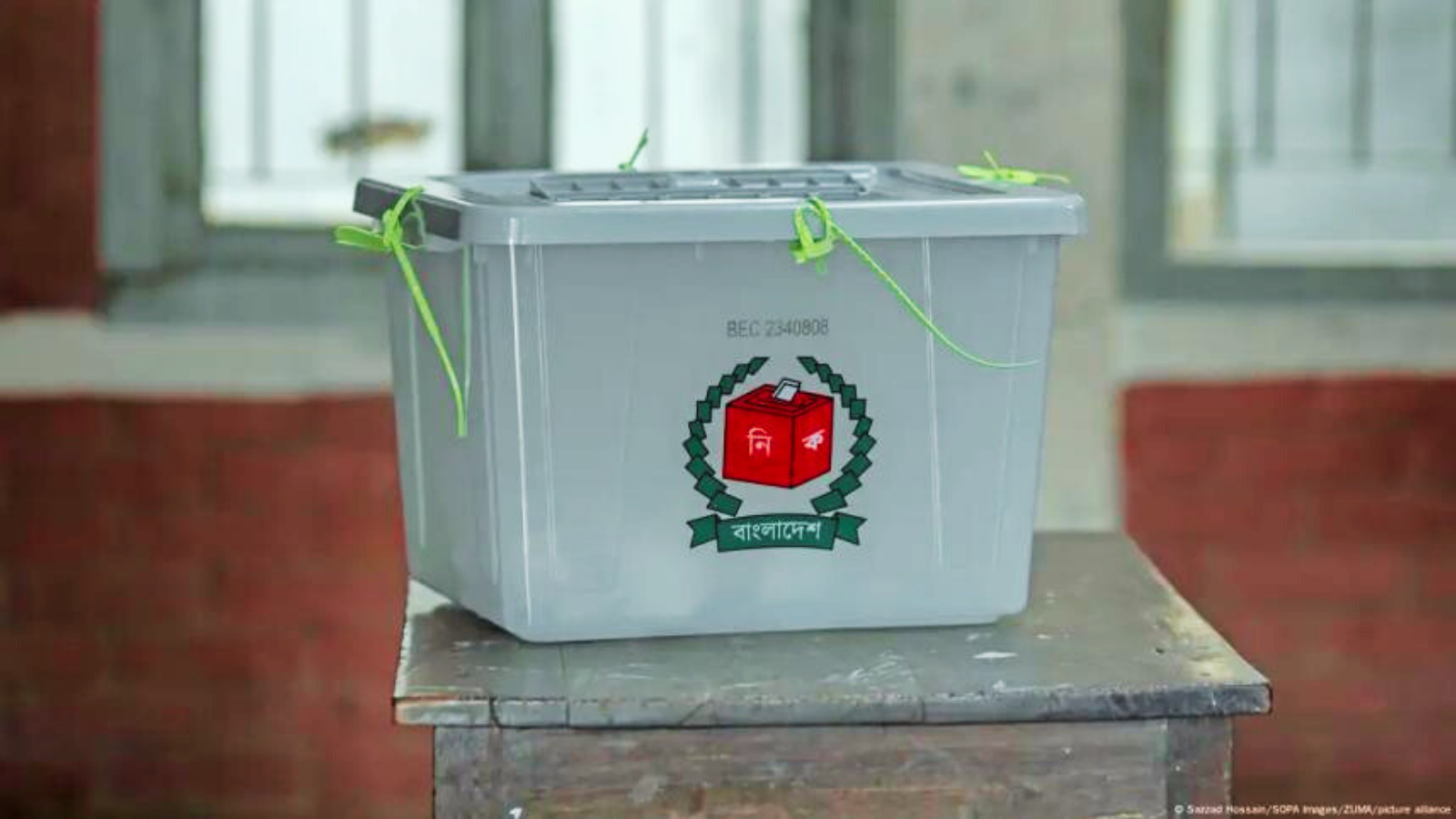
Bangladesh’s post‑independence electoral history has repeatedly shown one core truth: party symbols are often more powerful than individual candidates. In the landmark 1970 election, symbols became the primary carriers of emotion, identity and political allegiance and that reality remains largely unchanged today. When a party chief is popular and the party symbol is widely accepted, it becomes a formidable combination at the ballot box.
In the 13th national parliamentary election, that old pattern is visible again. Two major blocs a BNP‑aligned alliance on one side and a Jamaat‑e‑Islami led 10‑party coalition on the other are at the heart of the contest. With the Awami League absent, symbol‑driven politics has taken on even greater importance.
Multiparty competition and shifting alliances
A wide range of parties, including Jatiya Party and Islami Andolan, are contesting, alongside a significant number of independent candidates. Their presence reflects pluralism, but also injects fresh uncertainty into many constituencies. Rebel candidates from various parties further complicate the electoral arithmetic.
In many cases, leaders are switching alliances at the last moment, not on ideological grounds but to secure electoral advantage. This confuses voters and deepens mistrust in politics. Islami Andolan’s late decision to quit its alliance and contest independently under the hand fan symbol is a telling example.
Personal ambition versus party ideals
Several recent moves highlight how personal political futures are often prioritised over party ideology. The departure of Nurul Haque Nur from Gono Odhikar Parishad, Rashed Khan’s decision to join BNP, LDP leader Redwan Ahmed’s exit, Bobby Hajjaj effectively sidelining his own NDM to seek BNP’s nomination, and freedom fighter Maj. (Retd.) Akhtaruzzaman contesting under Jamaat’s scales symbol all point to a culture where individual ambition can override organisational principles.
Historically, similar defections by figures like Taimur Alam Khandaker, Shamsher Mobin Chowdhury and Barrister Shahjahan Omar have weakened democratic practice and party cohesion.
Awami League-leaning voters as a silent factor
Even though the Awami League is not contesting, its support base remains a major electoral factor. Several parties are trying to present themselves as the natural guardians of Awami‑leaning voters in an effort to tap into that vote bank.
At the same time, BNP is grappling with internal dissent, with around 90 rebel candidates running as independents. This poses a serious challenge to official party nominees and raises questions about discipline, especially in a party whose stated principle is that “the individual is smaller than the party, and the party is smaller than the country.”
Lessons from past elections
Experiences from the disputed 2024 election and earlier polls show that when party workers and supporters lack unity, the electoral process itself becomes fragile. For democracy to function meaningfully, parties need internal discipline, ideological clarity and a strong sense of responsibility toward citizens.
The people’s difficult but decisive choice
Ultimately, the decision now lies with the voters. Beyond personalities and symbols, they must weigh:
- Past record: how parties have governed and behaved in and out of power
- Governance capacity: ability to manage the state effectively
- Sovereignty and stability: commitment to protecting independence and territorial integrity
- Economic management: capacity to stabilise and grow the economy
- Law and order: improving security and justice
- Future vision: a credible roadmap for a safe, stable and progressive Bangladesh
Whichever party or leadership can convincingly address these concerns is likely to earn the public mandate. The country’s future security, stability and progress will hinge on the wisdom of that collective choice.










+ There are no comments
Add yours