
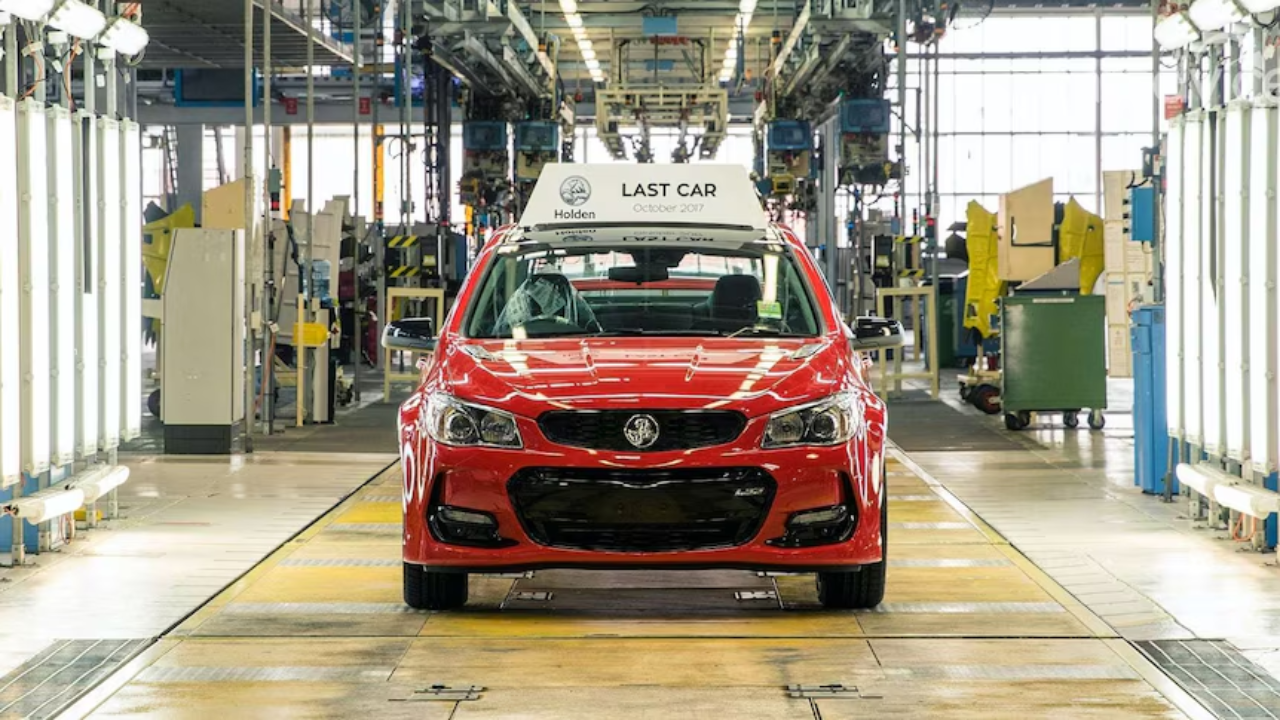
When the final Commodore SS-V rolled off Holden’s Elizabeth assembly line in South Australia on October 20, 2017, it marked the end of a remarkable 120-year legacy of large-scale automotive manufacturing in Australia. This historic moment closed a chapter that had seen the rise and fall of many iconic Australian-made cars, from the legendary Monaro, Torana, Falcon, and Charger to more familiar models like the Camry and Magna.
However, Australia’s automotive story wasn’t solely about domestically designed vehicles. It also included a significant number of foreign-branded cars assembled locally machines often overlooked as purely foreign imports. Factory assembly lines in Heidelberg (Melbourne) and Enfield (Sydney) saw French Citroëns, Renaults, and Peugeots come to life in Australian factories. Likewise, German Volkswagens and Mercedes-Benzes were assembled here, providing a local touch to European luxury and economy cars.
Not only mainstream brands but also lesser-known vehicles like Studebakers, Ramblers, Singers, and Triumphs were produced in Australia during the decades when tariffs on fully imported vehicles encouraged local assembly. This strategy allowed manufacturers to circumvent import taxes and foster local industry.
Among these uniquely Australian “foreign” cars was the Citroën ID19 Parisienne, a simplified version of the iconic DS model, exclusive to Australia. Enthusiast Ferdi Saliba, who owns a black ID19 with a vivid red interior, recalls that many admirers were surprised to learn it was built in Heidelberg rather than France. The ID19 was assembled by Continental & General using mostly French parts but incorporated Australian touches, such as a traditional manual transmission instead of the complex semi-automatic found in foreign Citroëns, no power steering, and locally sourced vinyl trim.
This model shared its assembly line with Peugeots and Studebakers into the 1960s, exemplifying how Australia’s automotive industry was a melting pot of local ingenuity and international brands. The end of Australian car manufacturing marked not just the conclusion of a production line but the closing of a significant chapter in the nation’s industrial history one that blended local craftsmanship with global automotive influences.










+ There are no comments
Add yours