
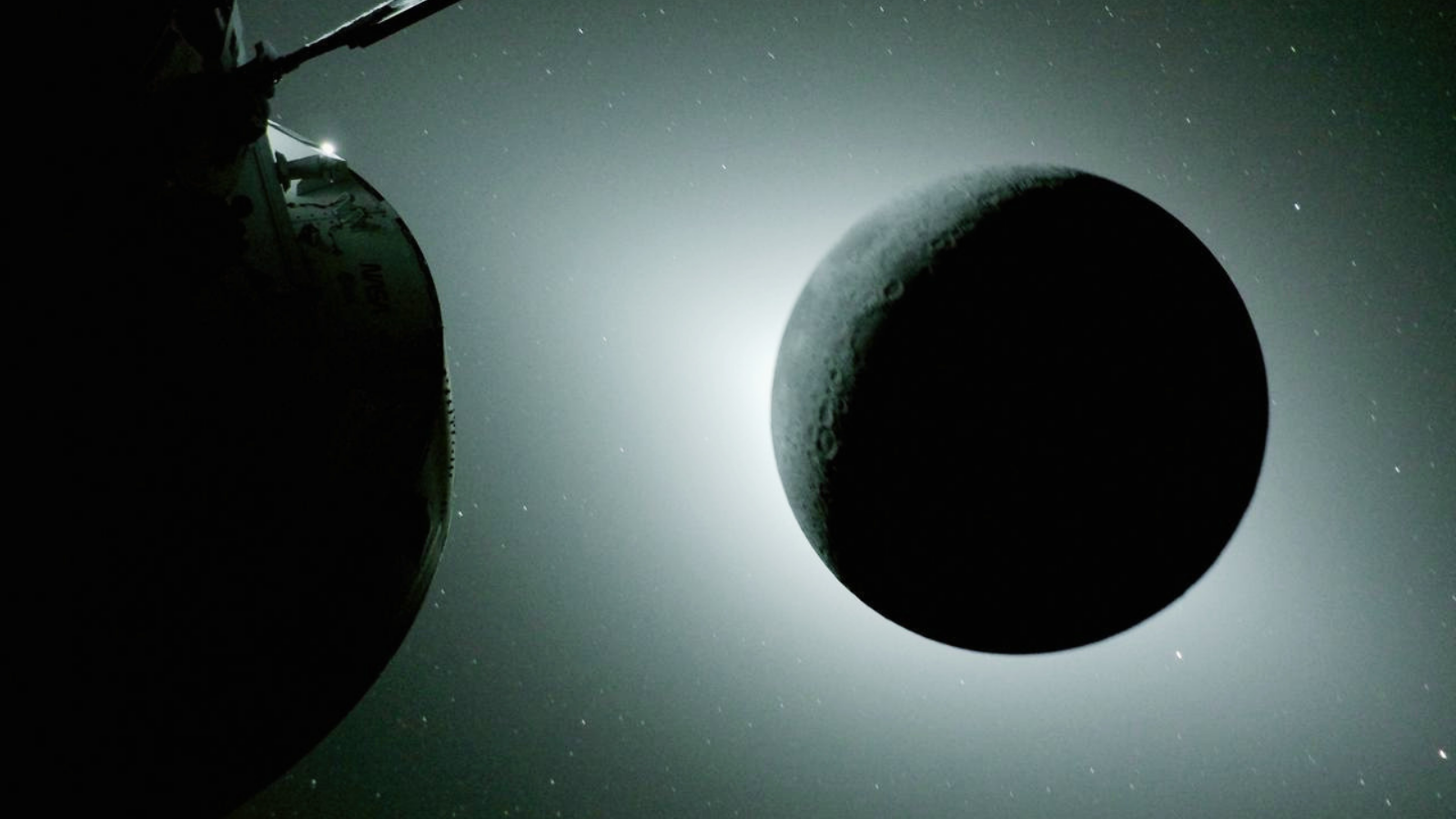
The four astronauts aboard NASA’s Artemis II mission are preparing to speak with reporters on Wednesday in what will be the first-ever press conference delivered from deep space. The crew NASA astronauts Reid Wiseman, Victor Glover, Christina Koch and Canadian astronaut Jeremy Hansen have been orbiting in their Orion spacecraft since launching from Florida last week.
Earlier this week, they swept past the shadowed far side of the moon, following a trajectory that carried them farther from Earth than any humans in history. Their mission marks the opening chapter of NASA’s multibillion‑dollar Artemis program, which aims to return astronauts to the lunar surface by 2028 ahead of China and establish a long‑term US presence on the moon as a stepping stone for future missions to Mars.
Back on Earth, teams of lunar scientists have been working around the clock inside rooms adjacent to NASA’s Mission Control Center in Houston. They have been poring over real‑time and recorded audio from the crew, debating observations and taking notes as the astronauts relay what they see more than 252,000 miles (405,555 km) away.
For decades, lunar science has relied heavily on orbiting satellites and Earth‑based telescopes. But Artemis II’s six‑hour lunar flyby offered something far rarer: human eyes observing the moon in real time, enabling immediate scientific exchanges between the crew and researchers on the ground.
Scientists view Artemis II as a crucial early step in unlocking the moon’s geological secrets and, by extension, the history of the solar system. Before launch, mission specialist Christina Koch described the moon as a “witness plate” a preserved record of cosmic events that shaped the planets.
The crew’s observations are also helping NASA evaluate potential landing zones for future robotic rovers, which the agency hopes to deploy in rapid succession beginning next year.











+ There are no comments
Add yours