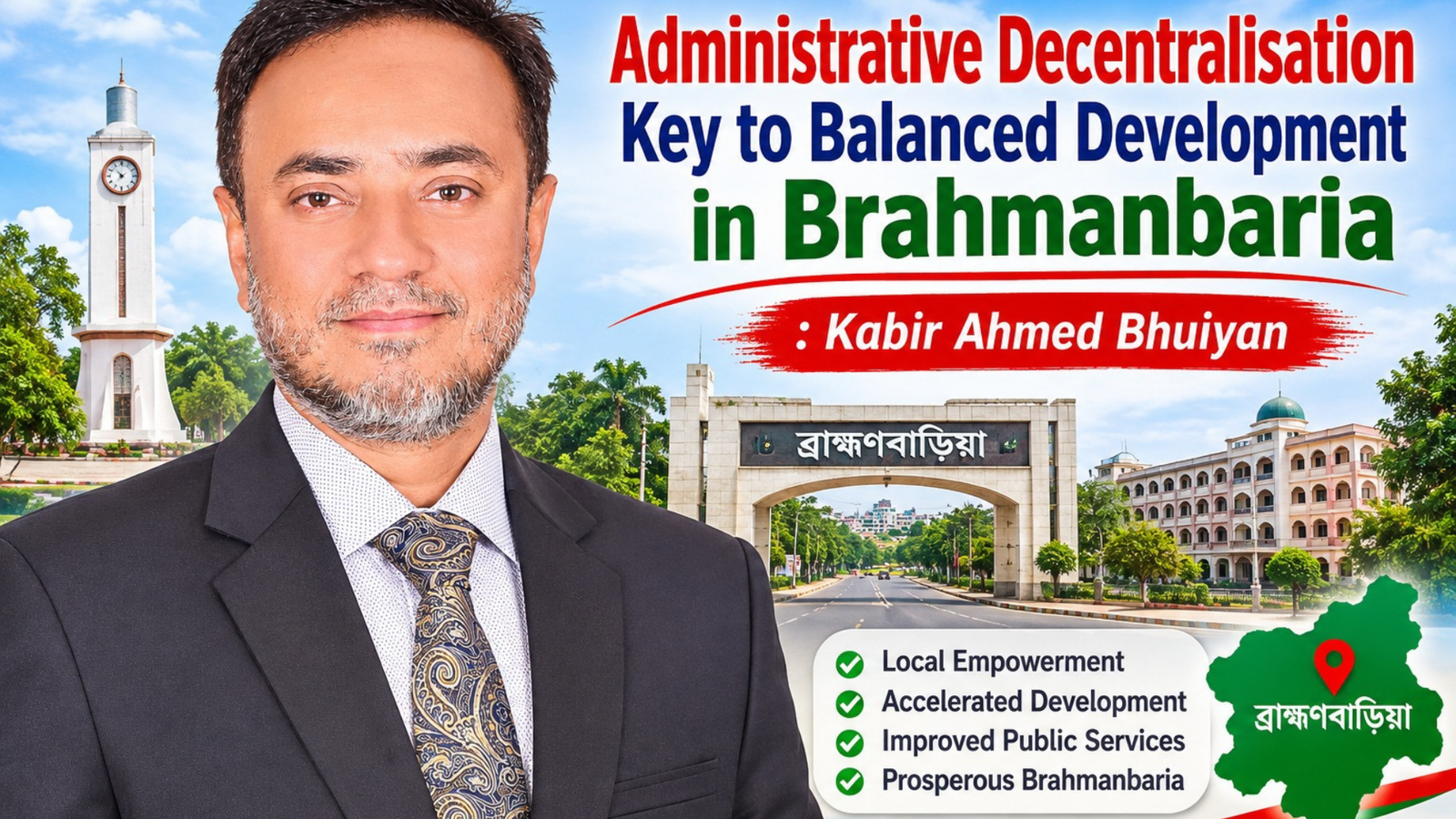
Administrative decentralisation is essential for ensuring balanced and inclusive development across Brahmanbaria, according to a comprehensive policy proposal highlighting the need to reassess the district’s current administrative structure in line with its growing population and development demands.
The proposal argues that sustainable development should not be limited to large infrastructure projects or investments concentrated in a few areas. Instead, it should focus on providing equal access to public services, healthcare, education, employment opportunities, transportation, and administrative facilities for residents throughout the district.
Growing Population, Limited Administrative Structure
According to data from the 2022 Population Census, Brahmanbaria has a population of more than 3.3 million people, spread across:
- 9 upazilas
- 101 unions
- 5 municipalities
- 1,328 villages
- A land area of approximately 1,927 square kilometres
Development advocates say the existing administrative structure may no longer adequately reflect the district’s demographic and geographic realities.
Among the district’s upazilas:
- Brahmanbaria Sadar has a population of around 660,000
- Nabinagar has approximately 556,000 residents and the district’s highest number of unions at 21
- Nasirnagar, Kasba, Sarail, and Bancharampur each serve populations exceeding 300,000
The proposal notes that the significant differences in population size, geographic coverage, and service demands among the upazilas indicate a need for administrative reassessment.
Proposal for New Upazilas
The plan recommends evaluating the formation of new upazilas while maintaining the existing boundaries of parliamentary constituencies.
Particular attention has been given to:
Brahmanbaria Sadar
With more than 660,000 residents, Brahmanbaria Sadar is considered one of the district’s most densely populated administrative areas.
The proposal suggests dividing the current upazila into two separate administrative units to:
- Improve public service delivery
- Reduce administrative pressure
- Accelerate local infrastructure development
- Bring government services closer to residents
Nabinagar
The proposal also identifies Nabinagar Upazila as a candidate for administrative restructuring due to its:
- 21 unions
- Large population
- Extensive geographic coverage
- Significant travel distances for citizens accessing services
Supporters argue that a revised administrative framework could improve governance efficiency and public accessibility.
Strengthening Akhaura and Kasba
The report also highlights the strategic importance of Akhaura and Kasba, particularly due to:
- The Akhaura Land Port
- International railway connectivity
- Immigration and customs facilities
- Cross-border trade with India
- Economic and logistics opportunities
Rather than creating new upazilas in the region, the proposal recommends enhanced coordinated planning between the existing administrations to improve trade, healthcare, education, and border management services.
Expected Benefits of Administrative Decentralisation
Advocates believe the creation of additional upazilas could bring several advantages:
Administrative Services
- Easier access to government services
- Reduced travel time and costs
- More efficient land administration
- Faster local decision-making
Healthcare
- New or expanded Upazila Health Complexes
- Improved maternal and child healthcare
- Increased deployment of doctors and healthcare professionals
Education and Employment
- Additional educational institutions
- Technical and vocational training centres
- Youth entrepreneurship programmes
- Expanded skill-development opportunities
Infrastructure
- Improved rural roads and bridges
- Better drainage and urban planning
- Modernised marketplaces and local economic centres
Economic Development
- Expansion of banking and financial services
- Growth of small and medium-sized enterprises
- Improved agricultural and fisheries marketing systems
- New employment opportunities
Vision for Inclusive Development
Supporters of the proposal argue that development should be measured not only by infrastructure investments but also by how easily citizens can access healthcare, education, administrative services, and economic opportunities.
They contend that administrative decentralisation, strengthened local government institutions, and a more balanced distribution of public resources could help unlock the full potential of every region within Brahmanbaria.
The proposal concludes that a detailed government study examining population trends, geographical realities, service demands, and long-term planning could help determine whether additional upazilas would contribute to greater administrative efficiency and regional development.
“Development is not the exclusive right of any particular area. Every resident of Brahmanbaria deserves equal opportunities, equal access to services, and an equal share in the district’s progress.”








+ There are no comments
Add yours