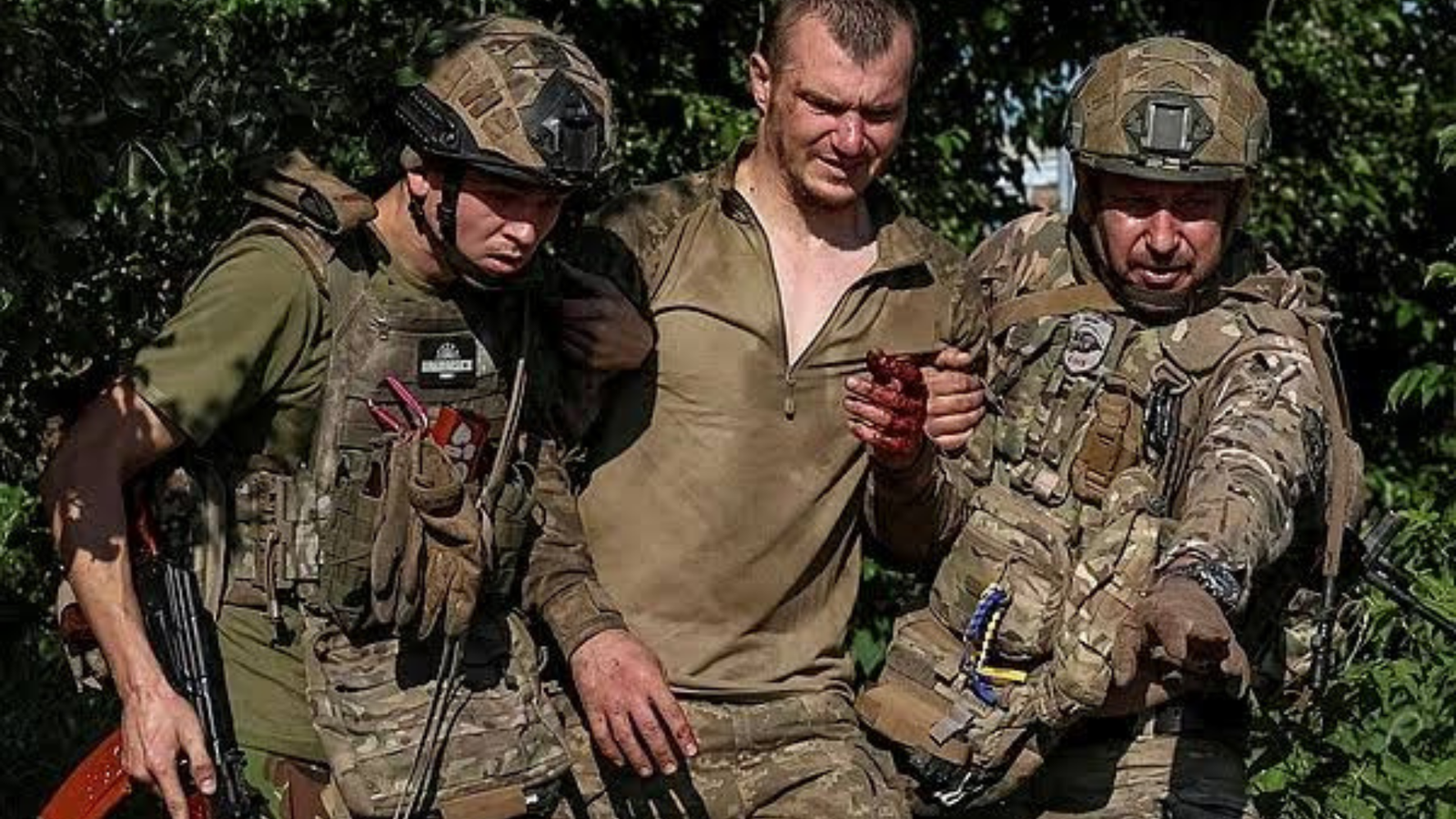
The front line in Ukraine saw minimal movement throughout June, extending a months‑long trend of stalled Russian advances, according to new geospatial analysis from the Institute for the Study of War (ISW).
Russia recorded a net gain of 30 square kilometres (12 square miles), mostly in the northeastern Kharkiv region. But ISW noted that these gains were largely the result of earlier incursions being reclassified as confirmed advances once additional evidence emerged.
Ukraine, meanwhile, made 11 square kilometres (four square miles) of progress in Zaporizhzhia and 18 square kilometres (seven square miles) in Dnipropetrovsk, though ISW said the full scope of these counterattacks remains unclear.
“The outcomes from these continuing combat operations remain unclear and will likely be reflected in the data in the coming weeks,” ISW’s Geospatial Intelligence Team said.
Russia’s broader momentum has slowed sharply since late 2025. Moscow lost 403 square kilometres (156 square miles) in April and May the first time in two and a half years that its forces ceded more territory than they captured. Ukraine built on those gains in May, aided by increasingly effective frontline drone strikes and mid‑range attacks.
So far in 2026, Russian forces have advanced an average of 15 square kilometres per month, a dramatic drop from the 405 square kilometres per month recorded in 2025. ISW’s estimates exclude Russian claims that remain unverified.
The user should confirm this information with a trusted source.








+ There are no comments
Add yours